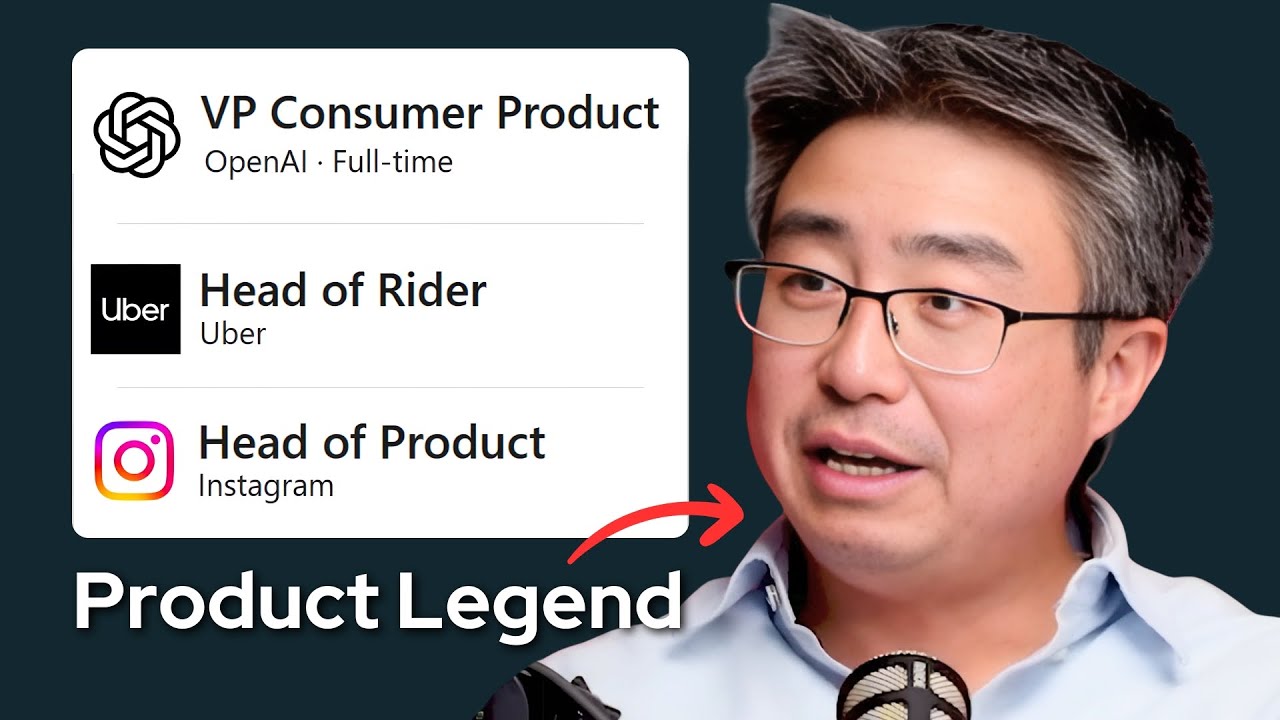
Peter Deng, General Partner at Felicis and former product leader at OpenAI, Facebook, and Uber, discusses AI business models, product development, and the future of AI across consumer and enterprise markets. He draws on his experience leading consumer products at OpenAI (including ChatGPT Enterprise), product at Facebook and Uber, and now investing in AI startups to offer a wide-ranging perspective on where the industry is heading.
AI Pricing and Business Models
The core problem with seat-based pricing for AI: Peter argues that per-seat SaaS pricing misaligns with the actual unit of value in AI, which is the work done, not access to a tool. At OpenAI, he felt strongly that ChatGPT Enterprise was sometimes undervalued and sometimes overvalued under a seat model because usage varies enormously across users.
Usage-based pricing isn’t the answer either: Tokens or GPU usage don’t equate to value delivered. Peter sees a race-to-the-bottom risk if companies price purely on compute consumption.
What he’d prefer: A model that works backward from the value created—e.g., how many people were made more efficient and what the impact was—then derives a platform fee and a usage component from that. He acknowledges buyers have a mental hangup about pure outcomes-based pricing, so a hybrid approach is more practical.
Practical pattern emerging: A broad platform fee with a usage cap or tiered overage, letting enterprises self-select into the right level. This preserves the simplicity of “all you can eat” for most users while allowing upsell paths for power users.
The bull case for agent companies: If an AI product is meaningfully better at a specific role than alternatives, it can maintain serious pricing power. But companies need to model out two or three degrees of abstraction to understand how long that advantage lasts.
Product Development in AI Companies
The new product team configuration: At OpenAI, the core team shifted from the classic PM-designer-engineer triad to PM-designer-engineer-post-training lead. Because the model is the product, the post-training lead is essential to shaping behavior.
Evals as the new spec: The product manager’s job has shifted from writing traditional specs to defining evals—concrete definitions of what success looks like. You can’t specify agent behavior in words alone; you need evals to define boundaries.
PM as white-space filler: Peter sees the PM’s role as picking up whatever isn’t being covered, and that changes with each wave of technology. The core principle stays the same even as the specific collaborators change.
The shift to task-specific post-training: While earlier waves saw general model improvements lift all boats, the current era involves more bespoke post-training for specific end tasks. GPT-5, for example, is better at coding but not necessarily better at everything. This creates a loop where startups can increasingly differentiate through domain-specific fine-tuning and evals rather than relying on general model improvements alone.
The Role of Product Managers in AI
PMs gain a 24/7 thought partner: Peter describes using ChatGPT late at night as a brainstorming partner when everyone else is offline—helping refine specs, vision docs, and investment theses when his own mental compute is depleted.
Roles will evolve, not disappear: Peter doesn’t predict whether there will be more or fewer PMs, but he expects the role to change. It may become more technical, or it may blend into a hybrid archetype where a single person can design, build, and ship a feature using AI tools.
Historical precedent: PM archetypes have already shifted across companies—more marketing-oriented at Apple and Microsoft, more technical and design-oriented at Facebook. Another shift is natural.
Increasing abstraction: Every human is operating at a higher level of abstraction over time. Cursor and similar tools mean code is “dripping from your fingertips,” but someone still needs to own architecture, robustness, and design craft.
Voice Interaction and AI
Voice is underrated: Peter is a strong believer in voice as a modality, having worked on it at OpenAI. He carries a water bottle with the original voice mode sticker as a reminder of its significance.
Why voice is powerful: There’s no lag between thought and expression when speaking—people think and talk simultaneously, with false starts and all. This makes it a uniquely engaging and natural way to interact with AI.
Model capabilities advancing: Voice models are getting better at tonality, warmth, and emotional nuance. Companies like Sesame are producing voice interactions that feel magical and well-crafted.
Practical use case: Peter uses Granola during his commute to talk through investment theses with false starts and tangents. An agent processes the conversation afterward, surfacing insights and structuring his own thinking.
The open question: Which voice use cases will persist? As voice agents emerge on both sides of interactions, more efficient non-voice communication may develop between agents. But voice’s staying power as a human communication medium suggests it will remain important.
Proactive AI: One of Peter’s favorite discoveries at OpenAI was what happens when the model talks first—shifting from a reactive assistant to a proactive agent. Companies like Utori are beginning to do this, alerting users to things without being prompted. This is a major frontier: most current products present a blank box, which 90% of users find confusing.
AI in Education
Tutoring and homework help: Peter used early ChatGPT to help his kids with homework—reminding himself of long division, parsing problems, and getting explanations on demand rather than watching YouTube videos.
Engagement is the real problem: Following Sal Khan’s insight, Peter agrees that the core challenge in education AI is engagement—drawing people in and sustaining their interest.
Following student passions: AI can unlock curiosity by adapting to what students care about (e.g., framing math problems around soccer for a soccer-loving kid). The deeper opportunity is fostering a lifelong love of learning by meeting students where their interests are.
Language learning: One of the first successful waves has been language learning apps, where the ability to practice speaking with AI is significantly more effective than traditional methods.
Consumer and Enterprise Adoption
Enterprise adoption required building foundational features: Security, integrations, audit logs, and organizational privacy constructs had to be built before enterprises could adopt ChatGPT. This is why enterprise adoption is only now catching up.
Consumer fear has dissipated: When Peter joined OpenAI, the dominant sentiment outside Silicon Valley was fear. His first product marketing hire proactively called people in the Midwest to gauge sentiment. Once people started using the technology, fear decreased and usefulness became evident.
The talent wars benefit startups: The escalating competition for research talent at big labs drives up salaries and creates second-order HR challenges, but it also means startup founders who can’t compete on compensation can still attract people who want to focus on specific problems. The competition pushes everyone forward.
Meta’s AI Strategy
Personal super intelligence: Peter takes Mark Zuckerberg’s vision seriously—a personalized agent for each person that assists with everyday goals. This is extremely valuable if executed well.
Not the same as ChatGPT: While there’s overlap, Peter sees differentiation coming from distribution points, unique data, workflow integration, and the “jobs to be done” framing. Just as people use both Facebook and Instagram, multiple consumer AI products will coexist.
Distribution advantages: Google has Chrome, Facebook has its feed and Instagram, Apple has devices. Each major company has a springboard to launch an assistive agent product.
Defensibility in AI Startups
Unique data is critical: Peter believes deeply in the importance of proprietary data that models haven’t been trained on—e.g., the nuances of scheduling calls in healthcare, the tonality of successful cold sales calls, or internal research and chain-of-thought from firms like McKinsey. Facebook’s unique data was mapping real friendship networks that existed only in people’s heads.
The data flywheel: Once deployed, every user correction becomes a labeling event. If an agent makes mistakes in scheduling and the user corrects it, that’s unique data only available to the entrenched tool. This compounds over time.
Speed to market: Getting to market fast and blanketing the market creates a compounding advantage that’s hard to catch.
Counterpoint acknowledged: Jacob notes that the number of examples needed to fine-tune models has turned out to be smaller than expected—sometimes just hundreds of data points. Peter agrees unique data may not be strictly necessary to start the flywheel, but it becomes critical for detecting preference shifts and maintaining the product over time.
Founder grit matters: Beyond model capabilities, Peter looks for founders who are willing to put in the elbow grease—understanding the use case deeply, iterating in market, and not expecting one-shot model outputs to work perfectly.
GPT-5 Reception and Product Design
Backlash was predictable: Peter compares the GPT-5 reaction to Facebook’s Newsfeed revamp, which was also poorly received initially. Any consequential product with a deep following will face backlash when it changes.
The model picker problem: The right direction is to eliminate the model picker—users shouldn’t need to choose. But people want control, and the model picker keeps creeping back. This is an age-old product design tension between removing friction and preserving user control.
Balance of magic and control: Every product must find the right balance between providing magic (removing friction) and giving users the control they need. Different users want different levels of control.
ChatGPT as Consumer Homepage vs. Apps like Uber
Incentive misalignment: ChatGPT’s product team wants to integrate services like Uber and DoorDash to make the platform more valuable. Uber’s product team doesn’t want to become a commoditized API call.
The super app question: In Asia, super apps emerged partly because typing was harder than clicking, making consolidated interfaces more utilitarian. A similar consolidation may happen in the voice/AI agent world.
UI becomes less important: As agents mediate interactions, the interface matters less. Uber will need to differentiate on service quality (e.g., lower ETAs) rather than owning the homepage.
Historical parallel: The iPhone paradigm gave Uber its chance by putting GPS in every pocket. The next paradigm shift—consolidated AI agents—could similarly reshape which companies control the consumer relationship.
OpenAI’s Dual Consumer-Enterprise Challenge
Structural tension: OpenAI faces a genuine conflict between consumer, enterprise, and API/platform priorities, including where to allocate compute and organizational focus. Peter sympathizes with the complexity—when he joined, they couldn’t even come up with a title that encompassed both consumer and enterprise.
Organizational undulations: The company has split and recombined consumer and enterprise teams. Reorgs are a way to express strategy, and Peter expects the structure to continue shifting as priorities evolve.
SearchGPT example: SearchGPT was a separate entry point that served its purpose in rallying the organization around the importance of web search, then was folded into the main product. This isn’t failure—it’s adaptation.
OpenAI’s ambition: Unlike other companies Peter has worked at, OpenAI “dreamed bigger,” stretching his own optimism about what’s possible with AGI. The company continues to pursue an unusually broad agenda including robotics, code, consumer, and enterprise.
Quickfire
Overhyped: Agents. Nothing today truly does what agents should do—make reservations, rearrange schedules, act autonomously in the world. The term is used prematurely.
Underhyped: Evals. They are the essential “elbow grease” that shapes model behavior and defines product success. They don’t get enough attention because they aren’t sexy, but they’re the unlock for most AI applications.
If building an AI app: Peter would go deep into a “boring” business with lots of wasted human effort—specifically AI voice for business processes like call centers. The inefficiency in these industries is enormous and underaddressed.
Parenting in the AI age: Peter focuses on fostering curiosity and the belief that his kids can realize any vision they dream up. He values fundamentals—math for structured thinking, coding for problem decomposition—but sees tools like Cursor as blessings that let kids focus on architecture and affordances rather than syntax.