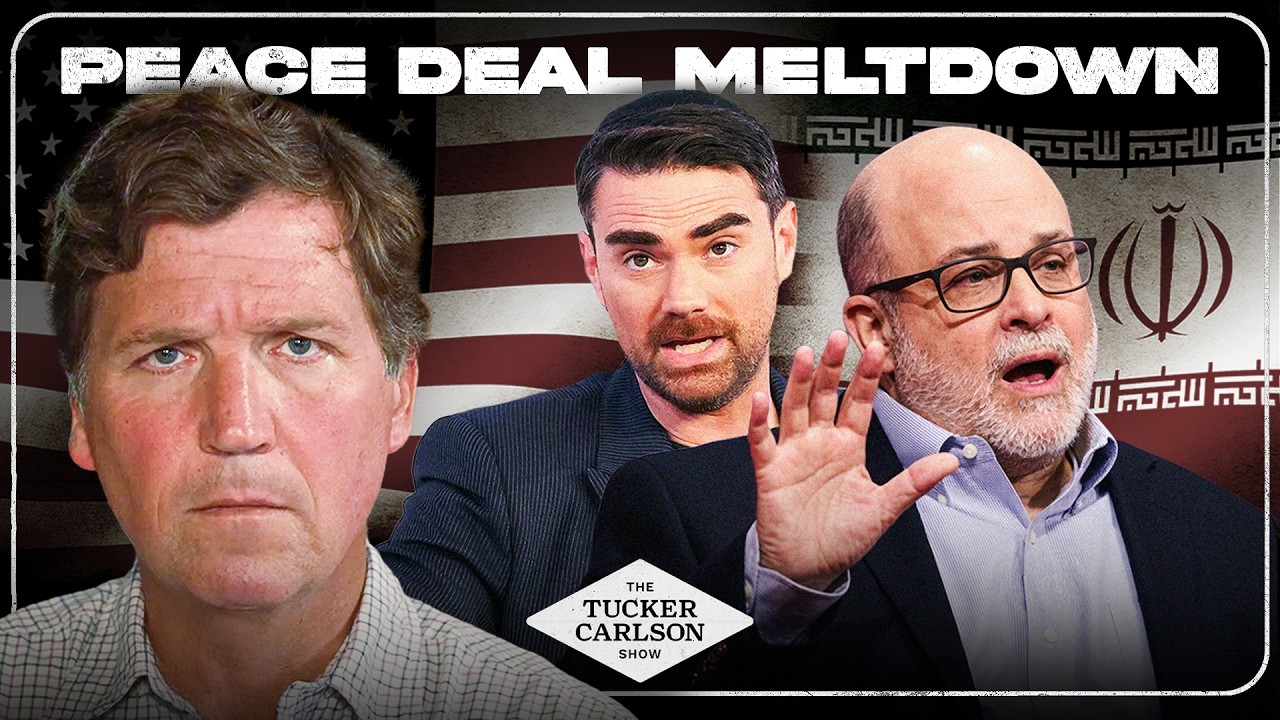
- A 14-point memorandum of understanding between the United States and Iran, expected to be signed in Switzerland on Friday, effectively ends the war that began on February 28th and marks a dramatic shift in the global balance of power — one that humiliates the United States, elevates Iran, and infuriates the neoconservative establishment that pushed for the conflict in the first place.
The deal itself is staggering in its implications
-
Paragraph 1 declares an immediate and permanent end to military operations on all fronts, including Lebanon — a country Israel used the war as a pretext to invade and bomb, targeting Beirut and seizing land south of the Litani River with American weapons and taxpayer money. The agreement forces the US to restrain Israel and effectively demands it give back stolen Lebanese territory. Israel is not even mentioned by name in the document; Lebanon is mentioned three times.
-
Paragraph 2 has the US formally respect Iran’s sovereignty and territorial integrity and pledge non-interference in its internal affairs — a de facto acknowledgment that Iran is not a “rogue terror state” but a legitimate sovereign power, and a great one at that, since you don’t negotiate as equals with a country you consider insignificant.
-
Paragraph 4 requires the US to lift its naval blockade of Iran within 30 days — a straightforward military retreat from waters the US has effectively controlled for decades.
-
Paragraph 5 gives Iran and Oman — not the United States — joint authority over the Strait of Hormuz, through which roughly 20% of the world’s oil and gas flows. Iran will provide safe passage for commercial vessels free of charge for 60 days, after which Iran and Oman (along with other Gulf states) will set the terms. This transfers control of the most economically critical waterway on Earth from the US to regional powers.
-
Paragraph 6 commits the US to help assemble at least $300 billion for Iranian reconstruction and economic development — not just rebuilding what was destroyed, but funding future growth. The administration says this won’t come from American taxpayers, but the US is explicitly involved in procuring the funds.
-
Paragraph 7 requires the US to terminate all sanctions against Iran — UN Security Council resolutions, IAEA board resolutions, and all unilateral primary and secondary sanctions — on an agreed schedule. These sanctions have been in place for generations, have crushed Iran’s economy, and are themselves an act of war. Rolling them back would be the most significant diplomatic shift in memory.
-
Paragraph 8 has Iran reaffirm it will not develop nuclear weapons — the stated justification for the war, despite no evidence that such a program existed. The speaker notes that the war’s outcome makes it more likely Iran will eventually acquire nuclear weapons, since the lesson is clear: countries with nukes (North Korea, Pakistan) are treated with respect; those without are invaded.
-
Paragraph 10 has the US Treasury issue waivers immediately for the export of Iranian crude oil, petroleum products, and all associated banking, insurance, and transportation services — ending decades of economic isolation and treating Iran as a normal trading nation.
-
Paragraph 11 requires the US to release all frozen Iranian funds held in banks worldwide, some since 1979 — billions of dollars that are Iran’s by right and whose return was a sticking point in the Obama-era deal.
The US lost, and the reasons are structural
-
The Trump administration agreed to this deal because it had no other option. Two factors made continuation impossible:
- Running out of weapons: The US expended roughly half its THAAD interceptors and Patriot missiles in seven weeks. At $1.5 trillion a year, the Pentagon cannot replenish stocks fast enough to sustain the conflict. The US has reached the limit of its industrial capacity to fight even a medium-scale war.
- Running out of oil reserves: The Strategic Petroleum Reserve is at its lowest level since 1983. Gas prices have hit $6/gallon for 93 octane in many places. Drawing down reserves to suppress prices is unsustainable, and further spikes would cause real inflation and political crisis.
-
The war was sold to Trump on Israeli intelligence estimates that killing the Ayatollah and Iran’s top 150 leaders would cause the regime to collapse. This was wildly wrong. Iran had built a decapitation-proof system: kill the top 150, and another 150 rise up, likely more radical than their predecessors. Regime change would have required a land invasion, which has zero public support in the US.
-
Trump understood very early that Netanyahu had misled him. Within days, he had Secretary of State Marco Rubio publicly state that “we followed Israel into this war” — an extraordinary buck-passing moment. Trump has continued to blame Netanyahu while posturing his way toward an exit.
The neoconservative response is hysterical and revealing
-
Fox News contributors and figures like Ben Shapiro and Mark Levin have reacted with fury, calling the deal a “setback,” accusing Trump of becoming a “hillbilly Obama,” and demanding the signing ceremony be canceled. But when pressed on what the alternative is — what “bold, decisive action” would achieve the stated goals of regime change, nuclear disarmance, and total surrender — they have no answer.
-
Their real goal was never the publicly stated one. The actual Israeli objective, the speaker argues, is chaos: to destroy any potential rival to Israeli power by plunging it into generational civil war and ethnic conflict, as happened in Syria, Libya, and Iraq. This serves Israel’s territorial expansion and weakens Europe through resulting migrant crises.
-
Trump has begun openly diminishing Netanyahu and Israel’s moral legitimacy — a calculated move to neutralize the one force that could still derail the deal. At the G7, Trump said he sent Israel a copy of the agreement (BCCing them, not consulting them), criticized Israel’s bombing of Beirut as “brushed” and “too much,” and suggested that Ahmed al-Sharaa (Jolani), the former Al-Qaeda leader now running Syria, might handle Hezbollah more humanely than Netanyahu. This is a president who once called for Netanyahu’s pardon and defended him against corruption charges.
The broader significance: the end of an era
-
The speaker compares this moment to the 1956 Suez Crisis, which ended the British Empire in practice even though Britain had been declining for decades. The US has just demonstrated that despite the world’s most expensive military, it cannot impose its will on the 34th-largest economy in the world. That conclusion is immediate and obvious — it will not take decades to sink in.
-
The deal makes official what geography always made inevitable: Iran sits on the Strait of Hormuz and can close it with mines. It is not Somalia. It is an ancient civilization of nearly 100 million people and will now be treated as a steward of the world’s most critical energy chokepoint.
Why the cycle will not repeat
- Despite cynics in Washington who expect the war to resume after a pause (as happened after the 12-day war in June 2025), the speaker argues this time is different for two reasons:
- Gaza: What Israel has done in Gaza — ethnic cleansing, mass killing of civilians including tens of thousands of women and children, destruction of the territory, and the murder of over 100 journalists to keep it hidden — is genocide by definition. Satellite imagery and eventual access will make this undeniable. The death toll is clearly over 100,000. When the full truth emerges, the political cost will be catastrophic for anyone who enabled or excused it. No amount of media ownership or lobbying can suppress this forever.
- The advocates have discredited themselves: Figures like Ambassador Mike Huckabee (who claimed “without Israel there would be no America”), Ben Shapiro, and Mark Levin have resorted to calling any critic a Nazi — including longtime Israel supporters like Piers Morgan and Megyn Kelly. This conflation of the Israeli government with global Judaism is irrational, morally repugnant, and counterproductive. It is the behavior of religious fanatics, not serious analysts, and it is alienating the very people who were Israel’s most reliable defenders.
Piers Morgan’s perspective
- Piers Morgan, a longtime supporter of Israel’s right to exist and defend himself, was called a Nazi and member of the “woke Reich” by Mark Levin for criticizing the Netanyahu government’s conduct. He argues that:
- Netanyahu is a canny career politician using war to stay in power and delay his criminal corruption trial.
- Ministers like Ben Gvir and Smotrich are openly evil — Gvir celebrated his 50th birthday with a noose on his cake and posted footage of a female detainee being brutalized — and their agenda is the ethnic cleansing of Palestinians from Gaza, the West Bank, and southern Lebanon.
- Israel has just passed a two-tier apartheid law allowing execution of Palestinians deemed terrorists while exempting Israelis who commit the same acts.
- Near two-thirds of Americans now hold a negative view of Israel — unprecedented in their lifetime.
- Shapiro and Levin are propagandists, not journalists, and their ad hominem attacks are losing them audiences and credibility.
- His message to them: stop attacking people for doing their job, start holding Netanyahu accountable, and recognize that you are making Israel increasingly globally unpopular.