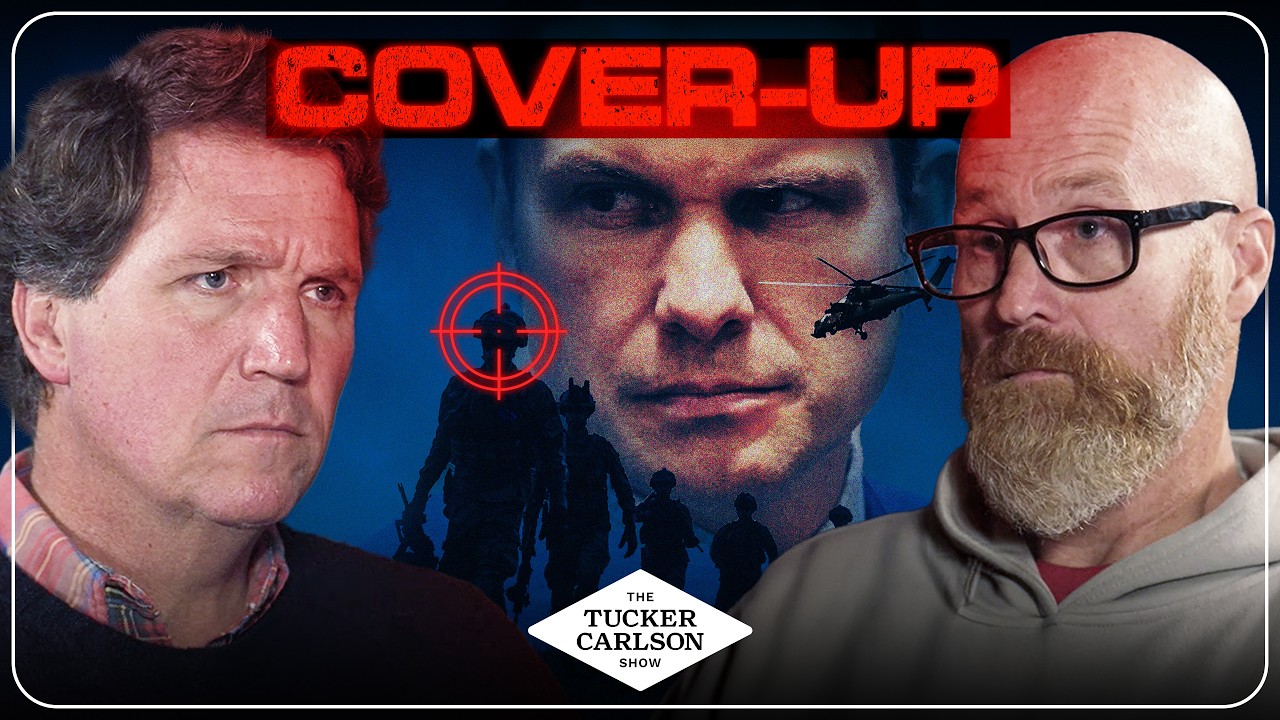
A former police officer and Army veteran investigates the 2012 death of his high school classmate, Navy SEAL Commander Job Price, officially ruled a suicide in Afghanistan, and uncovers forensic evidence of murder, a command-level cover-up, and a pattern of corruption, war crimes, and drug trafficking within the Navy SEAL community that has persisted for decades.
Job Price was a high-achieving career officer on the admiral track who died under suspicious circumstances in Afghanistan
Price and the investigator were classmates at Pottsville High School (graduated 1989); Price was academically and athletically exceptional, described as “boy scoutish” rather than hard-edged
He graduated from the Air Force Academy, transferred his commission to the Navy, completed BUD/S, and served 19.5 years, reaching command of SEAL Team 4 (East Coast)
He was 42, married with a 9-year-old daughter, 6 months from his pension, and slated for Naval War College in June 2013
He deployed to Afghanistan in September 2012 as commander of SEAL Team 4; died December 22, 2012, three days before Christmas
The official ruling: suicide by gunshot to the head in his bunk, gun still in hand
No suicide note, no prior warnings, no family history of mental illness; he was on low-dose Valium (for sleep), Benadryl, and Tramadol — only Valium was prescribed
Price was vehemently against medication; the other drugs’ origin is unexplained
The suicide ruling is unprecedented and forensically unsupported
No commanding officer in the entire GWOT era had ever died by suicide in theater; suicides in the military are typically junior enlisted, not senior officers in command
The investigator, a 30-year police veteran, reviewed the 356-page “death book” in 2019 at the request of Price’s father and found it “a thousand-piece puzzle with 250 pieces” — insufficient to support suicide
Crime scene photos showed Price was shot while sleeping on his left side, naked, with a pillow in his left arm — the bullet entered right-to-left at a 45° downward angle
But his body was found on his back, gun across his chest, head turned right — opposite the shooting position; physics cannot explain this movement post-mortem
No gunshot residue testing was done on Price’s hands — the only way to determine if he fired the weapon
No trace evidence testing (blood, skin, hair, bone) on the gun or body; contact wounds produce backspatter, but very little blood was on Price
Ballistics only confirmed the bullet and casing came from Price’s SIG 226 (9mm, unthreaded barrel, cannot be suppressed) — but the gun could have been fired elsewhere (e.g., a clearing barrel) and the components planted
Autopsy photos show a distinct semicircular imprint on Price’s head matching the diameter of a suppressor face — but his gun could not accept a suppressor
Multiple independent forensic experts (four crime scene investigators and Dr. Brent Turvey, PhD criminology) all concluded the evidence indicates homicide
The crime scene was deliberately unsecured and evidence was destroyed
Price was found at ~9:30 AM by the same SEAL who last saw him alive; an NCIS agent and doctor pronounced him dead
The NCIS agent locked the door and gave the key to the finder (Command Master Chief Jeff Pieler, a SEAL), saying “Don’t let anybody in. We’ll be back with more guys”
NCIS did not return for 9 hours; during that time, all suspects had access to the room and body
In law enforcement, a death scene is a crime scene until proven otherwise; relinquishing control to non-law enforcement destroys chain of custody and makes any evidence inadmissible
When NCIS returned, they bagged Price’s hands for evidence preservation — standard procedure
But the medical personnel, at Pieler’s direction, removed the bags, washed Price’s entire body head to toe (scrubbing hands, destroying all trace evidence), then applied new evidence bags — a deceitful act meant to imply the body was never tampered with
Pieler’s stated reason: “He wanted Job to have a dignified return flight home”
A bloody bed sheet was also omitted from the body bag, preventing later testing at Dover
Price had confronted multiple serious crimes on his deployment, creating powerful motives for his murder
Detainee torture and killing (June 2012): Before assuming command, Price reviewed evidence that four SEALs from SEAL Team 2 had tortured and killed an Afghan detainee; he recommended court-martial for all four
Taliban retribution: Signals intelligence intercepted Taliban chatter about retaliating for the detainee killing; one of Price’s SEALs was killed in an ambush in November — the predicted retribution — but Price was never briefed on the threat
Child rape by a SEAL: One of Price’s men raped an Afghan teenage girl; no court-martial occurred
Theft of CIA/AFSOC funds: A former SEAL Team 6 member attached to Price’s unit was stealing “pallets of hundred dollar bills” meant for tribal leaders; Price confronted him two days before his death and demanded the money be returned
Drug and human trafficking by local allies: Price struggled with police chief Matullah Khan, a known drug smuggler and human trafficker; SEALs were protecting poppy fields producing 93% of the world’s heroin
Command confrontation: Two weeks before his death, Admiral Tim Szymanski (Group 2 commander) and two senior officers flew to Afghanistan and had a heated argument with Price; witnesses confirm the argument
The investigator believes Price was told: stay silent, get your next assignment, become an admiral — or else
The SEAL community operates a “mafia-level” corruption network protected by command leadership
The investigator traces the corruption to Richard Marcinko, creator of SEAL Team 6, who was “dirty as the day is long” — running drugs and women with Puerto Rican cartels, training cartels in tactics, and named in the Epstein files
Marcinko remained influential until his death; “things didn’t happen without his blessing”
Admiral Tim Szymanski is described as Marcinko’s acolyte and the “queen bee” running the current corrupt hierarchy
The SEAL brand is monetized through legal and illegal verticals: training companies, firearms brands, MMA gyms, book deals (bulk-purchased to hit bestseller lists), NGO/contract work (Blackwater-style), and drug trafficking
Drugs purchased with taxpayer-funded AFSOC money were shipped back to the U.S. in military cargo and sold to gangs like MS-13 at 350% profit
Recruitment shifted post-9/11 from disciplined leaders to “high school wrestlers with anger issues, no dad” — emotionally stunted men who would “use their rage in a legal, quote unquote, productive way” and could be controlled through compromised missions
“Fail forward” culture: SEALs who commit war crimes or lose men get promoted; the investigator cites multiple cases where convictions were overturned and perpetrators advanced
The SEAL brand is now the face of the U.S. military abroad; accountability would damage the “empire’s” image, so the institution protects its own
The John Chapman case reveals the same pattern: a hero abandoned, his legacy attacked to protect living SEALs
Operation Anaconda (2002), Takur Ghar mountain: SEAL Team 6 (led by Britt Slabinski) and Air Force CCT John Chapman were inserted onto a known-enemy mountain; Neil Roberts fell from the helicopter
The team re-landed in the same hot LZ to rescue Roberts; Chapman assaulted bunkers alone, killed enemy, was wounded, left for dead when the team exfiltrated
Chapman regained consciousness and fought alone for over an hour, directing air support, saving 18 of 23 Rangers — then was killed by PKM fire
Slabinski and two other SEALs wrote statements supporting Chapman’s Air Force Cross (second-highest medal) covering only the first 4 minutes; the second half was classified by the Navy
In 2015-2018, the Air Force pursued a Medal of Honor for Chapman; the Navy/SEAL Team 6 blocked it, inventing the “Red Beard theory” — claiming a Chechen fighter, not Chapman, fought the second phase (red-on-red)
Video evidence (ISR, AC-130 feeds) and pixel tracking debunked the theory; Chapman never left the immediate area
A deal was struck: both Chapman and Slabinski would receive the Medal of Honor, but Slabinski got his first (2018) — the living man honored before the dead one
In 2024, the National Medal of Honor Museum (Arlington, TX) gave Slabinski a massive exhibit; Chapman received only a small plaque — despite promises to the Chapman family
Slabinski now heads the Congressional Medal of Honor Society and sits on the museum board; he publicly claims Chapman did not earn his Medal of Honor
Slabinski recently screamed at and physically confronted a veteran (Eric Deming) who asked him to name the seven men who died on Takur Ghar — he couldn’t; another SEAL (Jason Redman) grabbed Deming’s wife’s lanyard
The investigator believes the Navy is covering up that Chapman was hit by friendly fire (handgun rounds found in his legs/back of legs, distinct from 7.62 enemy rounds) during the chaotic first 4 minutes — unintentional but fatal to the narrative
The investigator has exhausted official channels and faces stonewalling at the highest levels
Congressional letters (House rep from MO, Senator McCormick from PA) received identical dismissals: “We’re satisfied with our investigation. Send info through the tip line” (unmonitored)
Pete Hegseth (then Fox host, now SecDef) reviewed the case in 2022, texted: “There’s no way anybody would commit suicide in the position he was found in… clearly a suppressor was used” — but ghosted the investigator in April 2023
Hegseth’s last text: “If they’re never in a position to help, I will” — but no action followed despite the investigator’s outreach through intermediaries
The investigator seeks only: change manner of death from suicide to “undetermined” (not homicide, which he knows is unattainable) to restore $3M+ in lost benefits to Price’s widow and daughter (life insurance, death gratuity, pension, admiral pay)
Most of Price’s team refuses to speak; their statements are scripted, using identical unusual language (“aloof”)
The investigator has no desire to pursue other cases but was pulled into Chapman’s case by the museum slight and Slabinski’s public attacks on a dead Medal of Honor recipient
He has obtained all uncut ISR/AC-130 feeds and autopsy records for Chapman; forensic analysis shows Chapman alive for at least an hour post-wounding (blood pressure evidence in non-lethal wounds) and handgun rounds in his body with no enemy handguns recovered
The investigator believes the Navy fears exposure of friendly fire on Chapman — and that the same corrupt hierarchy (Szymanski, Slabinski, Marcinko’s legacy) connects both cases
The corruption is systemic, bipartisan, and protected by a media-military-industrial complex that treats the SEALs as untouchable
Both left and right media (NBC, Fox) promote the military as the only uncriticizable institution; the “brand” supersedes truth
The investigator, a conservative veteran who “bleeds red, white, and blue,” is haunted that the “good guys” have become the perpetrators
Sunlight is the only remedy; the investigator continues because “I don’t like bullies. I don’t like liars. I don’t like people who hurt other people intentionally to serve their own best interests”
He will see Price’s and Chapman’s cases through but has “zero interest” in investigating others — the pattern is already clear