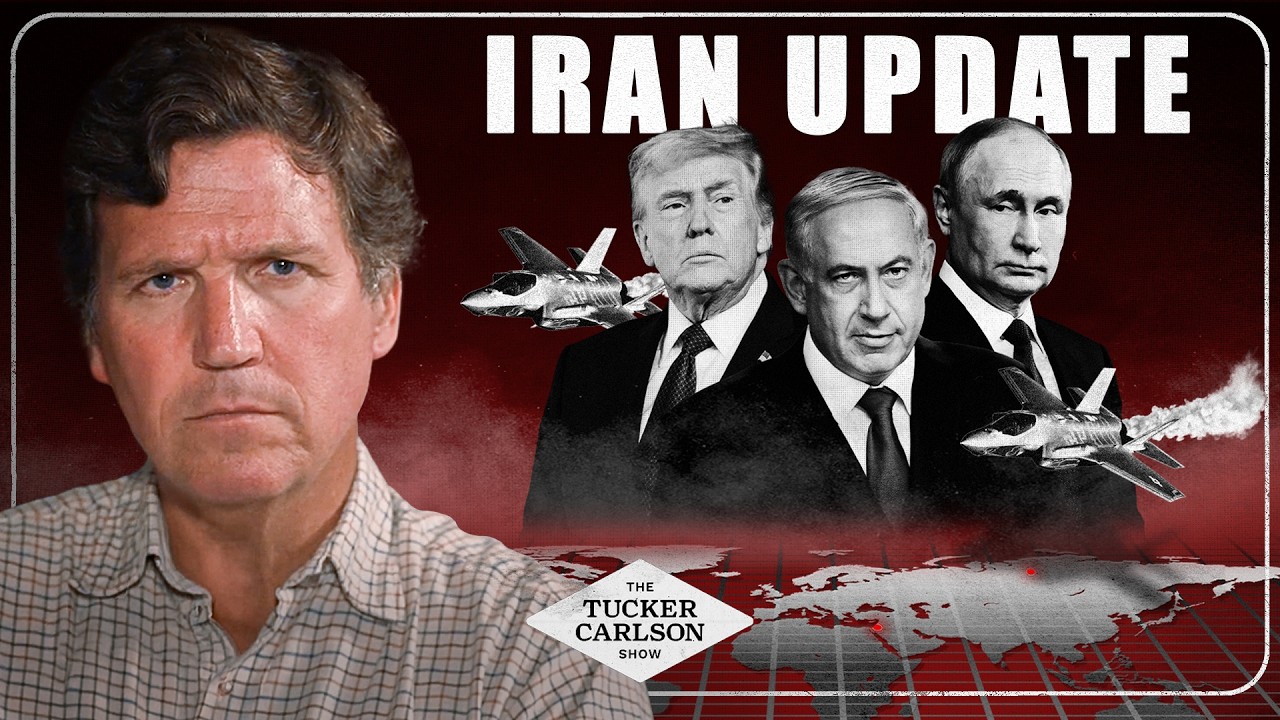
The United States and Israel have resumed large-scale strikes on Iran after months of a war that began on February 28, 2026, dashing repeated claims by President Trump that a diplomatic deal with Iran was imminent — the 38th such announcement since March 23. The conflict has exposed fundamental limits of American military, economic, and moral power, and is reshaping the global order in ways that weaken the United States and strengthen Iran.
The war’s trajectory and Iran’s growing leverage
Iran now controls the Strait of Hormuz, the narrow waterway through which roughly a fifth of global commodities flow — something it did not control when the war began. Despite months of bombing by the US and Israeli militaries, Iran has not been forced to open the strait or submit to any of the war’s original four demands: dismantling its missile program, ending support for Hezbollah/Houthis/Hamas, abandoning its nuclear program, or regime change.
Iran has retaliated against the six Gulf states that host US bases — the UAE, Saudi Arabia, Qatar, Bahrain, Kuwait, and Oman — inflicting severe damage on military and civilian infrastructure. These Gulf allies are now questioning whether the United States can or will protect them, a shift that may permanently alter regional alliances.
Iran has tied any ceasefire to an end to Israeli bombing in Lebanon, where Israel has been destroying civilian infrastructure and killing civilians, including Christians, in Beirut and southern Lebanon. This stance has enhanced Iran’s popularity across the Arab world, even in countries that historically have tense relations with Tehran.
What the war reveals about American power
Military limits: Despite a trillion-dollar defense budget and the most powerful military in history, the US has been unable to open the Strait of Hormuz or force Iran’s submission. Iran’s inventory of missiles and drones, combined with the target-rich environment of US-allied Gulf states, means the US cannot “escalate its way to victory.”
Economic limits: The US is not energy independent in practice. Global oil prices — set by Brent crude on international markets — determine US gasoline prices. Iran’s control of the strait gives it enormous leverage over the US and global economy. The broader lesson is that the US economy is deeply embedded in globalization and cannot insulate itself from disruptions abroad.
Moral collapse: The US has openly threatened and targeted civilian infrastructure in Iran — power, water, sewage — without apology. It has also threatened nuclear strikes against entire populations. The US no longer pretends to uphold the distinction between combatants and civilians that it once used to distinguish itself from adversaries. This represents a dramatic loss of the moral authority the US long claimed.
Sovereignty deficit: The war has made undenably clear that the timing and decision to go to war with Iran was driven by Israeli Prime Minister Benjamin Netanyahu, not by any independent American strategic assessment. This admission — and the public’s growing awareness that elected leaders do not control the most consequential decisions — threatens the legitimacy of American democracy itself.
The Ukraine war and the risk of nuclear escalation
Russia is steadily winning the war in Ukraine and is likely to end up controlling the four oblasts it has annexed (Luhansk, Donetsk, Zaporizhzhia, Kherson) plus possibly Odesa and Mykolaiv. The war will likely end as a frozen conflict, with Ukraine a dysfunctional rump state that never joins NATO — achieving Russia’s primary war aim.
Ukraine, backed by the US and Europe, has escalated drone and missile strikes deep into Russian territory, targeting energy infrastructure and occasionally killing civilians. Russia’s inability to stop these attacks has generated domestic pressure on Putin to escalate.
Prominent Russian strategist Sergey Karaganov argues that Russia should first attack NATO countries conventionally, and if that fails, use limited nuclear weapons against European targets to force the West to back off. Mearsheimer takes this threat seriously, noting that Russia views NATO expansion into Ukraine as an existential threat comparable to Soviet missiles in Cuba.
The US and European leadership show no sign of restraint. Mearsheimer attributes this to a combination of genuine delusion (believing Putin is a Hitler figure bent on conquiring Europe), institutional inertia, and the influence of Americans with ethnic ties to Ukraine who are deeply committed to the Ukrainian cause.
The Israel lobby and its role in driving US wars
Mearsheimer and Stephen Walt’s 2006–2007 work on the Israel Lobby argued that US foreign policy in the Middle East is heavily shaped by organized pro-Israel pressure, often against America’s own interests. The book was suppressed and its authors smeared as antisemites, but events since — the Iraq war, the Iran war, the Ukraine war — have vindicated their analysis.
The same networks that pushed for war in Iran have pushed for war with Russia. Mearsheimer identifies two reasons: (1) Israel wants the US military globally engaged and battle-ready so it can be called upon when Israel needs it, and (2) many senior US foreign policy figures have family roots in Ukraine or Eastern Europe and are personally invested in those conflicts.
Israel’s influence extends to spying on American officials. Israeli intelligence has reportedly tracked Steve Witkoff and Elbridge Colby — both associated with a more restrained US foreign policy — because Israel opposes any reduction in American global military engagement.
Mearsheimer argues that US support for Israel has been deeply harmful to Israel itself, enabling its most self-destructive impulses — territorial overreach, military hubris, and the genocide in Gaza — in the same way that an overindulgent parent enables a child’s worst behavior.
The Gaza genocide as a defining event
Mearsheimer calls the Israeli campaign in Gaza a genocide — a state policy to eliminate a people and transfer them from their land. The United States is the only country besides Israel to openly support it.
This is the single most significant event of the current era, and history will judge the world — and especially the United States — by how it responded. The damage to Israel’s global reputation is “off the charts,” and the US is now widely seen as a rogue state alongside Israel.
Iran, despite its many faults, has positioned itself as the only power willing to act against the killing of Palestinians and the destruction of Lebanon, which has enhanced its standing in the region and the broader global south.
How the Iran war is likely to end
Trump is desperate for a ceasefire because the economic consequences of a prolonged closure of the Strait of Hormuz — spiking energy prices, supply chain disruptions, and the risk of a global recession — threaten his political survival ahead of the midterm elections.
A ceasefire would require: (1) a complete halt to shooting, including in Lebanon; (2) opening the strait; (3) returning $24 billion in frozen Iranian assets; and (4) lifting sanctions on Iranian oil sales. Notably, the nuclear issue would be deferred to a second round of negotiations.
Iran is in the driver’s seat and has no incentive to offer Trump an easy deal. Netanyahu also resists any deal that amounts to accepting Iran’s victory. Trump is therefore caught between Iranian intransigence and Israeli pressure, with the international economy collapsing around him.
Mearsheimer believes Trump will eventually have to play unprecedented hardball with Netanyahu — potentially threatening to cut off aid — because the alternative is economic catastrophe. Whether Trump has the political will to do so, given his base’s devotion to Israel, remains the central question.
The most likely outcome is a frozen conflict in which Iran emerges stronger: controlling the strait, with a more robust economy (as sanctions erode), enhanced regional legitimacy, and a shattered US alliance structure in the Gulf. The US basing presence in the Middle East is already severely damaged and may not be recoverable.
The broader civilizational shift
Mearsheimer sees this moment as a profound pivot point in history, not a bump in the road. The unipolar moment — US global hegemony from roughly 1992 to 2017 — is over. The world is returning to a multipolar order in which the US is one great power among several, not the dominant force.
The Western foreign policy elite appears to be operating under a kind of collective delusion — pursuing strategies that are self-defeating, ignoring basic lessons about the limits of power, nationalism, and the dangers of cornering adversaries. Mearsheimer cannot fully explain why, but notes it is a distinctly Western phenomenon; leaders in East Asia and the Middle East do not share it.
The quality of public intellectual discourse has declined drastically. During the Cold War, mainstream media hosted genuine debate; now, dissenting views are confined to alternative platforms, and the mainstream parrots a narrow conventional wisdom that most people recognize as bankrupt.
The two greatest obstacles to aggression in the modern world are nuclear weapons and nationalism. Israel is ignoring both — occupying territory against the will of hostile populations while believing military power can substitute for political solutions. This ensures its long-term destruction, however remarkable its early achievements were.