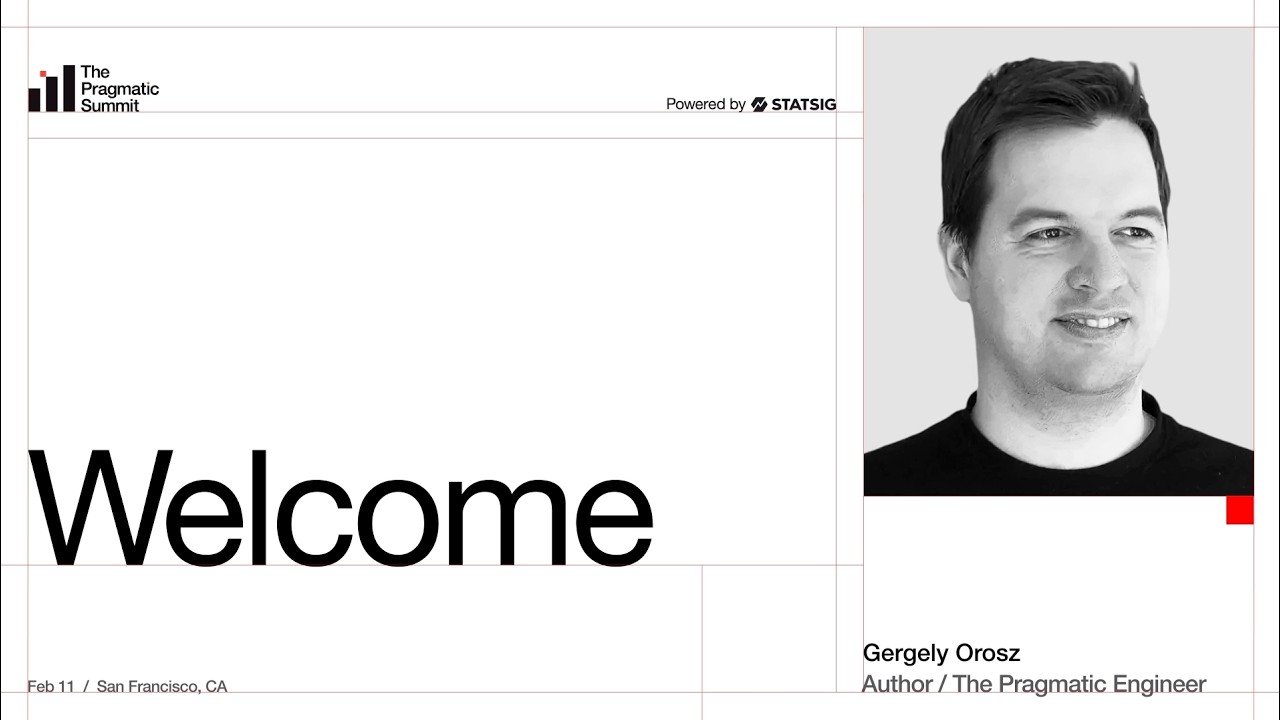
This is the opening address at The Pragmatic Summit on 11 February 2026 in San Francisco, delivered by Gergely Orosz, creator of The Pragmatic Engineer newsletter and podcast. He traces the personal journey that led to the event, explains what makes it distinctive, and sets the tone for the day as a gathering of serious, curious builders and engineering leaders from around the world.
How The Pragmatic Engineer started
Eight years ago, Gergely became an engineering manager at Uber and felt he needed better resources on engineering management in tech — he tried Harvard Business Review but found it too generic for the realities of leading teams inside a fast-growing Silicon Valley company.
He pitched writing for HBR about engineering management at Uber and never got a response.
Later, as a manager of managers, he wanted to give a struggling engineer a book with practical advice on growing from an E2 to a senior/principal engineer — but no such book existed.
He started writing one at Uber, but it stalled. Then COVID hit, Uber had layoffs, a quarter of his team was let go, and he decided to leave temporarily to finish the book.
The book turned into The Software Engineer’s Guidebook, and during that time he realized there was a gap: no publication captured the real, unwritten wisdom of working in tech.
He launched The Pragmatic Engineer newsletter — writing advice, insights, and “open secrets” that experienced people knew but were rarely written down.
The newsletter grew to over 1 million subscribers with no advertising, became the top-selling tech newsletter on Substack, and spawned a successful podcast.
The summit is the final piece he always imagined but never thought would happen: an in-person gathering of the community.
What makes this event special
The audience: Nearly all attendees are software engineers or engineering leaders, many from the Bay Area and California, others traveling from across the US and internationally — including Singapore and Brazil.
The speakers: Gergely describes it as the “Pragmatic Engineer cinematic universe” — most speakers have appeared on his podcast or collaborated on deep dives, and roughly 70% he had met in person before the event. Many are also published authors whose books are available on the fourth floor and who are accessible for signings and conversation.
The organizing team: Statsig, known for experimentation and feature flagging, organized the event and is credited as an exceptionally capable event host. Attendees can expect thoughtful touches throughout the venue, including Lego-based architecture activities downstairs.
The attendees themselves: Nearly 2,000 people applied to attend; the selection prioritized builders, experienced professionals, and people who are optimistic and curious about the future of technology. The event is run at roughly break-even, not for profit.
Gergely’s goal for the day
He wants this to be the single best day attendees can spend in a professional setting — a place to absorb new ideas, talk with speakers afterward, and, most importantly, connect with each other.
He predicts that friendships and connections formed at this event will lead to new startups and potentially major tech companies within two to three years, and encourages everyone to exchange contact information and make the most of being in a room full of like-minded, motivated professionals.