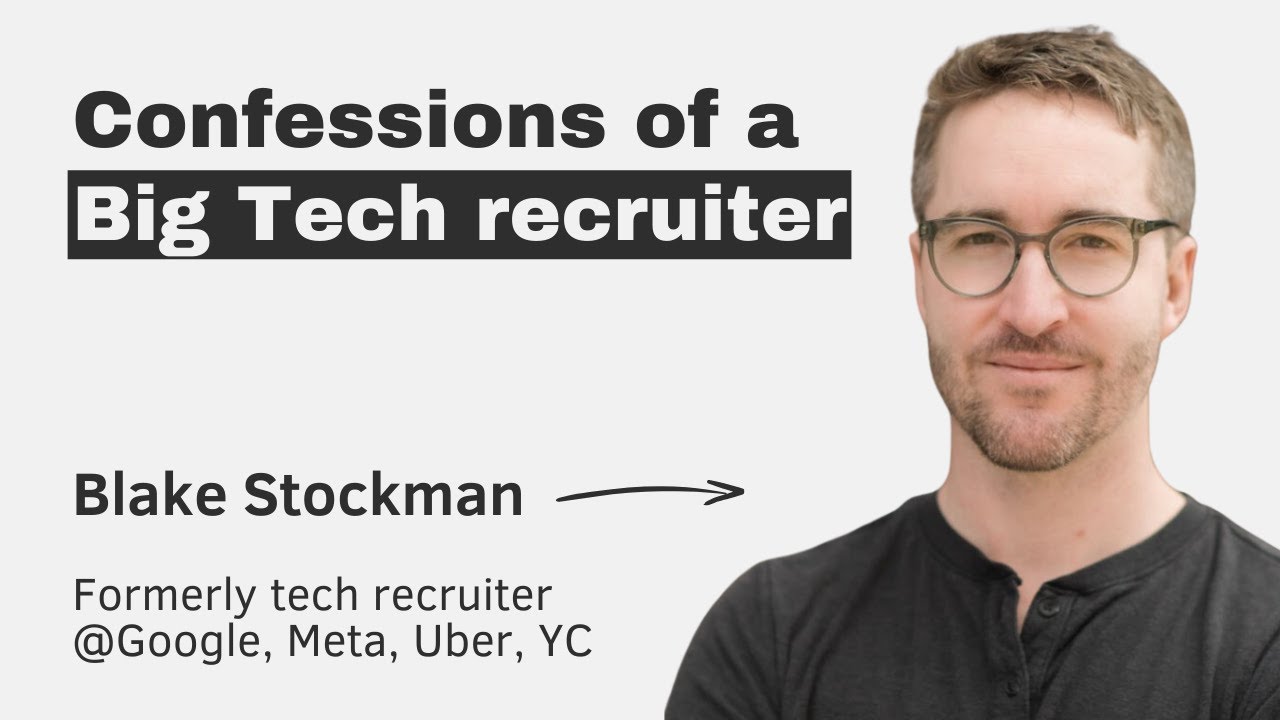
Blake Stockman spent 12 years as a tech recruiter at Google, Meta, Uber, Flexport, and Y Combinator before leaving the field to study law. In this candid conversation with Gergely Orosz (host of The Pragmatic Engineer and a former hiring manager who worked with Blake at Uber), he shares unfiltered insights into how tech recruiting really works behind the scenes, how hiring decisions get made, how candidates should negotiate, and what both engineers and managers can learn from treating recruitment as a genuine partnership.
Tips for working with recruiters
Recruiters are not fully on your side, but the good ones will advocate for you when they believe in you. Blake describes himself as somewhat of an outlier: when he genuinely believed a candidate was a strong hire, he would “go to bat” for them, even putting himself on the line with hiring managers. Most recruiters, especially after recent layoffs, are more cautious about their professional standing.
Be authentic but strategic about what you disclose. Don’t be robotic, but avoid sharing salary expectations early, as recruiters will anchor to whatever number you give. If you say $100K and the range goes up to $140K, you’ll likely get offered $110K rather than the top of the range.
Blake uniquely intervened in debriefs to coach the room. When a candidate he believed in was trending toward a “no,” he would inject himself as an outside observer, pointing out counterbalancing signals (e.g., one coding interview went well, the other didn’t) and asking the room to weigh what mattered most for the role. This only worked because he had built trust by consistently putting the company’s interests first.
Hiring managers should actively solicit feedback from recruiters. Recruiters talk to candidates extensively and can surface red flags, gauge genuine excitement, and provide context that interview signals alone miss. This is especially valuable in borderline decisions, which Blake notes are where many of the most effective hires actually come from.
How hiring works at big tech companies
Headcount allocation is political and often arrives late. At Meta, Blake didn’t get his 2025 headcount goals until February; at Uber, it was around March, and targets would shift shortly after. Every manager believes their hire is the most important, so a recruiter’s job involves navigating competing priorities.
The recruiter’s operational role is larger than most candidates realize. After headcount is assigned, recruiters build action plans with hiring managers, do talent mapping (identifying which companies have engineers with relevant domain expertise and cultural fit), run outreach campaigns, and manage the funnel. Much of this is becoming more automated, but the calibration work between recruiter and manager remains essential.
Uber had a unique “hire fast, get more headcount” culture. Under Travis Kalanick, the directive from the top was to hire as quickly as possible. If a team hired fast enough, they received additional headcount. This created a fundamentally different recruiting dynamic than at Google or Meta.
Calibration: the most underrated part of the hiring process
Calibration means getting the recruiter and hiring manager on the same page before any candidates are interviewed. Blake would ask Gergely to name five engineers he’d hire on the spot and explain why. Then Blake’s team would go find similar candidates, and they’d spend 30–60 minutes reviewing profiles together to align on what “good” looked like.
Skipping calibration wastes weeks or months. Without it, recruiters bring candidates the manager doesn’t like, or managers have unrealistic expectations about who’s available and at what compensation. The upfront investment in alignment prevents enormous downstream friction.
Recruiters can bring market reality to managers’ expectations. When Blake’s team realized they couldn’t find enough senior engineers locally, they proposed hiring strong mid-level engineers with growth potential. This kind of market-informed flexibility only happens when recruiters and managers treat each other as equal partners.
The case for partnering with recruitment (using Uber Amsterdam as an example)
Gergely’s manager at Uber explicitly taught him to treat recruiters as equal partners. This was somewhat countercultural at a tech company where engineers were perceived as higher-status. The weekly syncs between Gergely and Blake created a genuine working relationship, not a transactional one.
The partnership produced creative solutions the managers wouldn’t have come up with alone. The idea to do a recruiting trip to Brazil came from Blake’s recruiting team. Gergely was initially skeptical, but the trip was a major success: nearly all the engineers hired from it are still at Uber seven years later and have grown into senior and staff-level roles.
This kind of deep partnership is not the norm at most large companies. At Google, Blake describes the process as very removed: candidates interviewed with random engineers across teams, were routed through a central committee, and managers rarely interacted with recruiters directly. At Uber, recruiters were embedded with specific teams, enabling much more effective closing and candidate navigation.
How hiring decisions are actually made
Large companies use layered committees; fast-moving companies push decisions closer to the manager. Google and Meta have multiple committees reviewing hiring packets, which can add weeks to the process. Uber kept it to the manager plus one layer of approval as a sanity check against desperate decisions.
Written feedback before debriefs leads to better discussions. Blake advocates for interviewers to submit written feedback asynchronously so that debrief conversations are informed rather than improvised from scratch.
The hiring manager owns the final decision. Other interviewers provide signals, but the manager has to live with the hire. Blake encouraged managers to think in terms of trade-offs: no candidate is perfect, so given what you know about the team’s needs and this person’s strengths and gaps, is this a bet worth taking?
Only about 20% of hires are unanimous “thumbs up” across all interviewers. The rest involve navigating imperfect signals and making judgment calls. Blake’s advice to candidates: be honest with the hiring manager about where your strengths are and where you’re trying to grow rather than trying to present yourself as flawless.
Hiring at startups vs. large companies
The impact of a single hire (good or bad) is magnified at smaller companies. This creates more risk aversion initially, followed by overcorrection when hiring takes longer than expected. Startups often swing from “we’re being very careful” to “we need someone now” and make mistakes in both directions.
Desperate hiring decisions are a recurring pattern. A company identifies a critical need, spins up a recruiting process (which takes weeks to months), and then faces pressure to ship. If the pipeline hasn’t produced a clear winner, they either hire a “maybe” candidate or lose the opportunity. Blake has seen this repeatedly and warns against it.
Headcount deadlines can force bad decisions. At Uber, if a team didn’t fill its allocated headcount by year-end, it lost the slots. This created perverse incentives to hire borderline candidates just to preserve headcount for the following year. Gergely experienced this firsthand in Amsterdam when the team was behind on hiring targets.
The closing call: what happens when you get an offer
The recruiter prepares by getting the full compensation details from finance or the founder. This includes salary, equity, strike price, valuation context, and when the company plans to raise again. At Flexport, Blake’s team was specifically trained to sell the equity story because they couldn’t compete on raw compensation with Google, Facebook, or Uber.
Candidates should treat equity as an investment decision. When you accept equity, you’re deferring cash compensation to become a partial owner. Blake advises candidates to ask the same questions an investor would: What’s the strike price? How was the valuation determined? When is the next fundraise? What are the financial projections? If the recruiter can’t answer, ask to speak with someone from finance or the CEO.
The closing call also sets expectations for the candidate’s decision timeline. The recruiter will ask when you can decide. Be prepared for this question and know your own timeline.
How to negotiate an offer
Know the salary range first. Pay transparency laws in the US (California, New York, and soon Illinois) are making ranges more accessible. Even where they’re not legally required, candidates can and should ask. This gives you a baseline for what the recruiter is working with.
Don’t state your salary expectations first. When asked, Blake recommends responding respectfully: “I’d like to see an offer that reflects the value I bring to the table.” If a company won’t extend an offer without you naming a number first, that’s a red flag about the company.
Almost every offer has room to negotiate. Exceptions exist (some internships, highly standardized programs), but most offers can be improved. The best leverage is having multiple offers. Blake’s approach as a recruiter: if a candidate told him they had competing offers and genuinely wanted to join his company, he would take all the competing offer details to finance and push for the best possible final offer.
Recruiters are not incentivized to lowball you. Once a company decides to make an offer, the recruiter’s goal is to get you to accept. Blake notes that when he ran his own recruiting firm, he was paid a percentage of the salary, but even then he took his professional obligation seriously. The recruiter’s incentive is to close you, not to save the company money.
How to find and evaluate startup opportunities
There’s no single hub for startup jobs. LinkedIn is expensive for companies to post on, so it skews toward larger, later-stage companies. Early-stage startups rarely post there.
Best places to look:
Work at a Startup (workatastartup.com): Built by YC, gives founders permanent access to post roles. Blake used this constantly when recruiting for YC companies. It only covers YC companies, but there are many strong ones globally.
VC firm career pages and portfolio lists: Top venture capital firms (e.g., Andreessen Horowitz, Sequoia) maintain job boards or lists of companies they’ve invested in. If a top VC wrote a $10 million check, there’s likely something real there.
Evaluate startups on interpersonal fit, not just professional upside. Early-stage startup work is emotionally intense. You’ll be closer to the hardship, uncertainty, and ups and downs. You need to genuinely like and trust the people you’re working with. Blake compares it to going to war together.
Network actively. VC firms have in-house talent teams. Reach out to them directly. Much of early-stage hiring happens through referrals and hustle, not job boards.
How to make your LinkedIn profile recruiter-friendly
Include the basics clearly: what you’ve built, what you’re excited about, key technologies, and the domain you’ve worked in (fintech, logistics, etc.). Context about the business problems you’ve solved matters more than a generic “I build software.”
Don’t write an essay, but be human. Recruiters scan profiles quickly. Give them enough signal to know whether you’re worth reaching out to.
Don’t be a jerk if you’re not interested. If a recruiter messages you and you’re not open to it, a brief “thanks, not interested” or even no response is fine. Hostility just burns bridges in a long career.
A story about why you should thank your recruiter
Recruiting is a thankless job. Blake describes it as emotionally draining, with little recognition from either candidates or hiring managers. Gergely admits that as a manager, he didn’t thank Blake enough, even though Blake’s work was instrumental to his team’s success.
One hire from the Brazil trip came back to thank Blake after starting, saying “you changed my life and my family’s life.” The candidate had moved from Brazil to Amsterdam, a massive life change. Blake had been honest with him about the risks and benefits, didn’t sugarcoat the challenges, and helped him make an informed decision.
Careers are long, and how you make people feel matters more than what you did. Blake is now transitioning to law school and is getting help from people he worked with years ago. They’re helping not because of specific favors he did, but because he left them with positive impressions. A simple “thank you” or basic professionalism and kindness creates a network that pays dividends in unpredictable ways in the future.
Rapid fire round
Most successful cold outreach: A recruiter at Uber named Chris Adams simply emailed: “Hey, this is Chris from Uber, I’m interested in chatting, let me know when you’re free.” He got more responses than anyone else who tried to be clever or overly personalized. Simplicity and directness won.
Hardest role to recruit for: Chief Data Officer at Flexport. No one internally could agree on what the role actually meant, including the data analytics team, which questioned why the position was needed at all. Blake’s lesson: when no one can articulate why you’re hiring for a role, no one will be able to make the hiring decision.
Book recommendation:The Three Body Problem by Liu Cixin. Hugo Award winner, on President Obama’s reading list. Blake recommends it as a science fiction novel for engineers with inquisitive minds who want to understand how things work. Gergely agrees, noting that while some find the start slow, the depth of the science fiction concepts makes it impossible to put down.