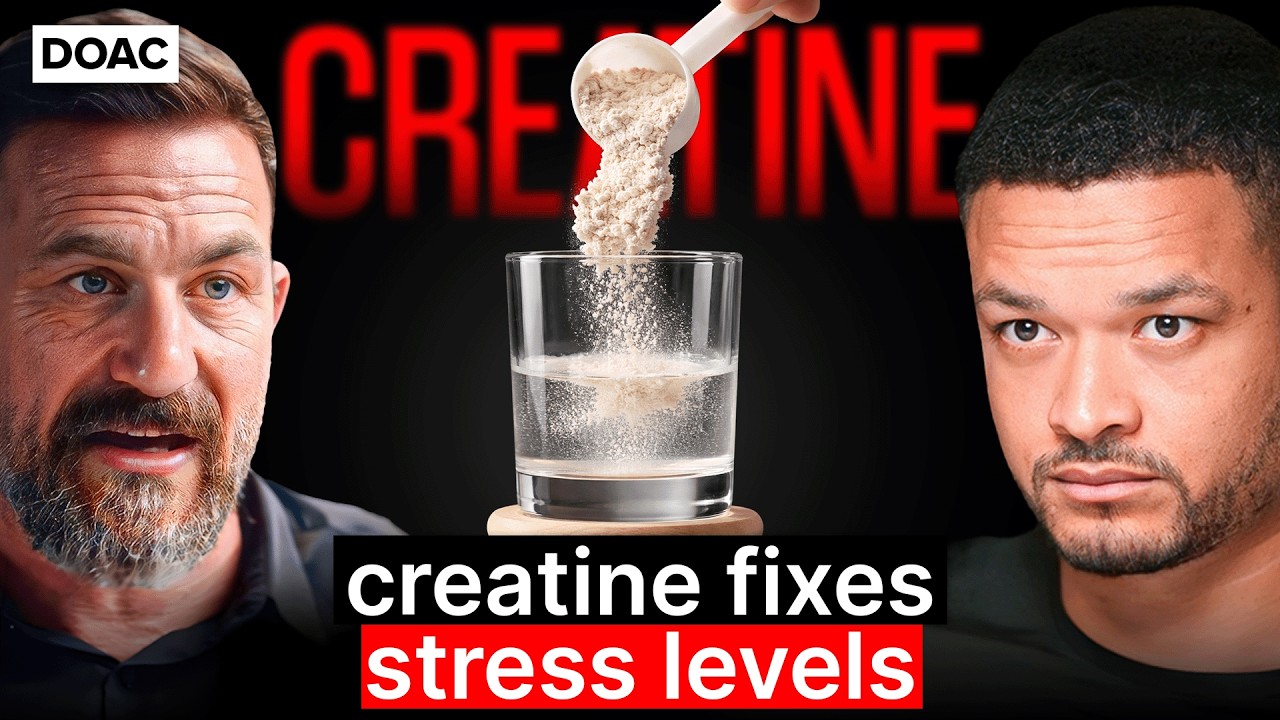
This special Christmas episode of the Diary of a CEO podcast compiles the most impactful, listener-replayed moments from the host’s interviews with leading neuroscientists throughout the year, all focused on optimizing brain health. The central idea is that the brain is the most powerful asset we have—governing thoughts, feelings, relationships, and memory—and that small, science-backed daily habits can profoundly improve its function, resilience, and longevity. The episode covers exercise, sleep, diet, supplements like creatine, social connection, neuroplasticity, nitric oxide, and emerging threats like microplastics and AI overuse.
Exercise: The Single Most Powerful Brain Booster
Aerobic exercise is the gold standard: Any activity that raises your heart rate—power walking, soccer, spin classes—triggers the release of growth factors that grow new brain cells in the hippocampus, the memory center.
Dose matters, but every bit counts: In low-fit people, just 2–3 sessions per week of 45 minutes led to significant improvements in mood, memory, and attention. In already-active people, more exercise (up to 7 times weekly) produced even greater brain benefits—hippocampal function, prefrontal cortex performance, and mood all improved incrementally with each additional session.
Immediate cognitive benefits: A single workout before speaking or performing boosts focus (via dopamine to the prefrontal cortex), reaction time (via motor cortex activation), and mood (via serotonin, dopamine, and norepinephrine). The host now exercises in his green room before stage talks.
Mindset shift: Reframe exercise not as an obligation but as a gift to your brain—one that pays off cognitively and emotionally every single day.
Sleep: Non-Negotiable Brain Maintenance
Sleep deprivation is literally dangerous: Prolonged sleep loss can be fatal; the brain cannot function without adequate rest.
Two critical functions of sleep:
Memory consolidation: The hippocampus replays and strengthens the day’s memories during sleep. Skipping sleep means failing to retain what you’ve learned.
Toxin clearance: Cerebral spinal fluid flushes out metabolic waste (like amyloid plaques) during sleep. Without enough sleep, your brain becomes “gunky”—leading to brain fog and long-term risk of neurodegeneration.
Practical takeaway: Prioritize 7–8 hours nightly. Avoid sacrificing sleep for Netflix or late-night scrolling.
Diet and Supplements for Brain Health
Mediterranean diet is best: Emphasize colorful, nonprocessed foods—vegetables, fruits, whole grains, healthy fats, and lean proteins. Minimize processed foods.
Creatine is a brain game-changer:
Traditionally seen as a gym supplement, creatine is now recognized for powerful brain benefits—especially under stress (sleep deprivation, high cognitive load, depression, or neurodegenerative disease).
The body makes 1–3g daily, but supplementing with 10g/day (vs. the standard 5g for muscles) increases creatine levels in the brain. Under acute stress (e.g., jet lag), doses of 20–25g can negate cognitive deficits—even outperforming well-rested individuals.
No loading phase needed unless you’re preparing for competition. Daily 5g saturates muscles in ~4 weeks; higher doses benefit the brain immediately.
Vegans benefit most: Since creatine comes mainly from meat, fish, and dairy, vegans often report dramatic energy and cognitive improvements when supplementing.
Emerging evidence: A 2025 pilot study showed 20g/day improved cognition in Alzheimer’s patients. Creatine also enhanced outcomes when combined with CBT for depression.
Avoid sugar: High-glycemic foods spike blood glucose, which “sticks” to proteins and enzymes, destroying nitric oxide production and increasing risks of diabetes, neuropathy, retinopathy, and Alzheimer’s.
Social Connection: A Biological Necessity
Loneliness shrinks the brain: Chronic loneliness causes long-term stress that damages the hippocampus and increases dementia risk.
More connections = longer life: Even brief interactions (e.g., greeting a barista) correlate with greater longevity. Strong social ties are the #1 predictor of happiness, per Harvard’s 80-year study.
Happiness = relationships: Not wealth, fame, or achievement—but the depth and strength of your social bonds.
Neuroplasticity: You Can Change Your Brain at Any Age
The brain is not fixed: Neuroplasticity—the reordering and strengthening of neural connections—continues throughout life. You are not stuck with the brain you had at 16 or 25.
How it works in adults: Unlike children (whose brains change passively), adults need alertness + focused attention to trigger plasticity. This shifts neurochemicals (dopamine, epinephrine, norepinephrine), creating “cones of attention” that prime the brain for rewiring.
Sleep consolidates learning: The actual rewiring happens during sleep or rest after focused effort.
Fear vs. love: Fear (e.g., fear of failure) can powerfully motivate change, but sustained transformation comes from love of craft or purpose.
One-trial learning: Traumatic events create lasting memories due to adrenaline surges—but therapy can remove the emotional charge while preserving the memory.
Nitric Oxide: The Molecule That Prevents Alzheimer’s
What it is: Nitric oxide (NO)—not nitrous oxide—is a gas produced in blood vessel walls that regulates blood flow, oxygen delivery, stem cell mobilization, and inflammation.
Deficiency starts at age 30: NO levels drop 80–90% between ages 30–70, driving erectile dysfunction (an early warning sign), high blood pressure, diabetes, and Alzheimer’s.
Alzheimer’s is vascular: NO deficiency reduces brain blood flow, impairs glucose uptake, increases inflammation and oxidative stress, and allows amyloid plaques and tangles to form. Restoring NO addresses all these root causes.
Boost NO naturally: Avoid sugar and processed foods. Eat balanced meals with quality protein, healthy fats, and low carbs. Exercise also stimulates NO production.
Habits That Help or Harm the Brain
Good:
Paddle/pickleball: Coordination-heavy sports activate the cerebellum, which in turn stimulates the frontal lobes—improving planning, focus, and emotional regulation.
Neuroplasticity apps + exercise: Doing memory games while on a stationary bike increases hippocampal blood flow and retention.
Meditation (Kirtan Kriya): A 12-minute practice (2 min loud, 2 min whisper, 4 min silent, 2 min whisper, 2 min loud) of chanting “Sat Nam” strengthens frontal lobe function and calms the emotional brain after 8 weeks.
Loving your job: Engaging, learning-rich work protects against Alzheimer’s. Stagnant jobs increase risk.
Breathwork: The 15-second breath (4 sec in, 1.5 hold, 8 sec out, 1.5 hold) repeated 4–5 times calms panic by increasing vagal tone.
Bad:
Chronic stress/workaholism: Elevated cortisol shrinks the hippocampus and increases belly fat. Only harmful if the work lacks purpose or joy.
Social media overuse: Constant comparison to curated, unreal lives fuels negativity and anxiety.
Microplastics: Major cause of hormone disruption, cancer, and neurotoxicity. Avoid plastic water bottles.
Noise pollution: Hearing loss is a top risk factor for Alzheimer’s—partly because the brain atrophies without auditory input, and partly because people fill silence with negative assumptions.
AI overreliance: In the short term, AI reduces cognitive effort, which weakens brain development. The key is to use AI as a tool, not a replacement for thinking.
Natural Brain-Boosting Remedies
Curcumin (turmeric): Upregulates antioxidant defenses, reduces oxidative stress, and rivals ibuprofen for pain relief. Works via the gut microbiome—even if not fully absorbed into blood.
Green tea: Rich in polyphenols that support the neurovascular unit (formerly “blood-brain barrier”). Linked to lower dementia risk and improved memory, attention, and cognitive function. Drink it regularly—preferably as a brewed tea, not a supplement.
Rosemary: Inhaling its volatile oils directly stimulates the olfactory lobe and limbic system. Shakespeare referenced it for remembrance; modern studies show it may improve cognitive performance in older adults.
Dark chocolate (75%+ cocoa): 50–100g daily improves blood flow to the brain and heart within minutes. Contains stimulants similar to coffee but with uplifting, heart-opening effects. Avoid sugary hot chocolate mixes—opt for high-cocoa, low-sugar bars.
Ginkgo biloba (GBE): Used in Europe for cardiovascular and cognitive support; works via similar vascular mechanisms as green tea and rosemary.
Final Insight: Your Brain Is Your Future
Every thought, memory, relationship, and opportunity begins in the brain. Protecting it isn’t vanity—it’s foundational to a meaningful life. The science is clear: small, consistent actions—moving your body, sleeping deeply, eating real food, connecting with others, challenging your mind, and avoiding toxins—compound into a bigger, healthier, more resilient brain. And it’s never too late to start.