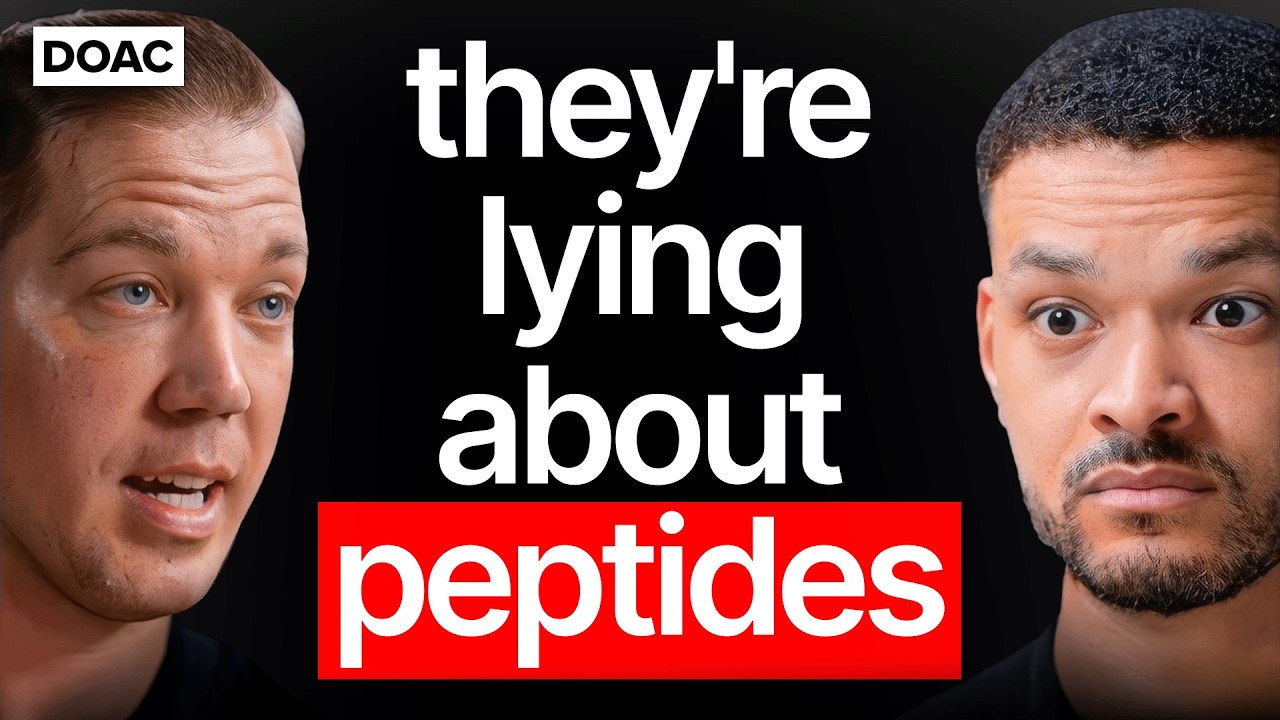
Peptides are short chains of amino acids that act like targeted keys unlocking specific cellular receptors, offering precise effects with fewer side effects than traditional small-molecule drugs. They’ve exploded in popularity due to a combination of regulatory shifts, social media, and growing interest in anti-aging, metabolic health, and performance optimization. Dr. Alex Tatem, a urologist specializing in men’s health and peptide therapy, explains how these compounds work, why they were banned, and what their re-legalization could mean for public health.
What Peptides Are and How They Work
Peptides are fragments of proteins made from amino acids—the “Legos” of the body—that bind to specific receptors like a key in a lock, triggering targeted biological responses.
Unlike broad-acting small-molecule drugs (e.g., aspirin), peptides have highly specific effects, reducing off-target side effects.
Insulin was the first medically used peptide (1921); Lupron (1985) is another example used in prostate cancer.
BPC-157 is a synthetic version of a gut-derived peptide that promotes blood vessel growth and tissue repair.
In animal studies, it healed completely severed Achilles tendons in rats.
It has an exceptional safety profile: no LD1 (lethal dose for 1% of population) has ever been identified, suggesting high tolerability.
Why Peptides Were Banned—and Why They’re Coming Back
In 2013, the Supreme Court ruled in Myriad Genetics that natural human genes can’t be patented, removing pharma’s financial incentive to develop non-patentable compounds like many peptides.
A 2012 compounding pharmacy scandal led the FDA to tighten regulations, categorizing peptides into three groups:
Category 1: Allowed for compounding (initially included many promising peptides).
Category 2: Banned due to safety concerns (moved 19 popular peptides here in 2023).
Category 3: Needs more data.
The 2023 ban lacked evidence of harm—peptides were widely used with no reported adverse events—but coincided with commercial pharma’s interest in protecting profitable drug markets.
Critics argue pharma lobbied against peptides because they’re hard to patent and divert spending from branded drugs.
In July 2024, the FDA will consider re-legalizing seven peptides—including BPC-157, TB-500, KPV, MOTS-c, DSIP, epithalon, and C-Max—moving them back to Category 1.
How People Are Accessing Peptides Now
Despite the ban, a gray market sells “research use only” peptides online, often with no quality control—risking contamination or incorrect dosing.
Most peptides must be injected subcutaneously (under the skin) because digestion breaks them down like food.
Exception: Some forms of BPC-157 survive oral administration.
Compounding pharmacies (503A facilities) can customize doses—e.g., splitting weekly tirzepatide into microdoses to reduce side effects—but face aggressive FDA crackdowns under pressure from Lilly and Novo Nordisk.
Tirzepatide (Mounjaro) is a dual agonist; retatrutide (coming soon) adds glucagon activation, showing unprecedented fat loss and liver health improvements.
BPC-157 & TB-500: Promote healing via angiogenesis (new blood vessel formation); used for injuries, gut ulcers.
GHK-Cu: Topical copper peptide that boosts collagen/elastin, improving skin quality and reducing signs of aging.
Real-World Impact: Fertility, Metabolic Health, and Beyond
Obesity-driven metabolic dysfunction is a leading cause of declining male fertility.
One patient increased sperm count 10x after losing 100 lbs on tirzepatide—reversing infertility rooted in insulin resistance.
Peptides may help reverse the decades-long decline in sperm count linked to microplastics, toxins, and metabolic disease.
GLP-1s are transforming outcomes in type 2 diabetes, NASH (fatty liver), and cardiovascular risk—but rapid weight loss risks muscle loss.
Future solutions: Myostatin inhibitors (e.g., bimagrumab) to preserve muscle during caloric deficits.
Trade-offs and Cautions
No free lunch: All peptides have trade-offs.
Growth hormone boosts can cause insulin resistance, joint swelling, or acromegaly if overused.
Stopping GLP-1s without lifestyle changes leads to weight regain.
Safety concerns with unregulated products: Unknown purity, dosing accuracy, or endotoxin contamination in research-only vials.
Not magic bullets: Peptides support—but don’t replace—diet, exercise, and professional medical guidance.
The Bigger Picture: Access, Equity, and Innovation
Pharma’s profit motive conflicts with accessible, non-patentable therapies—creating tension between innovation and public good.
Silicon Valley biohackers embrace peptides for cognitive and physical edge, drawn to their flexibility and DIY potential.
The Enhanced Games (May 2024, Las Vegas) will allow performance-enhancing drugs under medical supervision, challenging Olympic doping norms and athlete pay inequity.
Dr. Tatem advocates for legal, regulated access so all patients—not just the wealthy—can benefit.
Final Thoughts
Peptides represent a paradigm shift: targeted, versatile tools for healing, longevity, and metabolic restoration.
Their future hinges on regulatory decisions, physician education, and ethical advocacy to ensure equitable access.
As Dr. Tatem emphasizes: “Health is for everyone, not just for the fortunate.”