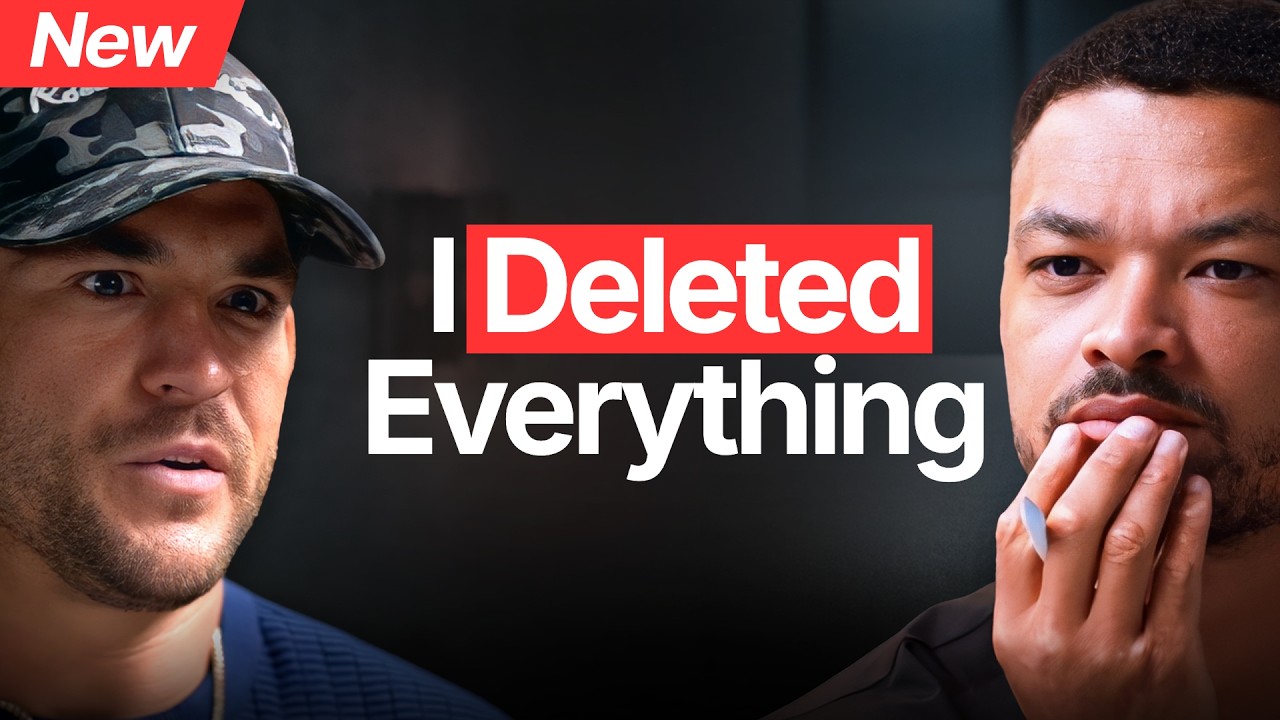
Dustin Poirier, retired UFC lightweight contender and former interim champion, opens up about his recent arrest for public intoxication at an Atlanta airport on Father’s Day 2024, the childhood trauma and family dynamics that shaped him, his ongoing battle with depression, the void left by retiring from fighting, and his efforts to rebuild his life and purpose at age 37.
The Airport Incident and Its Immediate Aftermath
On Father’s Day 2024, Poirier felt a depressive episode hit him hard while traveling for a three-leg work trip (South Florida, LA, Las Vegas); he started drinking in the airport, got into a confrontation with a gate agent, and was arrested for public intoxication.
He has no memory of the altercation; police body-cam footage shows him offering to fight an officer, then later dapping him up and praising his professionalism — Poirier has refused to watch the video, saying it would only drag him down.
He spent a night in jail, was released on bond, and immediately deleted all social media apps; he lost at least one major sponsor and several booked gigs, and his CBS/Paramount contract status is uncertain.
His wife Jolie, his partner since middle school, was called by police while he was in custody; their reunion was painful — he apologized repeatedly, she told him it cannot happen again, and he committed to quitting alcohol for life.
Childhood Foundations: Violence, Alcohol, and Instability
Poirier grew up in Lafayette, Louisiana, in a working-class family; his parents divorced when he was in kindergarten or first grade, and his early memories of them together involve physical fighting and violence.
His father has been an alcoholic his entire life; Poirier visited him every other weekend, witnessing the chaos firsthand — his father has ruined marriages, friendships, and relationships with his children, and is currently homeless.
Poirier started drinking at age 12 or 13, was expelled from school for fighting at 14, and spent time in juvenile detention after violating probation (truancy, failed drug test, assault).
He had no goals, no focus, and no outlet; he describes himself as a happy kid but one carrying unprocessed pain — his mother and grandmother raised him and remained his constants.
Two older brothers grew up with him; a half-sister from his father appeared when Poirier was in his mid-20s.
Fighting as Therapy and the Terror of Retirement
Fighting became Poirier’s therapy, his structure, his daily purpose — “every day I could get up and push myself to be better, to answer a new question” — and he feared losing that outlet.
He retired in July 2023 at age 36 after a farewell fight in New Orleans; the gloves on the mat felt like leaving a piece of himself behind — “if a man’s lucky, he gets to die twice,” a friend told him, and the fighter in him died that night.
Post-retirement, days are long and unstructured; he oscillates between feeling at peace as a present father and waking up convinced he can still beat the current top lightweights — “some days I’m like, what the fuck am I doing? I can beat these guys still.”
He has spoken publicly about this void on Theo Von’s and Joe Rogan’s podcasts; those clips resurfaced after his arrest, giving the public context and generating widespread sympathy rather than condemnation.
No post-career support system exists in the UFC; Poirier believes there should be a structured transition program, noting the pattern of retired athletes spiraling into addiction, financial ruin, or legal trouble.
Depression, Therapy, and the Role of Alcohol
Poirier has experienced depressive episodes for years, intensifying after his 2022 loss to Justin Gaethje; he began therapy, felt better, stopped going, and the darkness returned — he now understands therapy is lifelong maintenance, not a one-time fix.
His wife recognized his patterns before he did — social avoidance, anxiety, mood swings — and he traces some roots to childhood: absent father, violence in the home, parental addiction.
Alcohol has always been a dangerous accelerant for him — “if I drink, we’re drinking till the bottles gone” — and he knows 90% of the time it leads to excess; he quit for years during fight camps but slipped back after retirement.
After the airport arrest, he committed to total sobriety: “it’s not benefiting me in any way… I’m going to cut it off completely” — he acknowledges social friction but says daily life without alcohol is not hard for him.
The Father Wound: A Cycle He Cannot Break
Poirier’s father, 74–75, is homeless, living in a truck his daughter gave him, shoeless, drinking himself to death — Poirier and his sister are the only children still trying to help; the others have cut ties.
On Father’s Day week, a photo surfaced of his father half-dressed behind a business; Poirier drove to the sheriff’s office to file an Order of Protective Custody, but his father appeared lucid at pickup and was released.
Poirier carries guilt and grief but draws a boundary: “that’s not my weight to carry… I’m a father now too. I got to look out for me and mine. I can’t babysit my father.”
He fears the inevitable call announcing his father’s death; his mother, remarried and distant from the situation, only recently learned her ex-husband was homeless.
Brain Health, CTE Fears, and Impulse Control
Poirier underwent a neurological scan with contrast a few years ago; it revealed scarring, thinning in the posterior brain, and a significantly separated septum pellucidum — the neurologist suspects impaired inter-hemispheric communication from head trauma.
CTE can only be confirmed post-mortem; Poirier played football growing up and fought for two decades — “my head’s been rattled a good bit.”
He notices increased impulsivity: spontaneous large bets, sudden decisions to get blackout drunk — but hesitates to attribute everything to brain trauma, saying “when you’re scrambling for answers, it’s easy to draw lines.”
Professional Path Forward: Broadcasting, Business, and Purpose
Poirier proactively pursued a broadcasting career post-retirement, telling CBS/Paramount he was coachable, wanted feedback, and would treat it like a fight camp — he enjoyed the desk work and fears losing it.
He has a podcast in South Florida (returning in two weeks), businesses in Louisiana, and has invested since age 23 — he is financially set for life and does not need to work.
He wants a new “terrifying” goal to replace fighting — something that consumes him the way the sport did — but has not found it yet; nothing fills that void, not even fatherhood, though he loves it deeply.
He estimates a 5% chance of returning to the UFC, trending down — the logistical hurdles (USADA re-entry, six months clean testing, wife’s approval, another camp) are massive.
The Good Fight Foundation: Service as Identity
In 2018, Poirier and Jolie founded the Good Fight Foundation after auctioning fight gear to support a fallen officer’s family; it became a nonprofit, now running annual back-to-school drives (1,300+ packed backpacks), food pantry support, and water wells in Uganda.
The foundation is lean — no paid staff, bulk purchasing, volunteers packing every bag — and won the inaugural Forrest Griffin Community Award in 2020.
Poirier sees it as stacking purpose on his back: “fighting was going to benefit me and my family… why couldn’t I stack more on my back and go in with a cause?”
Closing Reflections
Poirier is on vacation with family in Florida, staying off the internet, focusing on good mornings — reading, writing, doing something hard daily — and continuing therapy.
He wants to leave the world better than he found it, teach his kids the same, and be patient with himself — “patience is a virtue I wasn’t blessed with. But I’m working on it. Every single day.”