Paul Rosolie spent 20 years living barefoot in the Amazon rainforest with a machete, befriending indigenous communities and eventually co-founding Jungle Keepers, an organization that now protects 130,000 acres of rainforest and employs former loggers and gold miners as conservation rangers. He’s on the cusp of creating a national park to save an entire watershed. His story is about how a teenager seeking adventure found meaning in the fight to save the Amazon, and how that fight led him into contact with one of the last uncontacted tribes on Earth.
The Amazon’s True Scale and Importance
The Amazon is larger than the lower 48 US states and is one of the most physically defining features of Earth when viewed from space
It contains one-fifth of the world’s fresh water and produces one-fifth of its oxygen
The canopy rises 150–160 feet, and half of all rainforest life exists up there, making it the most biodiverse terrestrial biome in the entire fossil record
There are still parts of the Amazon that no human has ever visited
The central misunderstanding is one of scale: people don’t grasp that if the Amazon’s ecosystems collapse, life on Earth is not possible, and we are the last generation that can still restore them
From Troubled Kid to Jungle Keeper
Rosolie was a high school dropout who was simultaneously suspended and in American Mensa, brilliant but unable to function in a classroom
He took his GED at 16 to leave school early on the condition he attend university part-time, freeing him to spend semesters in the Amazon
At 18, he booked the most remote research station he could find, two days by boat from the nearest city in Peru, run by an indigenous man named JJ
JJ was a member of the Siebera tribe, whose family knowledge of the forest stretched back countless generations
He could read animal tracks on a beach like a newspaper, track jaguars, fish with his own callus as bait, and stun fish with barbasco root
Rosolie knew snakes; JJ knew everything else. They traded skills and became family
JJ invited Rosolie on a 10-day family hunting expedition into areas only indigenous people were allowed, launching his real education
Witnessing Destruction and Finding a Mission
The turning point came when Rosolie and JJ watched loggers burn ancient forest they had come to love
Trees over a thousand years old, species never described by science, incinerated in front of them
The symphonic roar of life silenced, replaced by smoldering ground
JJ looked around and said, “Do you see anybody? You have to do something.”
At 19 or 20, with no PhD, no money, no media presence, just bare feet and a machete, Rosolie committed to saving the wildest river basin they knew
That river had remained wild for centuries because it was protected by the Mashco-Piro, a nomadic uncontacted tribe whose violent reputation kept outsiders away
Over 20 years, Rosolie and JJ built Jungle Keepers from nothing into an organization that has turned loggers and gold miners into conservation rangers, protecting 130,000 acres
First Contact with an Uncontacted Tribe
About a year before this conversation, the indigenous communities Jungle Keepers works with called to say the Mashco-Piro tribe was coming out of the forest for the first time in 10 years
Rosolie and his team made a two-day boat journey in one night through the worst thunderstorm he’d ever seen, navigating by crocodile eyes reflecting flashlight beams
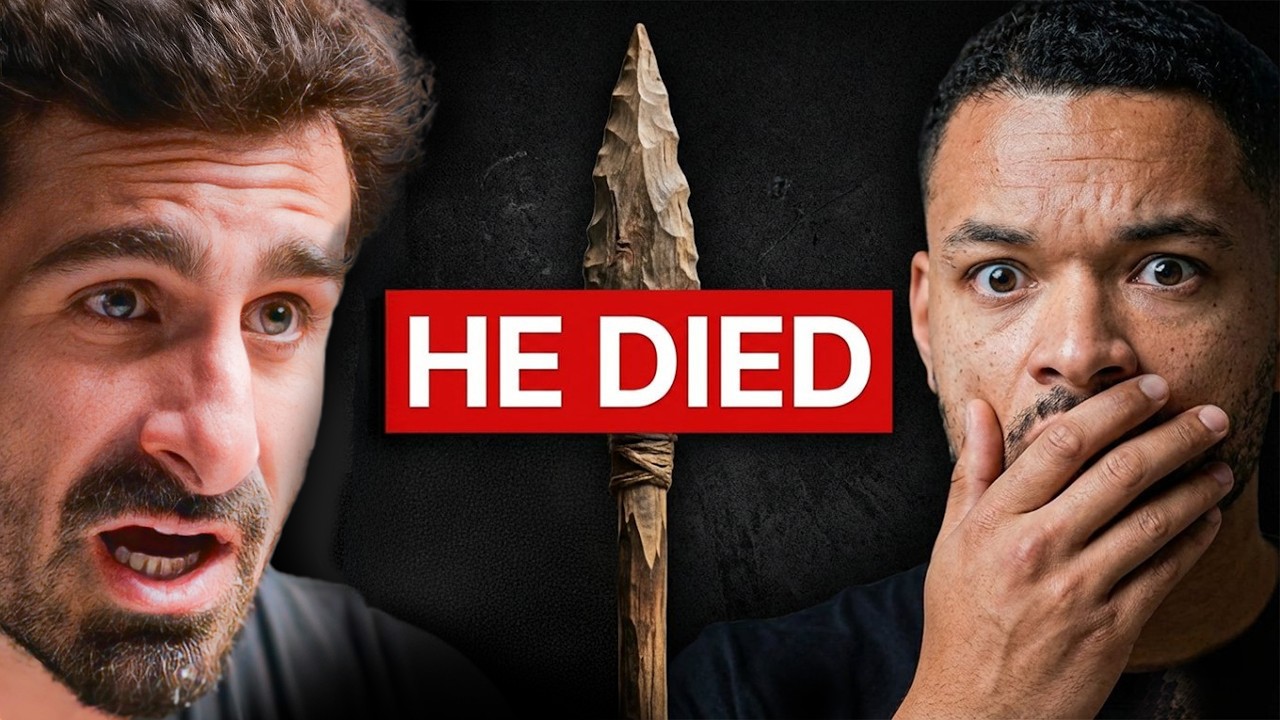
When they arrived, the tribe had already left, but one fisherman had been shot at with a 7-foot bamboo-tipped arrow that ricocheted off his leather belt
Ignacio, a ranger who had previously been shot in the head by one of these arrows during a peaceful contact attempt, told Rosolie: “They’re coming. You’d be an idiot to leave.”
The tribe emerged the next morning: naked men with 7-foot bows and arrows, penises tied up with rope, faces painted red, walking out of the jungle across the river
An anthropologist present said they were still in the “bamboo age” with no stone tools, living as hunter-gatherers so isolated they were like a time capsule a thousand years removed from modernity
They communicated through the anthropologist using approximate shared language with the Yine people
Their first request was food: bananas and plantains, which they grabbed desperately, each person hoarding their own
While the men negotiated at the river, hidden women raided the indigenous community’s farm behind them, pulling up all the yuca, plantains, and sugarcane
What the Tribe Revealed About Their World
The tribe members were all men, estimated ages 12 to 45; no older people were seen, and the women stayed hidden
They appeared to have two leaders, brothers based on appearance, who did most of the communicating
They were tall compared to local Peruvians, well-muscled, and healthy
They carried rope obsessively, which they use for bowstrings, arrows, lashing, and as their only clothing
They communicated with each other using animal calls, particularly capuchin monkey sounds, to surround prey or enemies without detection
Local people know to listen for animals sounding “off” as a warning sign the tribe is nearby
They had one critical question for the outsiders: “How do we tell the bad guys from the good guys?”
They said some outsiders shoot them with “fire sticks” and cut down their trees, which they consider gods
They don’t know the country of Peru exists, have never heard of a spoon or the wheel, and have no concept of law or government
They are being boxed in by deforestation and hunted by narcotraffickers; a mass grave of a similar clan was recently found
After the encounter, tribe member George was shot through the torso by an arrow the next day when he rounded a riverbend unexpectedly, the arrow entering over his scapula and exiting near his belly button, collapsing his lung. He survived but was permanently injured.
Why This Footage Matters and Why It Was Released
Rosolie released world-first video footage of this encounter because the tribe cannot advocate for themselves
They cannot come on a podcast, address the United Nations, or write a petition
Their only hope is if the outside world protects the forest they live in
The footage was held back initially to prevent people from seeking out the tribe, as common pathogens carried by outsiders could wipe them out
Rapid contact with uncontacted tribes has historically destroyed them through disease, alcohol, and cultural disintegration
The ethical path is to protect their forest and let them maintain agency over any future contact
Jungle Keepers now protects the very land the Mashco-Piro live on, though the tribe doesn’t know this
What the Jungle Taught Rosolie About Transformation
Living in the wild triggers a physical and neurological transformation
The anterior midcingulate cortex, a brain region between emotional and executive centers, grows when you do hard things you don’t want to do but do anyway
This region is smaller in obese people and the doom-scrolling generation, larger in athletes and people who live longer
Rosolie compares this to Theodore Roosevelt’s two years in the Badlands after losing his mother and wife on the same day, which transformed him into the man who became the youngest US president
Rosolie went on 10-day solo survival trips into unnamed parts of the Amazon, hiking to places so remote the animals had never seen a human
He was driven by a need to verify for himself whether environmental collapse was as bad as he’d been told, refusing to learn through a screen
His body is now covered in scars from crocodile bites, infections, near-death experiences with elephants, and being hunted by narcotraffickers
The Eaten Alive Disaster and How Failure Saved His Mission
At 24, Rosolie was approached by Discovery Channel to do a show about anacondas in the Amazon
He agreed because he thought it would give him a platform to reach millions with a conservation message
The show was promised to be called “Expedition Amazon” with real science and conservation content
After six weeks of groundbreaking research, including catching Eleanor, the largest scientifically measured anaconda at 18’6” and over 100 kilos, the producers revealed the show had been renamed “Eaten Alive”
The science and conservation message were cut; only the stunt remained
Rosolie had agreed to wear a protective suit and let an anaconda constrict him to demonstrate that snakes are not the monsters people think
The stunt failed because snake handlers had wrapped the snake around him unnaturally; the snake had no interest in eating him
The backlash was severe: the public felt lied to, PETA was angry, scientists dismissed him as a thrill-seeker, and he was essentially blacklisted from conservation work for years
He called this the best thing that ever happened to him because it sent him back to the jungle for another decade of real experience and forced him to develop an actual system for saving the forest rather than relying on media
He spent the first 15 years with no paycheck, no health insurance, no security, living out of a backpack and a boat
The Lowest Point and the Breakthrough
At 32–33, after his first book failed to gain traction, after years of striking flint with no fire, Rosolie hit his lowest point
His father gently suggested he might need to “jump ship and start over,” which devastated him
During COVID, Peru was the hardest-hit country in the world; his entire team and their families were on oxygen tanks, and Jungle Keepers bankrupted themselves sending money for medical supplies
He called his best friend Mosén and said he was quitting, that he’d been doing this for 15 years and was out of gas and ideas
Exactly one week after that phone call, billionaire Dax Silva reached out
He had seen Rosolie’s video saying they had the people, the plan, and the infrastructure to save the river and just needed funding
He committed to a five-year funding deal, providing salaries for rangers and protecting an additional 100,000 acres
This was the moment the wave they had been waiting for finally arrived, validating years of relentless effort with no visible return
Jungle Keepers: The Model for Saving the Amazon
Jungle Keepers works by employing local people, including former loggers and gold miners, as conservation rangers protecting their own land
Indigenous communities are given sustainable jobs as rangers, boat drivers, guides, and handymen instead of being forced into logging for cash
The organization uses social media and modern technology rather than traditional grant writing and government deals
Donors from around the world contribute as little as the price of a Starbucks coffee per month at junglekeepers.org
The model protects not just trees but entire ecosystems: endangered species, uncontacted tribes, and the “millennium trees” that are skyscrapers of life
Rosolie built a treehouse at the edge of the reserve so donors and visitors can see the forest they’re protecting and, looking the other direction, the wasteland that results when the Amazon is not protected
There is an invisible “mist river” above the Amazon canopy, larger than the Amazon River itself, that Rosolie first saw after climbing the tallest tree at dawn
Indigenous Knowledge and Jungle Medicine
Indigenous knowledge systems represent technologies modern science doesn’t have
When Rosolie had a rare, antibiotic-resistant infection (tularemia) that two months of strong antibiotics couldn’t touch, JJ cut a tree, collected the white sap, sealed the infection with it, and gave him a leaf juice concoction. The infection was neutralized overnight.
When Rosolie was stung by a stingray, JJ’s nephew and brother collected two kinds of bark, boiled them, and sucked the venom out with plant medicine
These cultures are being lost as roads, cities, and the internet draw young people away, causing languages and knowledge to disappear within a generation
Anthropologist Wade Davis described each culture as “a different blossom on the same vine,” not a failed attempt at being Western
Snakes, Fear, and the Misconception About Danger
Rosolie brought three snakes to the conversation to demonstrate that snakes are not the monsters people think
A baby ball python, completely harmless, which the host held for the first time in his life
A larger ball python, showing the surprising muscular power even in a “small” constrictor
A Burmese python, which could eventually grow to 18 feet and kill a deer, draped across the host’s shoulders to feel its strength
The key insight: no snake wants to deal with a human. Every snake, when placed on a table, tries to find the darkest spot and hide. They are not aggressive; they are defensive and want to be left alone.
The host’s fear melted into fascination as he felt the snake’s muscles move and realized it was just looking for a place to rest
Technology, AI, and the Future of Nature
Rosolie sees the current hysteria about AI and humanoid robots as overblown and disconnected from the real crisis
He compares it to Y2K panic and notes that people have been predicting flying cars for decades without getting them
His view: “Go outside, touch some grass. We are the engineers of our reality. Fix this planet before colonizing Mars.”
He believes technology will actually increase people’s appreciation for nature, community, and irreplaceable human experiences
As AI makes cities less necessary for collective labor, people will increasingly seek out natural places for their mental health and well-being
The Maslovian need for trees, water, and sky will remain constant regardless of technological advancement
He deliberately avoids social media news cycles and doom scrolling, curating his feed to show only conservation work and art, because consuming a thousand tragedies a day sends your brain on fire
Ayahuasca and the Spirit World
Rosolie’s experience with ayahuasca was unintentionally extreme because the 80-year-old shaman fell asleep while brewing it, over-concocting the dose
He experienced what he describes as the creation of the universe, the Big Bang, shapeless existence between solar systems, and taking the form of different animals
He felt he died and came back, accessing rooms in a “mansion” he never knew existed
The shaman was found the next morning lying naked in a stream “like ET” and retired from shamanism for a week
Indigenous people believe ayahuasca is a gift from the gods, a link between the spirit world and our world, and that the Amazon was formed when the anaconda god slipped out of the Milky Way and carved the rivers
Finding Love and Building a Life Between Two Worlds
Rosolie recently married after meeting his wife at a talk about the Amazon in California
Both had reached the point where they thought their lifestyles made relationships impossible
He tested compatibility by taking her crocodile catching on her first night in the jungle; they caught a caiman together and floated down the river holding hands under the Milky Way
He proposed in the treehouse above the jungle canopy
She now manages the organizational side of his life, reminding him to thank donors and explain things to people, while he focuses on the jungle work
What It Takes to Change the World
Rosolie’s core message is about relentlessness: the master has failed more times than the beginner has even tried
He burned his boats with no plan B, which he doesn’t necessarily recommend, but it forced him to keep swinging the hammer
The key is finding something you love so deeply that the obsession sustains you through years of no visible progress
His advice to young people: find a master doing the work you want to emulate and spend five years working for them before trying to start your own project
Don’t ask permission; show up, help with their bags, make yourself useful, and learn everything
Build irrefutable proof of who you are through logged hours of genuine work
He believes meaning comes directly from the amount of responsibility you take on
For him, meaning is found in the rain, the rocks, the chemical physical cycles of the universe, and the simple truth that if you want to eat, you get a fish
He sees science as the language of God, not an opposing force, and believes humans are meant to be stewards of the rest of life on Earth
When asked what he’d regret if he had three years left to live: not finishing the mission. “We’re still in the barrel of the wave, and we’re not done yet.”