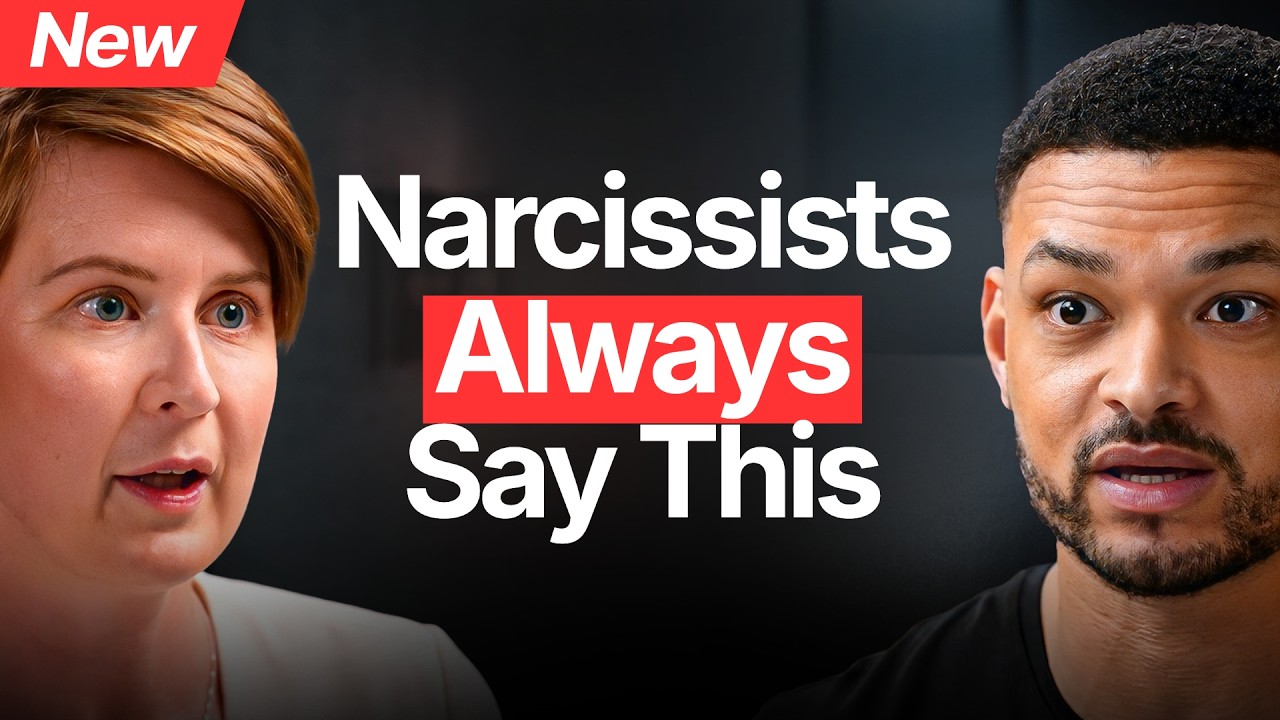
Dr. Leanne Ten Brinke, a psychology professor who studies dark personality traits and deception, explains how to recognize and manage people with psychopathy, narcissism, Machiavellianism, and sadism — the “dark tetrad” — drawing on lab research, brain imaging, and real-world studies of leaders, criminals, and everyday interactions.
Why This Research Matters
Ten Brinke studies deception and dark traits to make people less cynical about human nature; understanding these patterns gives practical tools for better interactions and a more accurate worldview.
Public fascination with psychopathy stems from its stark contrast to most people’s experience of empathy, honesty, and rule-following, plus a desire to avoid victimization.
Spotting Psychopathy in Seconds
Naive observers can detect psychopathic traits from 5-second video clips with reasonable correlation to clinical assessments.
Key cues: Duchenne smiles (genuine-looking smiles with eye crinkling/crow’s feet) paired with hostile language, and frequent illustrator hand gestures.
These micro-behaviors give observers a “kernel of truth,” though personality is best judged across time and context.
Facial Expressions and High-Stakes Deception
Genuine sadness involves downturned lip corners plus inner eyebrows pulling up and together; liars often show a surprise-like expression (whole eyebrows up, not together) instead.
In Ten Brinke’s PhD work, four verbal and nonverbal cues predicted guilt in televised pleas for missing loved ones with ~90% accuracy, though replication yielded more modest effects.
Verbal markers of deception: fewer words, more tentative language (“if you see this come home or call”), leaving gray area; truth-tellers are precise and high-conviction (“when you see this, call me”).
Three Reliable Signs Someone Is Lying
Sparse or ambiguous information: liars give fewer details, especially when unprepared; truth-tellers can expand on request because they were there.
Embedded lies: liars often give rich detail on truthful parts of a story and almost none on the fabricated parts.
Visible cognitive effort: slow speech, fillers (um, uh), brow furrowing — though none are a “Pinocchio’s nose”; they are red flags to follow up on.
Learning to Detect Lies: Ask Better Questions
Untrained people average ~54% accuracy; training helps modestly, but learning to ask good questions is far more effective.
Use open-ended prompts (“Tell me about Friday night”) and unanticipated follow-ups (“What was in the deck?”) to increase cognitive load on a liar.
A single powerful heuristic: ask yourself how verifiable the statement is — this outperforms trying to integrate many weak behavioral cues.
The Eye-Contact Myth and Neurodivergence
The belief that liars avoid eye contact is false; liars often maintain or increase eye contact because they know the stereotype.
This misattribution harms neurodivergent people (e.g., autism) and those from cultures where reduced eye contact signals respect, leading to false deception judgments.
Mask of sanity: they can appear normal on the surface; the “operating system” underneath differs.
Myths and Prevalence
Myth: all high-psychopathy people are violent. Reality: psychopathy is a risk factor, but many score high without violence; rule-breaking takes many forms.
Prevalence (self-report agreement with trait items): ~10% of the population; clinical psychopathy ~1%; narcissistic personality disorder 2–5%.
Origins: ~50% genetic, ~50% environmental. Psychopathy/narcissism linked to abuse, cold/unresponsive parenting; narcissism also linked to parental overvaluation (“you’re special, better than others”) — distinct from warm responsiveness that builds healthy self-esteem.
Parenting intervention: warm, responsive parenting and reward-based (not punishment-based) reinforcement reduce callous-unemotional traits in children; kids with these traits are punishment-insensitive but reward-sensitive.
Brain Differences
Prefrontal cortex: less active/connected in high-psychopathy individuals — linked to impulse control and moral reasoning deficits.
Amygdala: smaller and less active — linked to low fear, poor aversive conditioning (don’t learn from punishment).
Can Dark Traits Be Changed?
Incarcerated offenders: low motivation to change (they don’t care about harming others); CBT can reduce recidivism if consistently engaged.
Lower trait levels: “agreeableness challenges” (daily prosocial acts) reduced self-reported dark traits over 4 months for those who complied.
Longitudinal reality: 93% of long-term observers reported behavior just as bad or worse after age 50; personality traits are enduring, and waiting for change is painful.
The Social Cost of Lying (Even “White” Lies)
In lab conversations where one person lied and the other was unsuspecting, liars were perceived as less warm, competent, and moral, and partners felt less connected.
Liars give fewer self-disclosures, disrupting reciprocal intimacy; the more people lie in daily life, the lonelier they feel.
Observers feel more sympathy and donate more to genuine vs. deceptive pleas for help — even without knowing who is lying — suggesting subtle, unconscious detection.
Warmth and Competence: Both Needed for Trust
Warmth = benevolent intentions (kind, honest, trustworthy); signaled by smiling, eye contact, leaning in, engaged listening.
Competence = ability to execute on intentions.
High warmth + high competence = high trustworthiness; resting “scowl” faces signal anger and reduce perceived warmth.
Dark Traits Don’t Produce Real Success
Psychopathy: associated with less influence in government and lower earnings for hedge fund managers (contrary to “successful psychopathy” myth).
Narcissism/Machiavellianism: may correlate with rank/salary gains, but teams perform worse; narcissists look like leaders initially (confidence mistaken for competence) but are later seen as hostile, non-contributing, and disruptive.
Psychopathic bosses: bully subordinates, create stress that spills into families, increase turnover and team division.
Reading Dating Profiles for Red Flags
Ryan (“savvy, strategic, persuasive”): Machiavellian cues — controlling, three-dimensional chess.
Haley (“hurricane,” “chaos,” “pranks,” “tough”): psychopathy (impulsivity, volatility) and sadism (delight in others’ discomfort).
David (surgeon, “life of the party,” “confident enough to pick the restaurant,” “admit when I’m wrong occasionally”): narcissism — attention-seeking, self-assured, low priority for partner.
Chad (law enforcement, “housetrained,” “independent,” “genuine”): few red flags; appears relatively healthy.
In-Person Cues on Dates or in Relationships
Interrupts often but refuses to tolerate interruption (impulsivity + dominance).
Talks mostly about self, little interest in you (narcissism).
Finds others’ struggles enjoyable, annoying, or boring (sadism).
Seven Rules for Dealing With Dark Personalities
1. Establish clear, explicit boundaries (written policies at work; verbalized limits in relationships). Rules reduce selfish behavior even in moderate trait-holders; enlist a “boundary buddy” for accountability.
2. Don’t give them power over others. They seek power but harm subordinates (stress, turnover, team division). If they already have authority, motivate change via their currency (money, status, bonuses), not compassion.
3. Use the carrot, not the stick. High-psychopathy individuals are reward-sensitive, punishment-insensitive (amygdala/prefrontal differences). Reward prosocial acts with things they value (status, title, bonus) to increase future occurrence.
4. Emphasize common identity. Narcissists respond better to negative feedback if they perceive shared group membership (same school, team, birthday) — loyalty tempers ego threat.
5. Become a detective of deception cues. Track sparse details, low verifiability, cognitive strain; follow up with “Tell me more.” Remember: no gaze aversion, no fidgeting.
6. Avoid face-to-face negotiations. In person, dark-trait individuals leverage charm/dominance to extract better deals; over text/email, that advantage disappears, you get a written record, time to consult others, and physical safety if violence is a risk.
7. Involve others / use whisper networks. Group judgments of personality and veracity are more accurate; gossip networks often flag Machiavellian individuals — treat as data, not gospel.
Three Common Mistakes
Believing nothing can be done — standard tools (guilt, punishment) fail, but the seven rules work.
Assuming they share your inner experience — they are not motivated by compassion, fairness, or guilt; negotiate using their goals.
Thinking you can change them — personality is enduring; aim to manage interactions, not transform them.
The Big Picture: Numbers and the “Great Lie”
90% of people are generally good, kind, honest, rule-following; the ~10% with elevated dark traits cause wildly outsized harm (e.g., 1% clinical psychopathy → ~50% of serious crime).
Mitigating damage from this small group dramatically improves lives, workplaces, and relationships.
The great lie: “To succeed, you must be ruthless and look out for number one.” Research shows the opposite — psychopathy predicts less influence and money; true success comes from bringing others along, earning prestige, respect, and care.