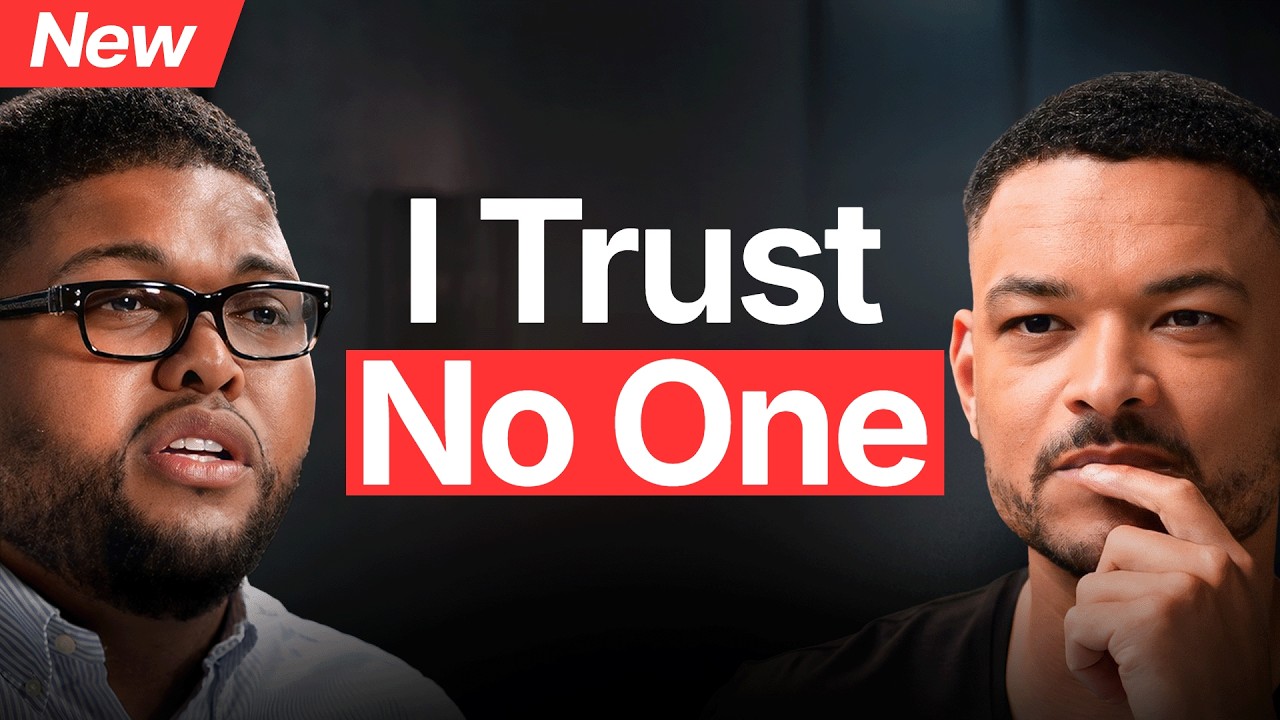
Druski (Drew Desbordes) rose from a turbulent childhood in Atlanta — marked by an abusive father, a brother diagnosed with schizophrenia and bipolar disorder, and a gunpoint robbery — to become one of comedy’s fastest-rising stars, building a multi-platform empire through relentless self-belief, strategic relationship-building, and a refusal to punch down in his humor.
Childhood and Family Dynamics
Druski grew up in a “broken home, not a broke home” — his father was a United Airlines pilot, his mother worked for the CDC — but his father’s teaching style was physically harsh and fear-based, offering only three life paths: school, a trade, or the military “get your ass blown off.”
The father’s volatile temper included hitting Druski and his brother for wrong answers (e.g., bringing a regular screwdriver instead of a Phillips), and Druski witnessed his mother being choked and pushed out the door, leaving him caught between parents at a young age.
Druski’s comedy emerged as a healing tool: he tried to lift the household mood after violent episodes, making his brother laugh after beatings (including one for bedwetting) and diffusing tension at the dinner table.
His mother was the counterbalance, constantly encouraging him to believe in himself, recording his performances from toddlerhood, and telling him to write down his goals — a habit that later anchored his career pivot.
Druski’s brother never found a coping mechanism for the trauma; Druski believes comedy saved him from a similar path, though the hypervigilance it bred comes with mental health costs he still navigates.
Forgiveness and Letting Go
Druski emphasizes that forgiving his father — both internally and face-to-face — was essential to moving forward; he views grudges as a mental burden that “rots people’s brain out” and prevents growth.
His father’s lessons (e.g., “don’t half-ass anything,” “it only takes one ‘aw shit’ to negate ten ‘attaboys’”) eventually resonated after Druski saw peers jailed or killed, but only after he released the resentment.
This forgiveness mirrors a broader pattern: Druski observes that gifts (like reading rooms and people) are linked to dark sides, and resilience comes from integrating both.
College, Depression, and the Epiphany
Druski attended Georgia Southern University but fell into deep depression his second semester: isolated, skipping classes, staying in his dorm playing 2K and ordering food, feeling invisible after being the “class clown” in high school.
He discovered his purpose by binge-watching Steve Harvey, Kevin Hart, Will Ferrell, Chris Farley, and Jim Carrey interviews — realizing every person he admired was a comedic legend and feeling “more connected to them than anything I’ve ever felt in my life.”
Steve Harvey’s “jump off the mountain” video (take the leap of faith, stop overthinking) became a daily replay that convinced Druski his recurring vision of a bigger life was real.
He dropped out at 21–22; his mother cried and hung up, his grandparents predicted he’d become a crackhead — but he committed fully: “I’m going to become a comedian or die trying.”
The Turning Point: Rock Bottom and the Gunpoint Robbery
After college, Druski worked Red Lobster, LongHorn, Outback, McDonald’s, then fell into Atlanta’s scamming scene (bank/card fraud) while half-heartedly posting videos — until he and a friend were armed-robbed at gunpoint during a deal gone wrong.
Staring down the barrel, he had an out-of-body realization: “If I survive this, I’m going to turn my life around and lock in.” He went home, wrote goals on paper (no Plan B, host a tour, host awards, star in a major movie), and began posting daily from his mother’s house.
He lost everything immediately: car repossessed, sleeping on the floor with his sister’s blanket, no mattress or dressers — but he “feared nothing because I have nothing left” and turned the repo into content.
He used his mom’s house as a set: flipping couches for “First 48” interrogation skits, using a trash can as a tripod for backyard news reporter bits, updating her on follower counts while making zero money.
Early Grind and the Drake Breakthrough
For years, Druski made “a couple hundred dollars” promoting music on his story, giving grocery money to his mom, and posting relentlessly — “boom, boom, boom, boom, boom” — while brands only offered free merch and event access.
The inflection point: Drake DM’d him, a fan of his early sketches, and cast him as comedic relief in the “Laugh Now Cry Later” video alongside Lil Durk, Kevin Durant, Odell Beckham Jr., and Marshawn Lynch.
Overnight, brand deals became transactional; companies saw him as a star, not just another creator. Druski calls it “could never repay him” — Drake took a chance on “silly stuff” that now looks minimal compared to his current work.
Business Philosophy: Relationships Over Talent, Betting on Himself
Druski insists “it’s all relationships” in corporate America: brands want to know the real person at dinner before trusting them with a T-Mobile or Nike campaign; his diverse upbringing (Indian, Mexican, white, Black, African, Jamaican friends) trained him to connect across any room.
He never punches down — every joke comes from a “good-hearted, light-hearted place,” avoiding politics, race, or dark humor; this brand safety makes him trusted by major advertisers while staying authentic.
After years of rejection from Netflix, Amazon, FX (multiple “no”s on shows and movies), he stopped waiting for permission: he invested his own earnings into high-production YouTube series (Could Have Been Auditions, Could Have Been Love, Could Have Been House, Could Have Been Daddy), building the “Druski Universe” until streamers bid to buy them.
Lesson: “Before anybody sees the vision, you have to see it. If you don’t bet on yourself, you’re doing yourself a disservice.” He ignored naysayers (college friends who said “you ain’t that funny, think about Kevin Hart”) by focusing on small, visible steps rather than the distant summit.
Brand, Health, and the Trump Moment
Druski’s comedy targets universal mannerisms — “exposing things we see but don’t notice” — not political or identity groups; he believes if both sides get mad, you’re just finding funny everywhere.
In March 2024, a sketch on conservative white women hit hundreds of millions of views; a week later, Trump told Erykah Badu to “sue him” (unclear if referencing Druski). Druski: “I’m not looking to get sued by nobody… we have too much we’re pursuing.”
He transformed his health ~a year ago: “I want to be a healthy heavy-set guy” like Chris Farley, Cedric the Entertainer, Jack Black — balancing gym, diet, and still enjoying life, rejecting the false choice between “gorging” and discipline.
Current Projects and 30-Year Vision
Collect and Praise (with Mike Epps): semi-scripted mega-pastor comedy hitting Netflix and YouTube November 2024 — “one of the biggest culture-shifting shows of all time.”
The Catch (Universal): film with Emma Stone and Chris Pine, shooting now, releasing May 2027.
Unannounced Netflix film pickup; T-Mobile Super Bowl commercial (with Backstreet Boys); Dunkin’ Super Bowl spot (where Jim Carrey’s $5M/2hr offer was accidentally emailed to Druski’s team — Carrey passed, Druski sees it as proof of caring about craft over cash).
Goal: “Be the number one comedian of my generation and the face of comedy for the next 30 years” — evolving like Eddie Murphy (raw → family films → Harlem Nights → Life), Jamie Foxx (biopic Oscar → Django → comedy), teaming with every major comedic voice of this era.
Advice to Younger Self and the Role of Self-Awareness
To the dorm-room version: “Believe in yourself more than you ever have. You can be iconic. You are great. You are one of one. Stay consistent even when the road looks rough… most people quit when the car gets repossessed — that’s the trial you asked for.”
He distinguishes persistence from delusion: “Sometimes you do have to quit” (e.g., rapping past 30 with no traction). Self-awareness — sitting in silence, phone down, sober, figuring out what you actually want — is the separator; most people avoid it by numbing or distracting.
He credits his mother’s early recordings and constant “you could do better” (even on A’s) for instilling a multi-path mindset: “There’s different ways to get to any answer” — now applied to comedy across sketches, stand-up, film, TV, commercials.
Closing Question: Next Life
If reincarnated, Druski chooses Michael Jackson: “Arguably the most iconic individual of all time… perfected a craft, evolved from child star to adult icon, created a whole new entity — you forgot he was the Jackson 5 kid.”