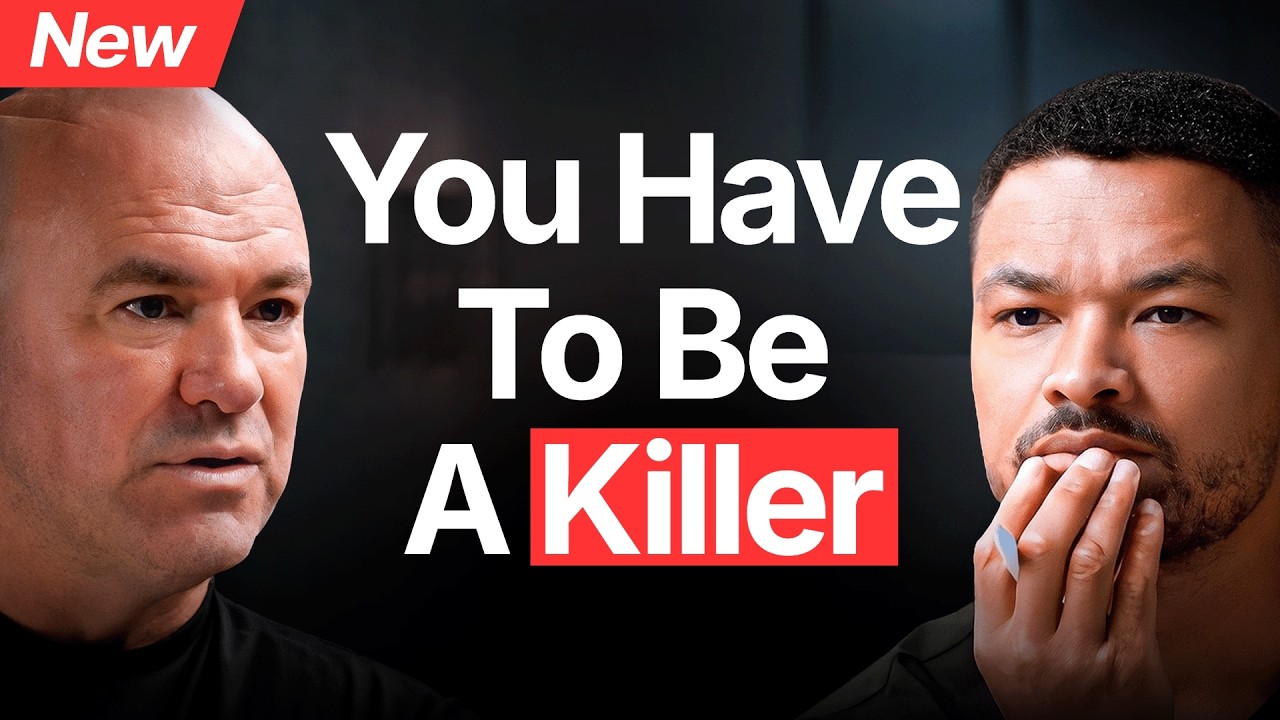
Dana White, UFC President and combat sports mogul, shares the mindset, principles, and personal history that drove him from a $2 million purchase of the UFC to building a global empire he values at $50 billion, while revealing why he believes most people aren’t cut out for entrepreneurship and how he stays relentless at 57.
Early Context and the Making of a Fighter
White’s drive didn’t come from a traumatic fighter’s upbringing like Khabib or Tyson, but from a childhood marked by an absent, alcoholic father and a mother who worked relentlessly as a nurse while putting herself through school.
He learned early what he didn’t want by watching family members whose potential was derailed by drinking; he quit alcohol at 21 because he knew it would block his ambitions.
His father was selfish and careless — White recalls him showing up drunk to take him and his sister to see Beverly Hills Cop, throwing money at them in a packed theater instead of parenting.
Becoming a parent himself clarified the contrast: he realized how a father should feel, and it made him a better parent, not a victim.
He never liked authority or working for others; at 19 he walked out of a solid hotel job with benefits because he found the industry disrespectful and knew he wanted to be in the fight business, even though he didn’t yet know what that meant.
The Entrepreneurial Mindset: No Days Off, No Entitlement, No Safety Net
“There’s no such thing as a day off when you run your own business” — no birthdays, holidays, or weekends; bad things happen daily and you must solve them.
He warns young people who want entrepreneurship for schedule freedom: “You’re going the wrong way. Get a 9-to-5.” Real entrepreneurship means 8:30 AM to 7–10 PM in the office, every day.
He rejects the “work from home” model for building a serious business: “It’s impossible. You can’t do it.” Physical presence creates the collisions and ideas that drive growth.
A formative moment at 12–14: a friend’s father put $1 million in an account for him, then took it back during hard times. The friend called it theft; White thought, “That was never your money. You didn’t earn it.” That entitlement mindset, he says, predicts failure.
Most people aren’t cut out for entrepreneurship because it requires carrying the livelihoods of many others, not just yourself. He takes that responsibility deadly seriously.
The Formula: Matchmaking, Production, and Brand Trust
Three pillars made the UFC work when everyone said it was too barbaric: matchmaking, live event production, and television production.
Boxing became a “going out of business sale” — promoters grabbed cash and ran, burning networks and sponsors. White built a brand that everyone trusts: fans, sponsors, broadcasters, athletes.
The live event experience is paramount: people spend far more to attend than to watch on TV, and they must leave thinking, “God damn, that was a good time. I’d do it again.”
He insists there is a formula — many smart, wealthy people have tried and failed to replicate the UFC — and he holds it.
Hiring and Loyalty: The Superpower Is Picking the Right People
No one person does everything. Early on White wore every hat; the shift to scale came from assembling a team that fits the vision and can execute.
His “superpower” over 25 years has been picking the right people — and firing fast when they don’t fit.
He looks for talent plus work ethic plus alignment with the vision. His inner circle (production head Craig Borsari, PR head Len Breen, sponsorship, matchmaking) now operates like a well-oiled machine with minimal oversight.
During COVID, he refused layoffs despite the terror of the moment. He gathered employees, promised no one would be fired, held weekly FaceTimes, and told them: “If you need groceries, toilet paper, a loved one gets sick — call me first.” No one left; they all said, “We’re with you. Let’s roll.”
He rejects the “we’re a family” corporate cliché because families don’t fire each other — but he does treat loyal, high-performing people like family. Loyalty is the currency; without it, you have nothing.
He views the business as a battleship at war: “Me and my team are going to war. We either all go down together or we don’t go down at all.”
Staying in the Weeds: Why the CEO Never Leaves the Details
“It’s easier to get to the top than to stay on top.” At the summit, everyone studies your blueprint to beat you, poach your people, copy your moves.
He refuses to delegate the core — he’s on the “red phone” to the production truck during live events, calling out cuts in real time: “What was that? Let’s never do that again.” No hurt feelings, just standards.
He blocks out media critics (“they’re all wrong, everything they say is wrong”) but listens to hardcore fans and haters who actually know the product.
Three things he focuses on daily — he won’t name them because “it’s part of the formula” — but everything else (movies, documentaries, ego bait) is noise.
The $7.7B Paramount deal wasn’t an exit; it was a bet on future value. His job now: deliver so the next deal is $10B. He’s “addicted to chaos” and creates it if it’s absent.
Killer Instinct, Manifestation, and the Cost of Winning
“You either have the killer instinct or you don’t.” He saw it missing in Ian Garry’s fifth round against Islam Makhachev: shaking hands and hugging during the fight instead of going for the finish. “Show Islam all the love you want when the fight’s over.”
In business, he’s not a “logo slap” sponsor guy — he wants partners to win, and he expects them to kick ass daily for the mutual deal.
Manifestation is real if you pair vision with daily execution: “When you decide who you are, what you want to do, what you’re going to accomplish, and you get up every single day and work toward it, it is impossible for you to fail.” Most people program the GPS but never step on the gas.
He doesn’t believe in regret. “I don’t believe that I have any.” The rearview mirror means nothing; yesterday’s wins or losses don’t matter — only what’s next.
He was never hurt by his upbringing; his family “ball-busted” relentlessly, which built armor. “When people who were supposed to love you say the things these guys would say… I don’t give a fuck what this guy over here thinks.” The New York Times attacking him during COVID? “I don’t give a fuck about the New York Times.” Only his inner circle’s opinions matter.
The Mother Wound and Forgiveness
His mother published an unauthorized biography with private photos (including his wedding) and critical passages. She emailed him demanding money with threats while he was in London; the escalating nastiness ended their relationship.
“Sometimes family is the worst.” The book hurt others more than him, but he won’t speak ill of her publicly.
He credits her for raising two kids alone, driving cross-country from Boston to Vegas through tornadoes, working double shifts and school. “She did it. She raised two kids by herself.”
He’s forgiven her in the sense that he doesn’t carry bitterness — “I wouldn’t change anything. Good, bad, whatever… 100% my parents made me who I am.” But he doesn’t dwell; the past is fuel, not a cage.
Health Transformation: Gary Brecka and the 10-Year Death Prediction
At 50, friend Carrie Kasem introduced him to Gary Brecka. White resisted, but at his son’s 21st birthday in Miami, Brecka did IVs and ran blood work — then predicted White had 10 years to live.
White gave him 12 weeks. In 6 weeks, sleep apnea (which made him wake up vomiting nightly) vanished, energy and clarity returned. His doctors, who had just cycled pills, were stunned.
“I wouldn’t be doing all this other stuff… I wouldn’t be able to run at the level I run at right now without him.” He believes he had less than 10 years given his trajectory.
Risk, Timing, Karma, and the Sliding Door at a Wedding
“Do not be afraid to take the risk.” Worst case: you go back to work. “It’s not a bad worst case scenario.” The real tragedy is never trying and waking up at 45 wondering “what if.”
He left the hotel job at 19 knowing the worst case was returning at 45 with the same pay and benefits — acceptable. The best case was unimaginable.
Timing > luck. He went to a rich high school friend’s wedding out of loyalty; there he reconnected with Lorenzo Fertitta after 10+ years. Lorenzo had just joined the Nevada Athletic Commission and wanted to train at White’s boxing gym. That reunion led to the UFC purchase.
He believes in karma — seen it play out good and bad — but not in God, ghosts, or the supernatural.
Boxing, Power Slap, and the Next Seven Years
He’s two years ahead of schedule in boxing because current promoters “are just so bad at doing it.” He knows the sport is broken and how to fix it; boxing was his first love.
On Eddie Hearn: “Eddie’s not the guy. His dad’s the guy. Barry Hearn’s a real guy.” On Frank Warren: “Frank Warren’s the real guy… I just saw an interview with him and I was like, love it. ‘All this talking… let’s fight.’”
Power Slap faced the same skepticism as the early UFC — “he’s going to destroy his legacy” — but he trusts his gut over focus groups. Sometimes the gut is wrong, but the worst case is learning and going back to work.
His seven-year goal (matching the Paramount deal): build the combat sports brand to a level “that just can’t be replicated again. When I’m dead, it’s going to be impossible to beat what I’ve built.”
At UFC headquarters, the only forbidden word is “no.” Tom Brady wanted to go to the Sphere; White canceled his team’s weekend and took them. The President suggested a fight at the White House — “Yes, sir. I agree.” Craig Borsari brings his own “impossible” ideas; they execute them at a level that blows minds.
The Life He Chose: No Destination, Just Bigger
No retirement vision. “Then I die. Who gives a fuck?” He takes four great vacations a year, but by day three he’s ready to return, fired up.
He knows his life isn’t for everyone — “It’s the furthest thing from it.” Self-awareness is the real advice: know who you are and give everything to that.
He hires killers for the inner circle; the wider org needs all types. “You can’t be within a mile of me if you’re not a killer.”
Final goal: “To build the biggest combat sports brand… to a level that it just can’t be replicated again.”