-
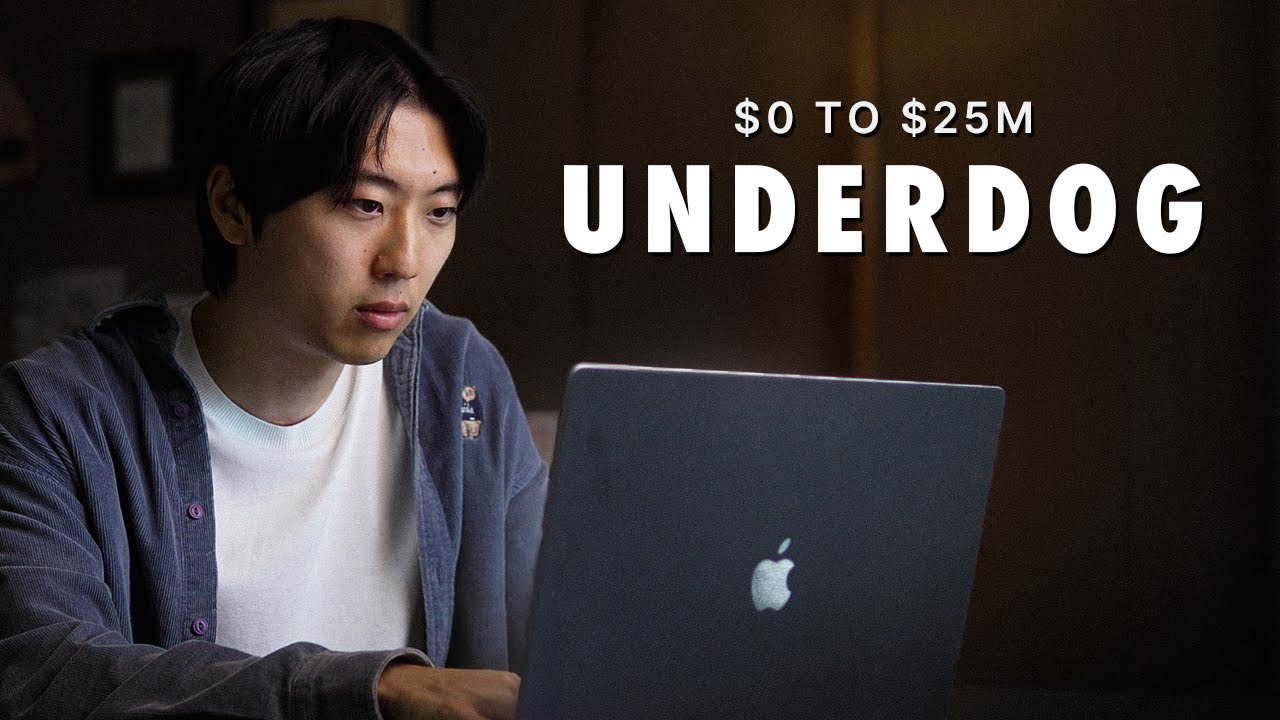
David Park
- Grew up in a family of entrepreneurs with little money and dreamed of building something of his own.
- Started his first company at 16 as a clothing brand, which failed spectacularly.
- Attended college with parental financial support but felt isolated and unhappy, leading him to drop out to chase startup ambitions.
- Met co-founder Henry, bonded over shared passion for AI and writing, and endured roughly ten failed startup attempts together.
- Lived and worked out of his parents’ bedroom, cold-calling agencies for months while enduring frequent rejection and financial strain.
- Discovered GPT-2 and used its output to inspire the creation of Jenny, an AI-assisted writing tool.
- Faced a prolonged period of minimal revenue, eventually learning to prioritize user feedback by asking about dislikes and existing workflows rather than praising the product.
- Hit a funding low with nearly no money left, then received a $100,000 check from Jason Calacanis after a podcast appearance, extending runway.
- Relocated to Malaysia with his co-founder to reduce burn and focus on rebuilding the product.
- Experienced sudden, massive user growth after being featured in a viral Zay Khan Twitter thread, jumping from $2,000 to $10,000 MRR in one month.
- Scaled further through TikTok and Instagram Reels, driving a second wave of virality and reaching $50–60k MRR, then approaching $1 million ARR.
- Underwent thyroid cancer surgery mid-growth, confronting the risk of being sidelined and voice damage.
- Returned post-surgery to find the business unstable without him and lacking product–market fit, forcing a choice between cashing out or fixing fundamentals.
- Chose to double down, hired marketing and growth talent, and shifted to disciplined scaling.
- Systematically tested TikTok creative formats, identified winners, and scaled by running multiple creator accounts with performance incentives.
- Rejected acquisition offers earlier in the year, then grew from roughly $1.5–3 million ARR to above $3 million within six months, with valuation reaching the $10–30 million range.
- Attributed success to persistence, sacrifice, and refusing to quit despite years of failure and near-bankruptcy.
-
Products and Offerings
- Jenny AI is an AI-powered writing assistant designed to help agencies create better content through a friendly, guided writing journey.
- Core workflow integrates AI assistance directly into the writing process, emphasizing user-centric collaboration over pure automation.
-
Metrics and Financials
- Reached $2,000 MRR before major growth, then $10,000 MRR in one month after viral exposure.
- Scaled to $50–60k MRR and approached $1 million ARR, later exceeding $3 million ARR.
- Startup valuation estimated between $10 million and $30 million at the time of reporting.
- Extended runway with a $100,000 check and cost reductions by relocating operations to Malaysia.
-
Strategy and Growth
- Vision centered on building a durable AI writing product with strong product–market fit rather than chasing short-term virality.
- Primary growth engine shifted from cold outreach to user-driven product refinement and viral marketing.
- Key tactics included direct user interviews, fixing core workflow fit, leveraging viral Twitter exposure, and scaling short-form social content across multiple accounts.
-
Tech Stack and Infrastructure
- Built on GPT-2 and later GPT-3 to power AI-generated writing suggestions and story creation.
- Focused on practical integration of AI outputs into usable agency workflows rather than experimental features.
-
Lessons and Advice
- Talk to users about their dislikes and existing workflows, not just what they like about your product.
- Prioritize product–market fit and stability over quick exits, even when under financial pressure.
- Persistence and long-term sacrifice are essential; success often comes after years of repeated failure.
- Scale content systematically by testing formats, finding winners, and multiplying creators with performance incentives.
- Make decisions based on gut and long-term conviction, not just short-term financial relief.
The Underdog: From His Parent’s Basement to $25M
Starter Story • • 14min • #22