-
Steven
- Background and origin story
- Steven is a founder who has built, scaled, and exited multiple mobile apps for millions of dollars in revenue.
- He previously created Puff Count, a quit vaping app, and scaled it to $44,000 in monthly recurring revenue before exiting.
- He sold Puff Count to a larger mobile app studio in Europe for a life-changing amount.
- He is not a famous influencer but an actual founder who discovered a marketing-first playbook that changed his trajectory.
- Pivotal moments and turning points
- He shifted focus to marketing as the most important part of building mobile apps.
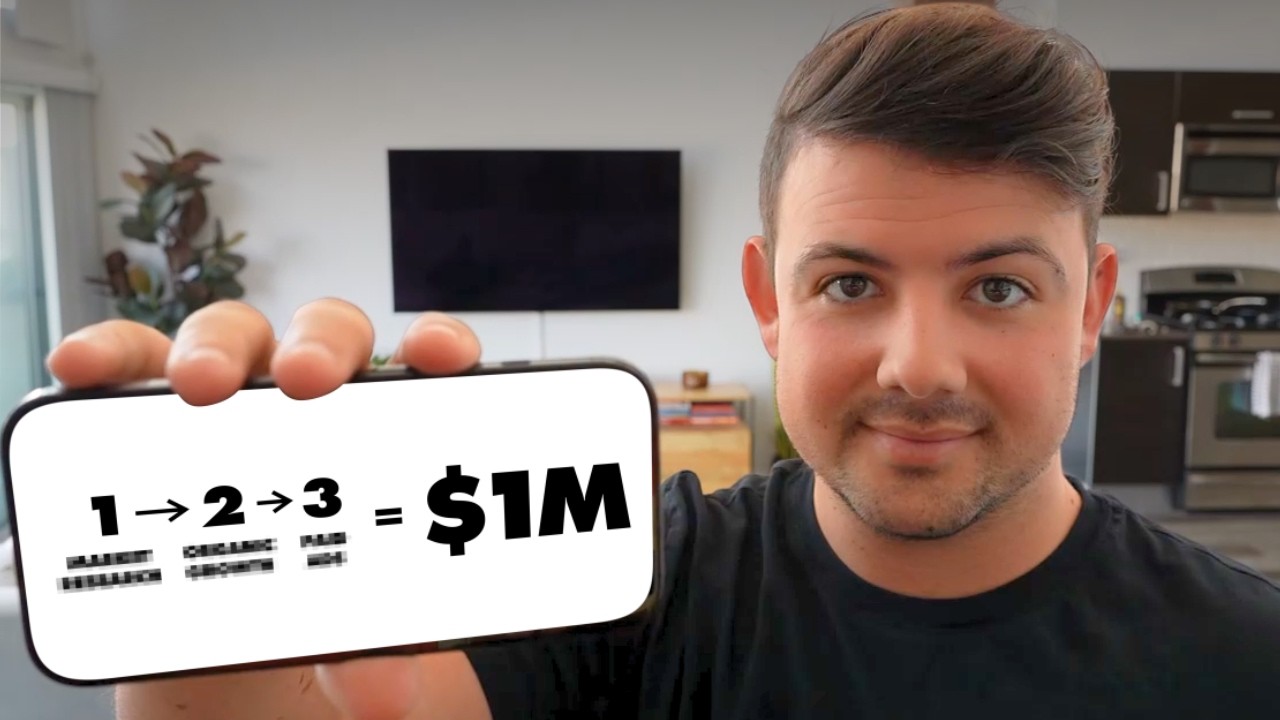
- He adopted a three-phase marketing framework that moved from research to organic growth to paid scaling.
- He committed to validating ideas before building and prioritized content that could go viral.
- He consistently recreated winning formats after his first viral video, which raised the floor for future view counts.
- Business growth, current status, or exit details
- Grew Puff Count to 120,000 followers and over 50 million organic views with $0 spend on content distribution.
- Scaled Puff Count to $44,000 in monthly recurring revenue.
- Spent $82,000 on paid ads to scale revenue, maintaining a customer acquisition cost around $20–$24 and lifetime value between $55 and $70.
- Exited the business to a larger mobile app studio in Europe.
- Background and origin story
-
Products and Offerings
- Core product(s) and what each one does
- Puff Count is a quit vaping app designed to help users track and reduce vaping habits.
- Supporting tools, side projects, or experiments mentioned
- Posted is a creator-focused product that streamlines connecting with creators, collecting bids, and licensing content for paid ads.
- Superwall and Revenue Cat are analytics tools used to track cost per install, trial conversion, subscription rate, retention, and lifetime value.
- Adjust and Appsfire are mobile measurement partners used to feed event data into paid ad platforms.
- Core product(s) and what each one does
-
Metrics and Financials
- Revenue figures, user counts, and financial milestones
- Puff Count reached $44,000 in monthly recurring revenue.
- Organic content generated over 50 million views and hundreds of thousands of app store installs.
- Paid ad spend totaled $82,000 before exit.
- Software costs and resource efficiency
- Content creation was done organically at $0 distribution cost.
- Creator deals ranged from approximately $40 to $110 per video, with ownership of videos and ad codes retained after payment.
- Exit or acquisition specifics
- Puff Count was sold to a larger mobile app studio in Europe.
- Revenue figures, user counts, and financial milestones
-
Strategy and Growth
- Overall vision and positioning
- Marketing must come first; a product that cannot be marketed will not succeed regardless of quality.
- Every app should be approached with a marketing-first mindset.
- Primary growth engine or method
- A three-phase framework: market research, organic growth, and paid scaling.
- Viral validation through TikTok content that is repurposed and scaled via paid ads.
- Key tactics, channels, or strategic steps
- Conduct market research by filtering TikTok videos by most liked and analyzing hooks, storylines, and calls to action.
- Document findings in a spreadsheet to replicate proven formats.
- Post daily across TikTok, Instagram Reels, YouTube Shorts, and Twitter to maximize volume.
- Pin highest-converting videos to the profile to create a conversion-focused funnel.
- Hire and license creator content via Posted to scale content production efficiently.
- Run paid ads on TikTok and Meta, starting with top-of-funnel events and progressing to purchases as data accumulates.
- Use mobile measurement partners to feed event data into ad platforms and enable optimization for lifetime value.
- Overall vision and positioning
-
Tech Stack and Infrastructure
- Tools, platforms, and technical approaches referenced
- TikTok, Instagram Reels, YouTube Shorts, and Twitter for organic distribution.
- Meta and TikTok Ads for paid acquisition.
- Posted for creator outreach and content licensing.
- Adjust and Appsfire as mobile measurement partners.
- Superwall and Revenue Cat for in-app analytics and monetization tracking.
- Notable technical decisions, trade-offs, or architecture choices
- Prioritized top-of-funnel optimization in paid ads before targeting purchases to build sufficient platform data.
- Focused spend on one paid ad platform at a time to concentrate data and improve effectiveness.
- Chose TikTok as the primary paid channel because organic content was native to the format.
- Tools, platforms, and technical approaches referenced
-
Lessons and Advice
- Direct advice given to other founders
- Solve a painful problem for a large audience and validate demand before building.
- Do not code first; validate marketing potential first.
- Post consistently and prioritize volume over perfection to find viral formats.
- Recreate winning content repeatedly to compound trust and reach.
- Track lifetime value and maintain a 3:1 LTV to CAC ratio to build a profitable growth engine.
- Hard-won insights and key takeaways
- Market research is the highest-leverage activity before creating content or building features.
- Organic validation reduces risk and increases confidence when spending on paid ads.
- Paid ads work best when fueled by proven organic content and precise event tracking.
- The profile page itself becomes a funnel; high-converting videos should be pinned to drive installs.
- Small details in content hooks, visuals, and calls to action significantly impact virality and conversion.
- Direct advice given to other founders
The $1M Mobile App Playbook
Starter Story • • 23min • #92