Founded Floa, a mobile app for yoga teachers and practitioners.
Studied economics, briefly worked in corporate, raised seed funding for a startup that failed, stepped away from tech, worked as a fashion photographer, then returned to startups as an advertiser and growth strategist.
Started PlayosB with his girlfriend during COVID as a yoga card-deck brand for mindful, screen-free practice.
Launched the first physical product on Kickstarter and generated more than $200K in the first month.
Turned the physical-product knowledge into a mobile app after seeing that the brand could evolve through technology without losing its mindful core.
Floa
Helps yoga teachers and practitioners build and practice yoga sequences.
Includes a sequence builder with yoga styles, poses, filters by category, chakras, and benefits.
Suggests poses that make sense after the selected pose.
Includes pose detail videos and information for teachers and practitioners.
Lets users personalize sequences, adjust timing, set right and left sides, and start guided practices.
Metrics
Pre-launched in May 2025 with a lifetime deal.
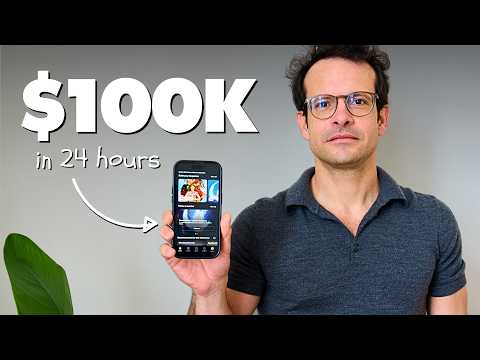
Generated more than $120K in 24 hours.
Launched on May 5 at 2 p.m. and generated $17K by the end of that day.
Got roughly 500 to 600 early customers.
Has about 4,000 active users across paid and free.
Makes about $9K to $10K per month after moving to a recurring model.
Lifetime deal strategy
Defined the long-term app vision before choosing when to monetize.
Chose to monetize as early as possible while building the product and revenue engine together.
Identified the minimum feature set needed to convince early adopters to buy a lifetime deal.
Planned email, landing page, videos, ad creative, lead generation, and audience warming as one launch machine.
Presented the app honestly in a YouTube video, showing current features and explaining future planned features.
Offered lifetime access with no refunds and told users they could wait for subscriptions if they wanted to try later.
Used early customers as committed feedback sources who helped shape later features.
Launch sequence
Ran a pre-launch for about one month and one week.
Started with storytelling that built interest without revealing the product.
Added curiosity by showing the physical product in the background and another hidden product in front.
Revealed the app later, explained why it existed, and linked to a video presentation.
Explained lifetime deal mechanics near launch, with limited quantities and limited timing.
Avoided showing the price before launch day so users evaluated the product around features and vision first.
Launch playbook
Validate before building by talking to five to 10 target customers without leading them toward the answer.
Define the minimum launchable product that creates enough value for early adopters to pay.
Build the content machine before promotion, including emails, graphics, videos, landing pages, and clear user education.
Structure pricing instead of guessing, using three tiers around $109, $199, and $349.
Use lower tiers as reference points that help sell the highest tier while still capturing skeptical buyers.
Be transparent about what exists, current limitations, and future improvements.
Set no refunds, limit the deal to five to seven days, and limit the number of spots to reduce procrastination.
View on lifetime deals
Does not regret the lifetime deal because early-stage founders do not yet know LTV, churn, or real demand.
Sees a lifetime deal as turning assumptions into cash in the bank.
Believes lifetime buyers are more committed than monthly subscribers and more likely to report bugs and give detailed feedback.
Created a Telegram group for early adopters and got significant product feedback from it.
Views lifetime deals as customer-funded capital without giving away equity, control, or board seats.
Tech stack
Uses Flutter for development.
Uses Firebase, which costs about $25 per month.
Uses RevenueCat for subscriptions.
Hosts video on Vimeo.
Uses OneSignal for push notifications.
Advice
Stop waiting for perfect because perfection can hide fear.
Put unfinished work in front of real people sooner.
Ship earlier, gather feedback, and learn faster in public than in private.