-
Joseph
- Background and origin story
- Was a big fan of RuneScape as a kid and got into coding after college by watching YouTube tutorials and taking Harvard’s CS50 class
- Built small personal projects like a website and a blackjack game over a few years before building Stealth GPT
- Pivotal moments and turning points
- In 2017, at age 23, he started J Squared Invest, a crypto onboarding company, which collapsed in the 2018 market crash
- Was later hit with a CFTC enforcement action, resulting in a $400,000 settlement that he is still paying off, borrowing the money from his parents
- In 2022, after seeing a TikTok video about an AI detector called GPTZero, he reverse-engineered it and figured out how to consistently beat it
- In January 2023, he had the idea for Stealth GPT; in February, he bought the domain for $150; by March, the first live website was up and running with paying customers
- Business growth and current status
- Reached approximately $190,000–$200,000 in monthly revenue over about 15 months
- Has had around 400,000 total signups with about 8,500 active subscribers
- Started as a solopreneur and has since built a team of six to seven people, with two more hires in progress
- Background and origin story
-
Products and Offerings
- Stealth GPT is a web-based SaaS subscription app that generates AI-written text that is undetectable by AI detectors, or rewrites text from tools like Claude, ChatGPT, and Gemini to appear human-written
- Offers three subscription tiers starting at $4.99 up to around $15
-
Metrics and Financials
- Revenue is approximately $190,000–$200,000 per month
- Profit is roughly $10,000–$30,000 per month after all expenses
- Monthly expenses include $50,000–$60,000 on salaries, about $5,000 on database, hosting, and AI stack costs, with the remainder going toward marketing and customer acquisition
- Google ads were a major cost center, with early cost-per-conversion as low as $10–$20
-
Strategy and Growth
- Vision centered on solving the broad problem of AI-generated content being detected and flagged
- Initial growth came from listing on Futurepedia, which led to a TikTok creator named Phil covering the product and driving the first two paying customers
- Early marketing focused on market education through TikTok and Instagram, explaining what the product is and why it is needed
- Scaled aggressively through Google Ads, reinvesting revenue continuously to fuel growth
- Emphasized building a simple, one-click solution rather than a complex feature-heavy app
-
Tech Stack and Infrastructure
- Built on Next.js and React as the core framework
- Uses Vercel for deployment, enabling fast rollouts and rollbacks
- Uses Supabase as the database
- Uses Discord for team communication, Buffer for social media management, Zendesk for support, Google Workspace for collaboration, and GitHub for code management
-
Lessons and Advice
- Marketing and distribution are just as important as, if not more important than, the product itself
- Think about real problems in your own life or problems people around you face when looking for ideas
- Be honest and critical about whether people will actually pay for your idea before building it
- Keep the user experience as simple as possible and aim to solve problems in as few clicks as possible
- Use customer feedback to evaluate quality and usability, but do not build highly complex niche features that only one user wants
- There has never been a better time to build; with AI tools, Vercel, Supabase, and free tiers available, anyone with a laptop and Wi-Fi can launch something today
- Posting your work publicly can lead to unexpected opportunities, as early traction came from a random TikTok creator discovering the product on Futurepedia
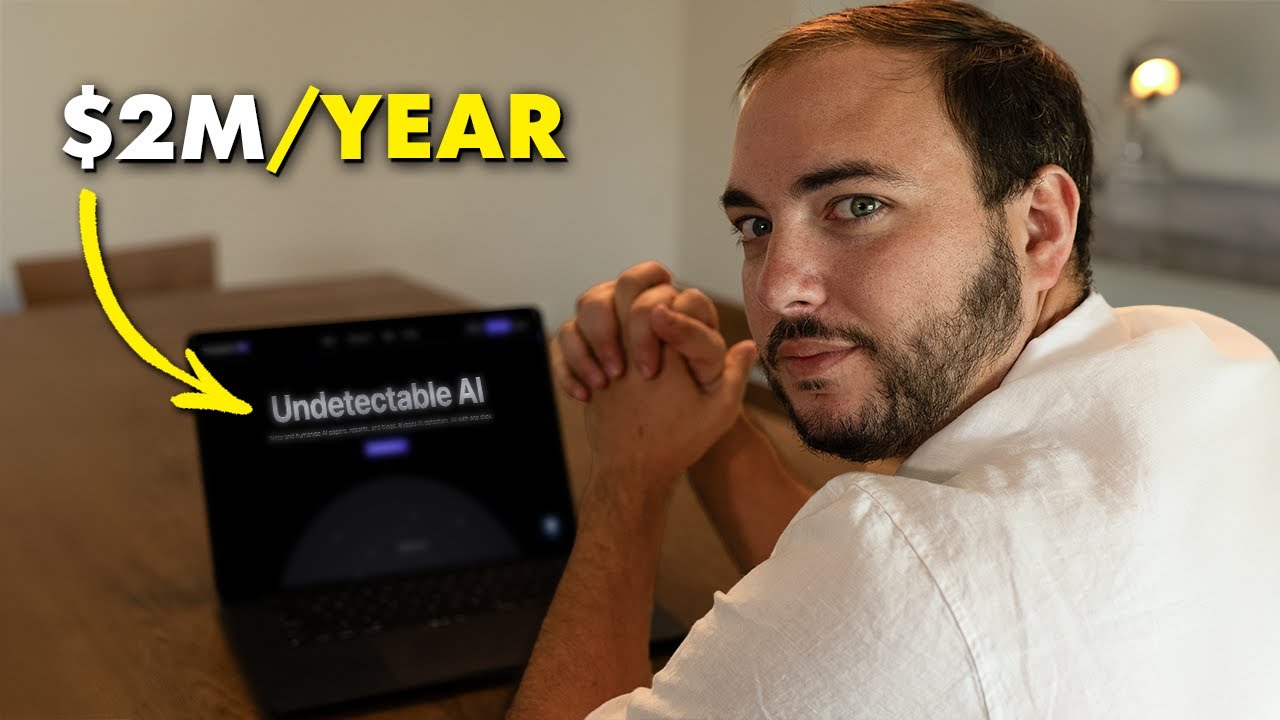
I Turned $150 into $2M/Year
Starter Story • • 16min • #40