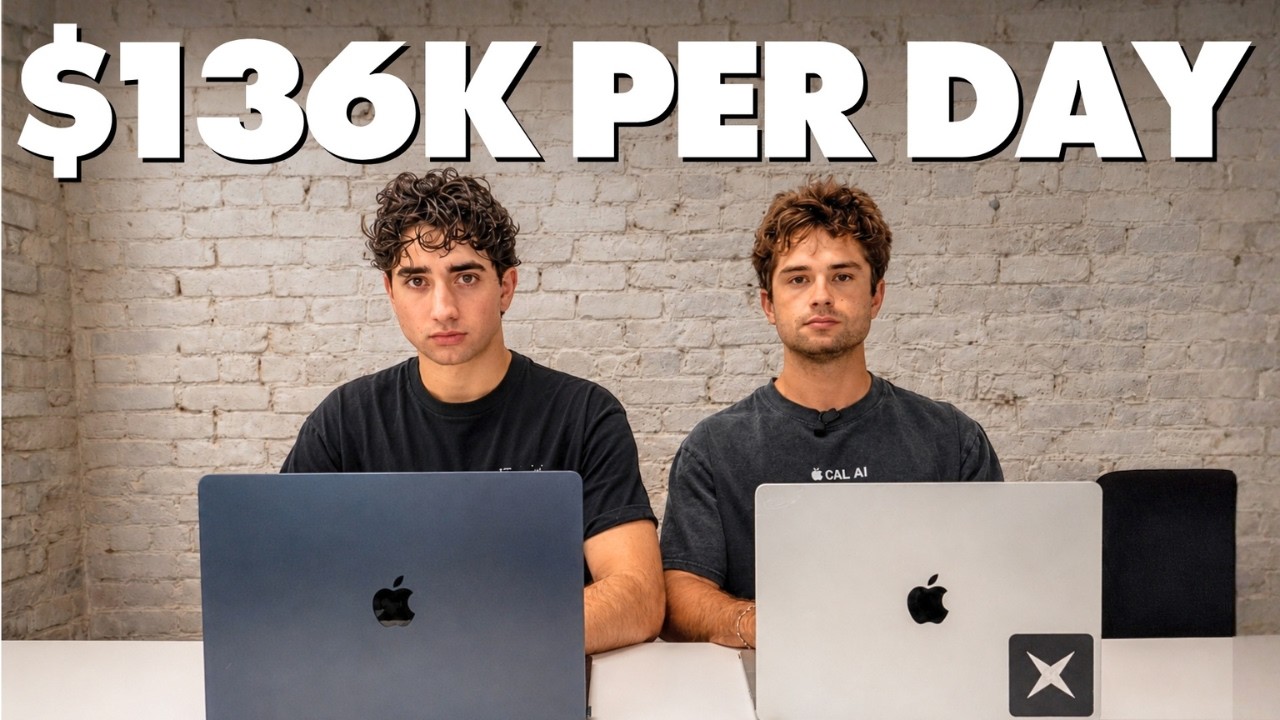
Four friends in their late teens and early twenties built Cal AI, a calorie-tracking app that grew to roughly $50 million in annual revenue within eight months and sold for a low-eight-figure sum; they share how they assembled a complementary team, navigated acquisition offers, and why they believe the iOS app opportunity is still expanding in 2026.
The founding team and roles
Blake Anderson, 25, co-founder/investor/advisor, started building apps in college and pivoted to AI apps before meeting Zach.
Zach, 19, CEO, coded from age 7, launched first App Store app at 12, scaled a prior company to 5 million users and $60K/year before selling at 16.
Jake Castillo, 31, CMO/COO, handled marketing and business operations; previously founded StudyBody.
Henry, 18, CTO, managed the tech team and product experience; met Zach at a coding camp at age 10.
Cal AI’s growth trajectory
First month: $30K revenue; second month: over $100K.
Within eight months: $1 million/month run rate.
On track for ~$50–60 million in the first full year.
Total App Store market: ~$100 billion/year, growing >10% YoY; Cal AI represented roughly 1/12,000th of the total pie.
How the team came together
Zach and Henry met at a coding camp at age 10, gamed daily, and later built projects together.
Zach cold-DMed Blake after seeing his AI app work; they began collaborating on Cal AI.
As Cal AI scaled, Zach recruited Jake for a COO role, knowing his work at StudyBody.
Each founder owned a distinct domain (product/CEO, tech/CTO, marketing/ops, strategy/advisor) with complete trust in each other’s expertise.
Managing conflict and trust
Late 2024: received low-eight-figure acquisition offers; team was split — life-changing money vs. belief in much larger growth ahead.
Resolved through constant open communication and mutual trust; collectively decided not to sell.
Blake emphasizes that without deep trust, a co-founder team cannot reach its true ceiling.
Opportunity for iOS apps in 2026
The App Store is a ~$100 billion market today, projected to exceed $200 billion within six years.
AI and new technology expand the addressable opportunity rather than saturating it.
Copycat strategies can still reach $10K–$100K/month, but outsized outcomes come from building something new and differentiated.
Zach notes he would not have responded to a copycat pitch; top talent gravitates toward original problems.
Advice for aspiring app builders
Solve your own problem: product design becomes intuitive, and marketing targets yourself — you know the pain points.
If you lack an idea, look for something that would genuinely help you.
Differentiation can come from features, approach, or distribution — not necessarily a brand-new category.
Selling Cal AI: the emotional reality
The sale didn’t feel immediate; founders were in different states, no big celebration.
Following six months: overwhelming relief — financial security for life regardless of future work.
Despite the exit, all four continue building because they view entrepreneurship as the “greatest video game in the world” — they’d be bored without it.
Current projects
Blake: 10X App Builder — a “Shopify for apps” platform handling ideation, code generation, backend hosting, and aesthetic design for social assets; aims to lower the barrier for non-technical founders.
Zach: Flow — a brand building a suite of productivity and health tools; documenting the full entrepreneurial journey on YouTube to demystify the process for the next generation.
Final perspective
The iOS app opportunity is growing, not shrinking; the winning playbook is taking existing ideas and adding a differentiated spin — features, approach, or distribution.
If starting today, they would still build iOS apps.