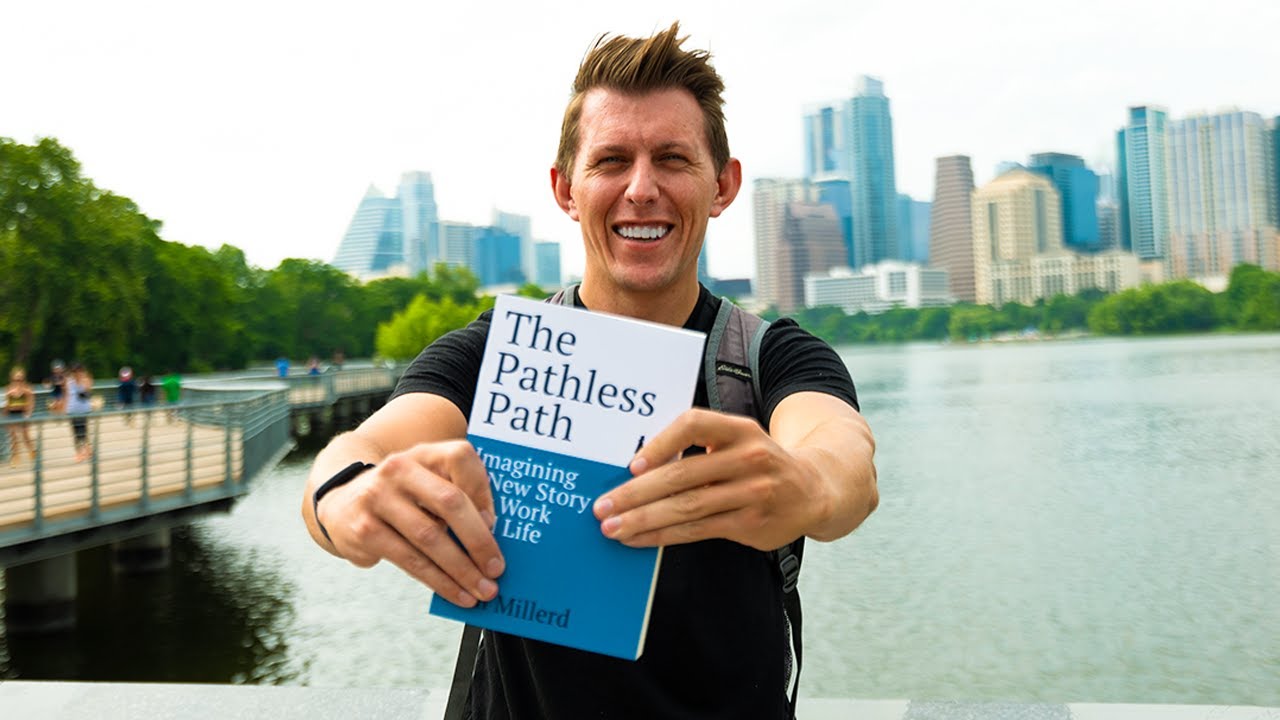
Paul
- Background and origin story
- Worked a $250,000 consulting job in New York City, early career focused on breaking into prestigious companies to feel special, but never felt fulfilled.
- Dealt with Lyme disease, launched blog “Lime Sucks” to document his health journey while still employed.
- Started writing on Quora daily before work for 100 days, realized he was a writer from that moment on.
- Had $50,000–$60,000 in savings when he quit, giving him financial runway to wander without pressure.
- Pivotal moments and turning points
- 2017 (age 32): Quit corporate job with no plan, first time letting life emerge instead of following a fixed path.
- Before quitting, applied to other jobs: one offered less than his current salary, others rejected him, prompting the unplanned exit.
- Former company required repayment of $24,000 signing bonus and relocation expenses for not staying 3 years, which he describes as “buying his freedom.”
- Turned down a deal with Penguin Random House to retain full creative control and higher royalty rates.
- Wrote The Pathless Path to make sense of his life after leaving the “default path” (corporate rat race).
- Business growth, current status, or exit details
- Book income makes up half or more of his total income for the first time this year.
- First year of The Pathless Path: $50,000 in revenue, 10,000 copies sold at ~$5 per book.
- Second year first 5 months: 15,000 copies sold, $75,000 in royalties.
- 2022 total topline revenue: $249,000 (pre-costs/taxes), up from $100,000 earlier that year.
- 2023 first 6 months on track to beat $249,000, but choosing to prioritize time with his newborn daughter over additional work.
- Current daily routine: Spends mornings with his daughter, works a few hours most days, no meetings before 11:00 a.m., clears calendar as needed to prioritize flexibility.
Products and Offerings
- Core product(s) and what each one does
- The Pathless Path: Self-published book about leaving the “default path” (corporate rat race), finding work that sustains your soul, and committing to the “real work” of your life without fixed plans.
- Supporting tools, side projects, or experiments mentioned
- “Lime Sucks” blog: Documented his Lyme disease journey and post-quit career path.
- Strategy U: Course and side business built from his freelancing experience.
- Paid workshops: Offers structured training sessions on selected topics.
- Freelance consulting and coaching: Kept minimal to prioritize writing and creative work.
- Personal podcast: Focused on pathless path ideas, initially not monetized, now part of his core work.
Metrics and Financials
- Revenue figures and financial milestones
- The Pathless Path first-year revenue: $50,000, 10,000 copies sold at ~$5 per book.
- The Pathless Path second-year first 5 months: $75,000 in royalties, 15,000 copies sold.
- 2022 total topline revenue: $249,000 (pre-costs/taxes), up from $100,000 earlier that year.
- 2023 first 6 months on track to beat $249,000, though he is prioritizing time with his newborn daughter over additional work.
- Total book royalties to date: $125,000–$130,000 (effectively profit after upfront costs).
- Royalty and sales breakdown
- Per-unit royalties via Amazon: $8.24 for hard covers, $7.45 for paperbacks, $4.28 for Kindle, $3.98 per audiobook.
- Sales mix: 50% ebook, 29% print, 21% audio.
- Traditional publishing comparison: Penguin Random House offered 10% of list price (~$2 per hardcover), vs. his self-published $8.24 per hardcover.
- Book creation costs
- Editing and coaching: $3,900.
- Book cover (via 99designs): $742.
- Ingram Spark publishing fee: $250 (now free).
- Audiobook production: $1,280.
Strategy and Growth
- Overall vision and positioning
- Reject the “default path” (corporate rat race, jobs for prestige or paychecks) in favor of the “pathless path”: commit to finding work that sustains your soul (“real work” of your life) without fixed plans.
- Prioritize flexibility and time for family over maximizing earnings.
- Primary growth engine or method
- Book marketing leans into activities he enjoys: podcast appearances, gifting books (US shipping $4.50 including shipping via self-publishing).
- No high-pressure marketing, follows personal interests to promote ideas.
- Key tactics, channels, or strategic steps
- Writing process: Brute force reps to overcome fear of judgment (early work has no audience, so no risk of criticism). Create unstructured mental space (wandering, reading, listening to podcasts) for ideas to percolate, write only when channeling ideas.
- Finding meaningful work: Remove money from the equation as long as possible, quit work that does not light you up, minimize/automate/delegate non-essential tasks.
- Recommends 1–3 month sabbaticals in adulthood to disconnect from work mode, reconnect with forgotten hobbies, and create space for deeper commitments to emerge.
- Monetization beyond book sales: Freelancing (early stage), Strategy U course (from freelancing experience), paid workshops, minimal consulting/coaching to support creative work.
Tech Stack and Infrastructure
- Tools, platforms, and technical approaches referenced
- Self-publishing: Amazon (print, ebook, Kindle publishing, royalty management), Ingram Spark (initial publishing, $250 fee, now free).
- Formatting: Rezy (ebook formatting, used default options), Amazon’s native tools for ebook formatting.
- Design: 99designs (book cover, selected designer based on past work).
- Audiobook: Hired third-party production ($1,280).
- Notable technical decisions, trade-offs, or architecture choices
- Lists himself as publisher instead of a traditional publishing house.
- Hired developmental editor (largest upfront expense) to organize content flow and structure.
- Hired proofreader after formatting to catch errors.
- Chose self-publishing over traditional deal to retain full creative control and higher royalty rates.
Lessons and Advice
- Direct advice given to other founders
- Trust yourself and embrace the uncertainty of unplanned journeys, do not skip the fun of emergent growth.
- To find meaningful work: Remove money from the equation as long as possible, quit work that does not align with your values, minimize/automate/delegate non-essential tasks.
- Take a 1–3 month sabbatical in adulthood to disconnect from work, reconnect with hobbies, and create space for deeper commitments to emerge.
- Be willing to lower earnings, pay a “status tax,” and give up prestige to do work that sustains your soul.
- Hard-won insights and key takeaways
- Writing requires brute force repetition to overcome fear of judgment, early work has no audience so there is no risk of criticism.
- Creativity comes from unstructured time (wandering, reading, consuming content) rather than forced daily writing routines.
- Self-publishing offers far higher royalties (2–4x traditional rates) and full creative control compared to traditional publishing.
- Book income can become a primary revenue stream: This year, book income makes up half or more of his total income.
- You do not need a fixed plan after leaving corporate work: Letting life emerge leads to more fulfilling opportunities.
- Prioritize flexibility (clearable calendar, no early meetings, family time) over maximizing earnings.