-
David
- Co-founded Shipper with his brother Daniel, bootstrapping it from zero to $50K+ monthly revenue
- Both are non-technical founders who focused on marketing rather than coding
- Their first major success was Legit Check, a luxury goods authentication service that funded all subsequent ventures
- Since 2019, they have built, scaled, exited, and acquired multiple companies
-
Products and Offerings
- Shipper is an AI app builder that lets users describe an idea to AI and receive a full working app in return
- It supports building websites, web apps, mobile apps, Chrome extensions, and bots for platforms like Telegram and Discord
- The product runs the business for users with zero skills required, eliminating technical jargon from the experience
- Pricing is credit-based, with the cheapest plan at $25/month, which is enough to experiment or build a full app
- Two types of credits exist: builder credits for general app creation and cloud credits for backend development
-
Metrics and Financials
- Current MRR is $25.6K with an ARR of $307K
- Gross volume is $71K, with 90% from subscriptions and 10% from one-off top-ups
- Around 690 paid users with zero free users, as they intentionally do not offer a free plan
- The service is expensive to maintain in both time and time and money, so revenue is reinvested into improving the product for paying customers
-
Strategy and Growth
- The idea came in summer 2025 after watching no-code and AI app builders like Base44 and Lovable explode in growth
- The plan was simple: find one common pain point in a proven market and triple down on it
- They believed owning even 1% of the AI coding tool market would be life-changing
- Differentiation came from analyzing competitor Trustpilot pages, public roadmaps, and Discord complaints to find unmet needs
- Key differentiator was expanding beyond websites and web apps to mobile apps, Chrome extensions, and bots
- First users came from Product Hunt, Reddit, SEO, and X (Twitter), with zero paid channels used to this day
- Launched MVP on Product Hunt in week one, earning the first $50 MRR from that launch
- Reddit drove initial traction with regular 400+ upvote posts, pushing revenue from $50 to $1K MRR
- SEO focused on high-intent keywords like “alternatives to X” and “how much does X cost”
- Building publicly on X around day 50 triggered parabolic growth, generating roughly $20K MRR in one to two weeks
- A key X tactic learned from Rob Haram at SuperX: always add the product link in the second tweet to maximize attention and traffic
-
Tech Stack and Infrastructure
- Customer support: Crisp
- Knowledge base: Notion
- Public roadmap: Frill
- Email marketing: ConvertKit (referred to as “charge” in transcript, likely a speech-to-text error)
- Landing page hosting: Webflow
- SEO blog and landing pages: WordPress
- Analytics: Datafast
- Marketing: X Premium and Typefully
- Affiliate management: Tools (specific platform name unclear from transcript)
- AI models: Anthropic’s Claude
- Version control: GitHub
- Hosting: Vercel
- Cloud infrastructure: Railway
- Databases: Neon
-
Lessons and Advice
- Every good business idea is already taken, and that is completely fine
- Do not try to invent something new; instead, find a proven idea, niche it down, and build your own version
- Start with something you genuinely know a lot about or care about
- Look at a big industry and ask what it would look like if built for people like you
- Study reviews and complaints about big players, then double down on what they get wrong
- You do not need to execute perfectly if you are in a good market with strong growth
- Getting some things wrong is acceptable when operating in a space that is already growing and popular
- Ship an imperfect product quickly rather than waiting for perfection, then improve based on real user feedback
- Keep a close eye on competitors to move faster and avoid their mistakes
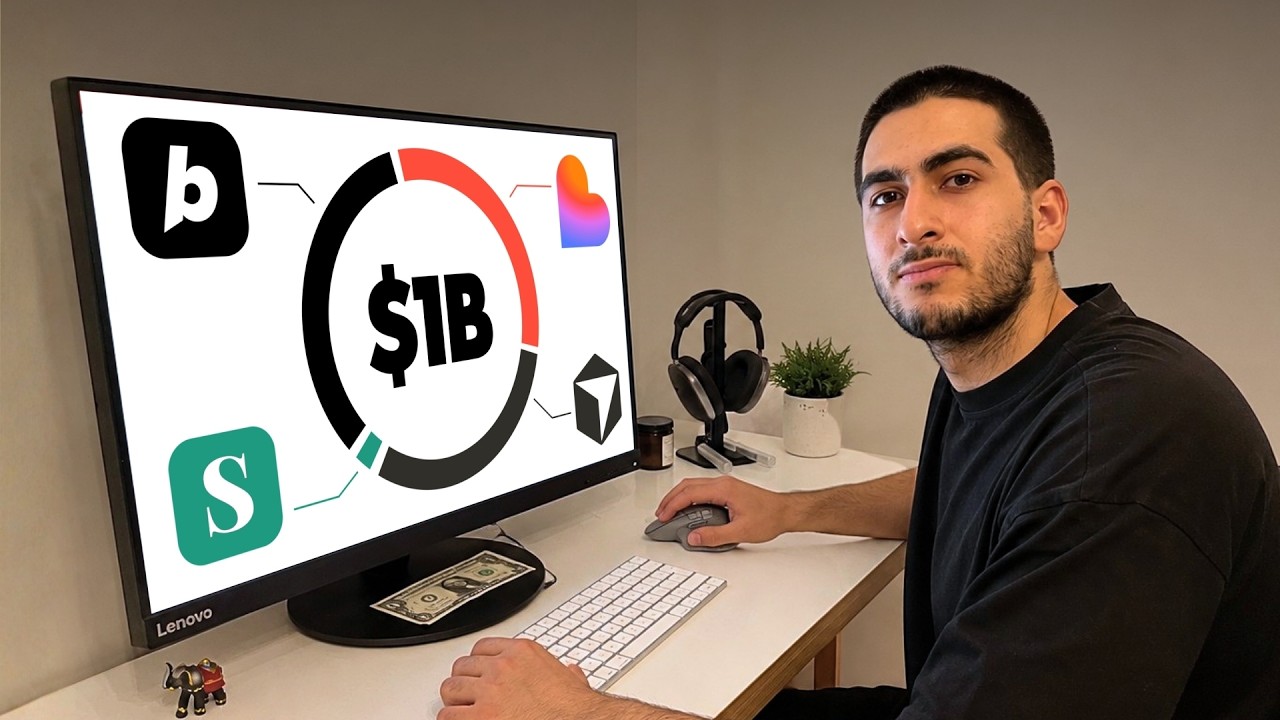
I Built A Micro-Version Of A $1B SaaS. Now I Make $50K/Month
Starter Story • • 11min → 3 min • #157