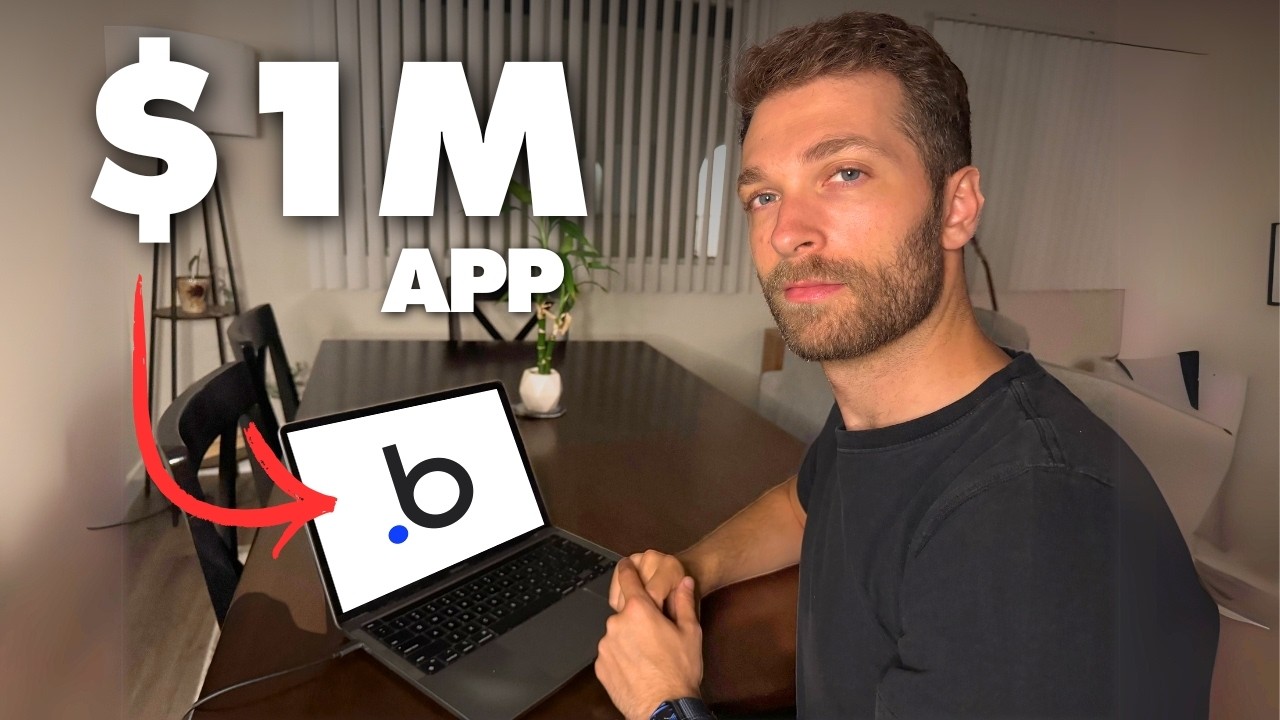
-
Jacob
- Background and origin story
- Started as a self-taught artist, songwriter, and music producer releasing music on Spotify
- After college, lived at home and pursued music full-time, using online courses to grow his music to nearly 1 million streams and thousands of fans on a small budget
- That led to helping friends promote their music, which became his first business: Domino, a music marketing agency
- Realized service-based businesses cap income to time, so he looked into SaaS to scale beyond trading hours for money
- Went through six failed SaaS ideas before the seventh—Faceless.video—became a million-dollar business
- Pivotal moments and turning points
- Co-founder Alex noticed viral “faceless” videos on TikTok and initially tried making them manually, but struggled with consistency and daily editing
- Alex realized the format was simple enough to automate, reached out to Jacob, and together they decided to turn the concept into a SaaS product instead of an internal tool
- Their first marketing effort—a Twitter thread promoted for around $200—went viral with hundreds of thousands of views, giving the business instant traction
- Influencers who saw their ads began promoting Faceless.video organically, driving significant growth without direct outreach
- Business growth, current status, or exit details
- Faceless.video reached over $1 million ARR in just 10 months, 100% bootstrapped
- Over 1.1 million users have signed up
- The platform generates thousands of videos daily for users, with some videos surpassing 1 million views and many reaching hundreds of thousands of views
- The entire application still runs on Bubble with no plans to migrate off
- Background and origin story
-
Products and Offerings
- Core product(s) and what each one does
- Faceless.video: A SaaS platform that automates faceless social media channels—users provide a topic, and the platform writes the video content, creates the video, and posts it daily on autopilot
- Supporting tools, side projects, or experiments mentioned
- Domino: Jacob’s earlier music marketing agency, a service-based business that preceded Faceless.video
- Core product(s) and what each one does
-
Metrics and Financials
- Revenue figures, user counts, and financial milestones
- Over $1 million ARR
- Over 1.1 million total users signed up
- Thousands of videos generated daily
- Software costs and resource efficiency
- First ad spend was approximately $200 for a Twitter thread that generated hundreds of thousands of views
- Entire tech stack runs on Bubble, keeping infrastructure lean
- Revenue figures, user counts, and financial milestones
-
Strategy and Growth
- Overall vision and positioning
- Target the emerging trend of faceless social media content by being first to market with an automated solution
- Position the product as a way to tap into existing viral trends in a new, scalable way
- Primary growth engine or method
- Viral marketing through a combination of ads, influencer collaborations, organic content, and word of mouth
- Word of mouth consistently ranks as a top-five attribution source, with customers listing “friend” as how they heard about the product
- Key tactics, channels, or strategic steps
- Used storytelling-driven messaging rooted in Jacob’s film-making and marketing background
- Kickstarted the narrative with paid ads and influencer collaborations, then let organic virality take over
- Focused marketing on showing how Faceless.video is different from competitors and how it taps into existing trends
- SEO, paid ads, influencers, and organic content all used, but the key was getting the messaging right through strong execution
- Overall vision and positioning
-
Tech Stack and Infrastructure
- Tools, platforms, and technical approaches referenced
- Bubble: The entire application is built on Bubble, a no-code platform that translates programming logic into plain English
- APIs integrated via Bubble to handle video generation and posting workflows
- Notable technical decisions, trade-offs, or architecture choices
- Chose Bubble specifically because it handles security, scalability, privacy rules, and backend management out of the box
- Stayed on Bubble even at $1 million ARR because the platform has not created any issues requiring a migration—one scalability issue was resolved by Bubble support
- Jacob argues that custom code “bells and whistles” are not necessary for building a successful business; a great idea, functioning product, and strong go-to-market strategy are sufficient
- Tools, platforms, and technical approaches referenced
-
Lessons and Advice
- Direct advice given to other founders
- Build from day zero optimizing for the best-case scenario—design your app and pricing model to handle 100,000 signups from day one
- Do not get too attached to your first idea; failing fast is a win-win, and going through multiple ideas is part of the process
- Stay bootstrapped because it forces you to build lean, focus on real value, and adapt quickly
- Do not watch generic tutorials—pick a project you are genuinely excited about and learn everything you need through building it
- Leverage existing skills from other industries, as they can become unexpected competitive advantages in your business
- Hard-won insights and key takeaways
- Not knowing how to code can be an advantage because it forces simplicity and speed in building MVPs
- Let the algorithm guide your idea generation—trends on TikTok and Instagram Reels contain real business opportunities if you analyze them
- A properly running SaaS system makes money while you sleep, but it is not hands-off while you are awake
- Loving what you are building is essential because it gives you a competitive edge—someone who is truly passionate will always surpass someone who is not
- For B2C apps, viral potential is critical because high customer acquisition costs make heavy ad spending unviable
- Virality happens when the product speaks for itself, messaging is right, and all incentives are aligned
- Direct advice given to other founders
I Built a $1M SaaS 100% with No Code (Bubble)
Starter Story • • 14min • #71