-
Mike
- Background and origin story
- Started as a Flash developer and ran a digital advertising agency, which he later sold
- Realized he was not good at advertising but loved building products, which led him to SaaS
- Based in Australia and fully bootstrapped across all ventures
- Business growth and current status
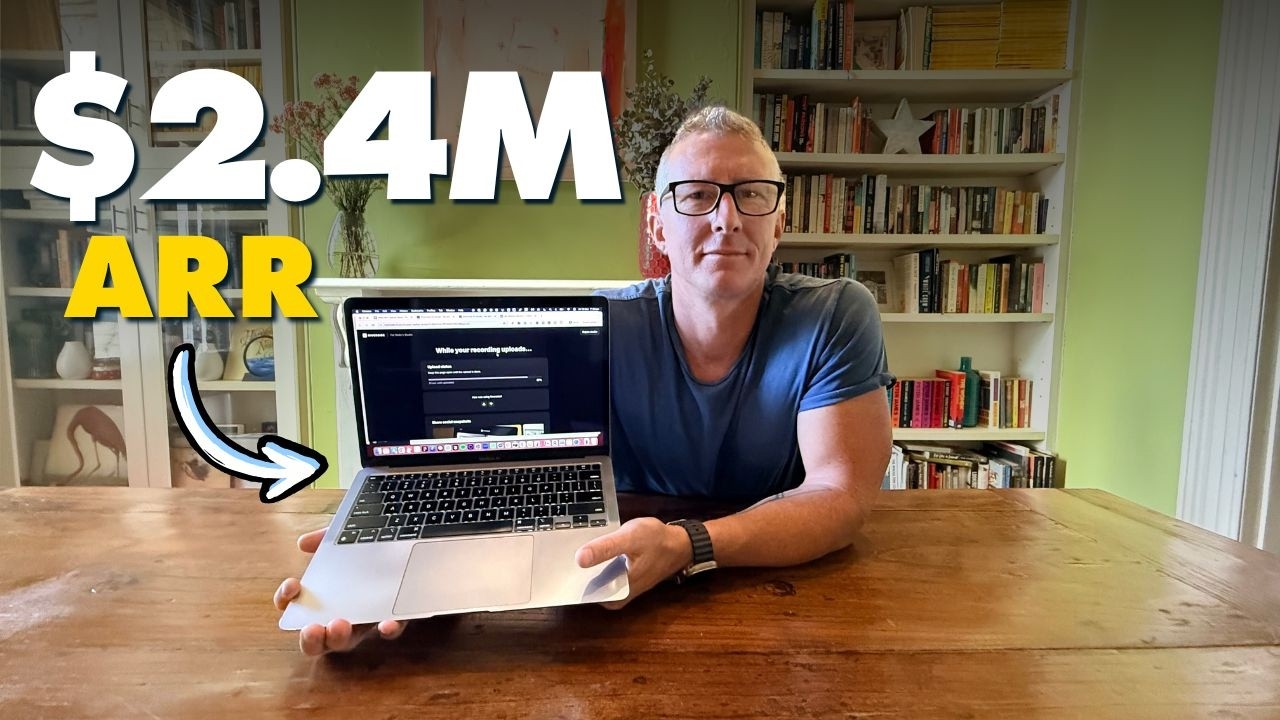
- Currently operates three SaaS businesses doing over $200K MRR, with two more launching soon
- Goal is to reach $1M MRR within five years with a small team and no outside capital
- Has never had a business failure using his repeatable playbook
- Background and origin story
-
Products and Offerings
- Curator.io: Social media aggregator for websites and events
- Thrill.co: Customer feedback tool that collects feedback, plots it to a roadmap, and announces new features
- JUNO.co: Digital signage platform for cafes, gyms, schools, and shops
- Fluke.co: No-code onboarding tours platform for SaaS businesses (tooltips, pop-ups, etc.)
- Smile.co (launching soon): Group e-card solution for B2B businesses
- All five apps combined generate just over $200K MRR
-
Metrics and Financials
- Combined MRR across all apps: just over $200,000
- Businesses are grown to approximately $10K MRR before founders begin taking profits
- Lifetime deals (LTDs) are used to raise capital early, with a target of $100K from LTDs to fund 1–2 years of content and growth
- Thrill.co raised approximately $30K from its private LTD launch
- Profits are split equally among four co-founders once $10K MRR is reached
-
Strategy and Growth
- Overall vision and positioning
- Focuses on minimizing risk by only pursuing ideas that have already been validated in the market
- Avoids AI-dependent businesses due to platform risk and reliance on APIs they do not control
- Prioritizes design as a core selling point and believes good design drives sales
- Targets boring, proven markets rather than trendy or speculative ideas
- Primary growth engine
- Lifetime deals (LTDs) as the primary early-stage growth and funding mechanism
- Heavy use of content marketing, including landing pages, blog posts, and competitor/alternative pages
- Marketplace launches on platforms like AppSumo for broad reach and capital infusion
- Key tactics and strategic steps
- Follows a strict 10-step playbook for every new business launch:
- Pick an idea that has already been done before to eliminate validation risk
- Define a good enough MVP based on competitor customer feedback
- Offer a lifetime deal ($59–$100 one-time payment) to generate early revenue
- Never give away free accounts—always charge to ensure usage and feedback
- Sell LTDs aggressively through Reddit, Facebook groups, X, and LTD-specific communities
- Start writing content immediately (landing pages, blog posts, competitor pages)
- Launch on AppSumo or similar marketplace for reach and additional capital
- Run one final private LTD at a higher price before closing lifetime deals permanently
- Get LTD customers to leave honest reviews on Trustpilot, G2, etc. to boost domain ranking
- Transition to MRR and sustain the business before LTD funds run out
- Builds in public and engages authentically on Reddit and other communities where customers gather
- Uses early LTD customers as ambassadors who are invested in the product’s success
- Follows a strict 10-step playbook for every new business launch:
- Overall vision and positioning
-
Tech Stack and Infrastructure
- Front end varies by team preference (Vue or React)
- Back end predominantly uses PHP and Laravel
- Design and prototyping done in Vyo and Figma
- Websites built on Framer, shifting website work away from the tech team
- Meeting notes handled through Granola
- Internal communication via Slack
- Uses Willow Voice for voice-to-text input
-
Lessons and Advice
- Work with people you genuinely enjoy being around—founder relationships are critical to longevity
- Build something you love creating, not just something customers want
- Minimize founder fallout by starting with four co-founders with equal 25% equity splits
- Stay lean and prioritize founder salaries over reinvestment, advertising, or large teams
- Avoid ideas that depend on external platforms or APIs you cannot control
- Good documentation is increasingly important because AI relies on it to recommend products
- The fun of building with people you like is a core reason to do it—enjoy the process
I Built 3 SaaS Apps to $200K MRR: Here's My Exact Playbook
Starter Story • • 13min • #107