-
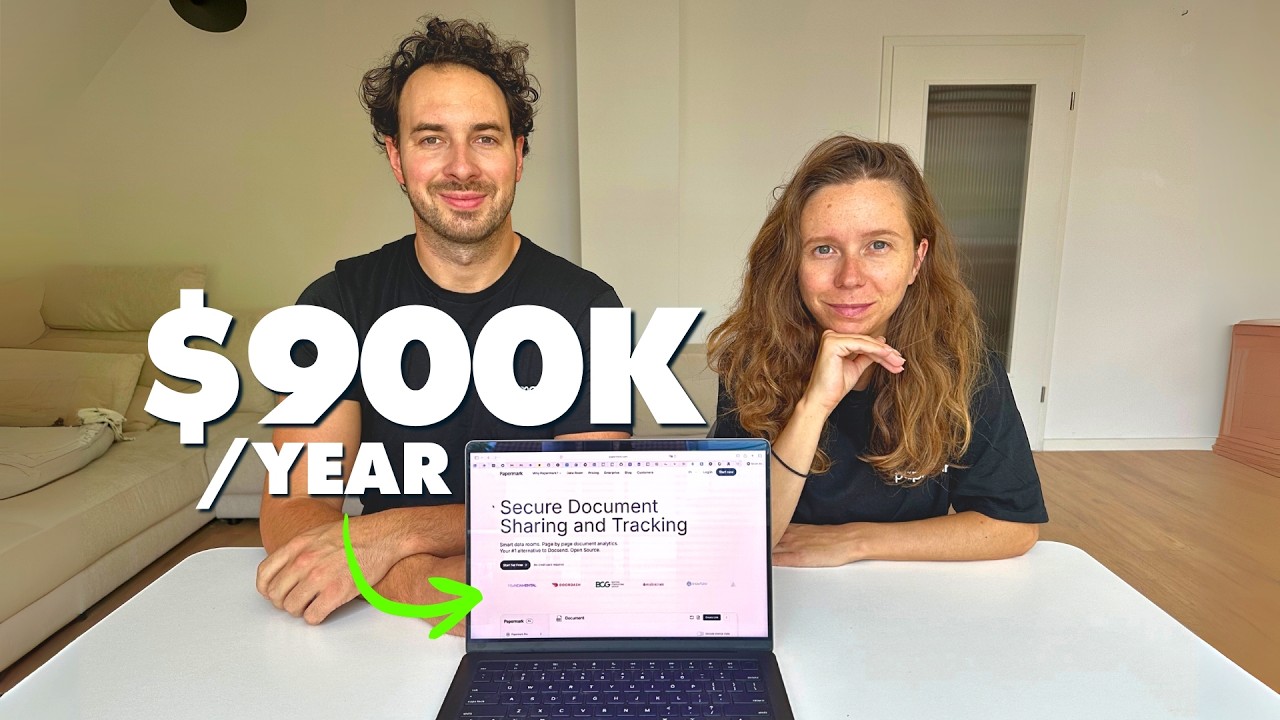
Marc and Iuliia (co-founders of Papermark)
- Built a bootstrapped, open-source SaaS business generating nearly $900K ARR in just 1.5 years
- Started as a weekend open-source project sparked by a tweet Marc posted about building an open-source alternative to DocSend
- The tweet went viral with 40,000 views in hours; they shipped an MVP over the weekend and launched it the following Monday to 100,000 views
- Early users immediately asked to pay, which validated the commercial potential
- Grew from $0 to $20K MRR in the first year, then to $75K MRR by the middle of the second year
- Currently serving around 30,000 users, 60 contributors, 7,000 GitHub stars, and 800,000 document views
- Iuliia had no coding background initially but learned by building on top of existing open-source projects and contributing back to the community
-
Products and Offerings
- Papermark is an open-source document analytics and sharing platform, positioned as a successor to DocSend
- Turns documents into shareable links with password protection, watermarks, and granular analytics (e.g., time spent per slide)
- Offers both a free self-hosted version and a hosted paid version (papermark.com)
- Uses an open-core model: core software is open source and self-hostable; advanced features require an enterprise license
- Targets users who want secure document sharing and data room functionality without the complexity and stagnation of legacy incumbents
- Papermark is an open-source document analytics and sharing platform, positioned as a successor to DocSend
-
Metrics and Financials
- Reached $20K MRR in year one, $75K MRR by mid-year two, approaching $1M ARR
- Serves approximately 30,000 users and 800,000 document views
- Cost structure:
- 80% on freelancer and founder salaries
- 15% on marketing and growth experiments
- 5–6% on tools and infrastructure
-
Strategy and Growth
- Chose open source as a defensible, scalable, and trust-building business model from day one
- Grew by building in public and shipping progress transparently on Twitter and LinkedIn, even when features were incomplete
- Participated in Hacktoberfest, a month-long open-source hackathon, to accelerate development and visibility
- Leveraged community-driven R&D: contributors monitor the project, suggest features, and fix issues, creating faster innovation than incumbents
- Focused on outpacing slow-moving incumbents by reaching feature parity quickly and then surpassing them
- Converted free open-source users into paying customers by offering superior hosted service and eliminating self-hosting overhead
-
Tech Stack and Infrastructure
- Built with Next.js and TypeScript as two separate projects: one for the marketing website, one for the core application (app.papermark.com)
- Hosted on Vercel with PlanetScale for PostgreSQL database
- Uses Cursor as their AI-powered IDE for daily development
- GitHub for version control and collaboration
- Trigger for background job processing
- Resend for fast transactional email delivery
- Stripe for payments
-
Lessons and Advice
- Open source is highly defensible because giving away the core product removes incentive for others to rebuild and monetize the same thing
- Zero barrier to entry drives scalability—users discover the project organically and convert to paid plans when they prefer managed hosting
- Community contributions create immense R&D velocity compared to relying solely on internal teams
- Public code builds trust and security through third-party auditability, especially valuable for enterprise and regulated industries
- To succeed with open-source business models:
- Reach feature parity with incumbents first
- Out-ship them consistently to become the clear successor, not just an alternative
- Convert open-source excitement into product momentum and paying users
- For aspiring open-source founders: start building in open source from day one, engage with the community, help others contribute, and let the project grow organically
- AI enables targeting smaller niches with simplified, focused tools—consider rebuilding bloated software categories (like CRMs) for specific verticals (e.g., veterinarians, property managers)
How We Built It: $900K Open Source SaaS
Starter Story • • 14min • #84