-
Deven
- Background and origin story
- Indie hacker from India who experienced multiple startup failures
- After last product shutdown, sought validated markets instead of creating a new category
- Noted LinkedIn tools were successful but lacked strong content creation features
- Leveraged GPT‑3 launch to build an MVP that converted raw thoughts into LinkedIn‑worthy posts
- This MVP became the foundation of Supergrow
- Pivotal moments and turning points
- Co‑founder of Rocket Up (Charlie) discovered his journey on LinkedIn and offered to launch Supergrow on their platform
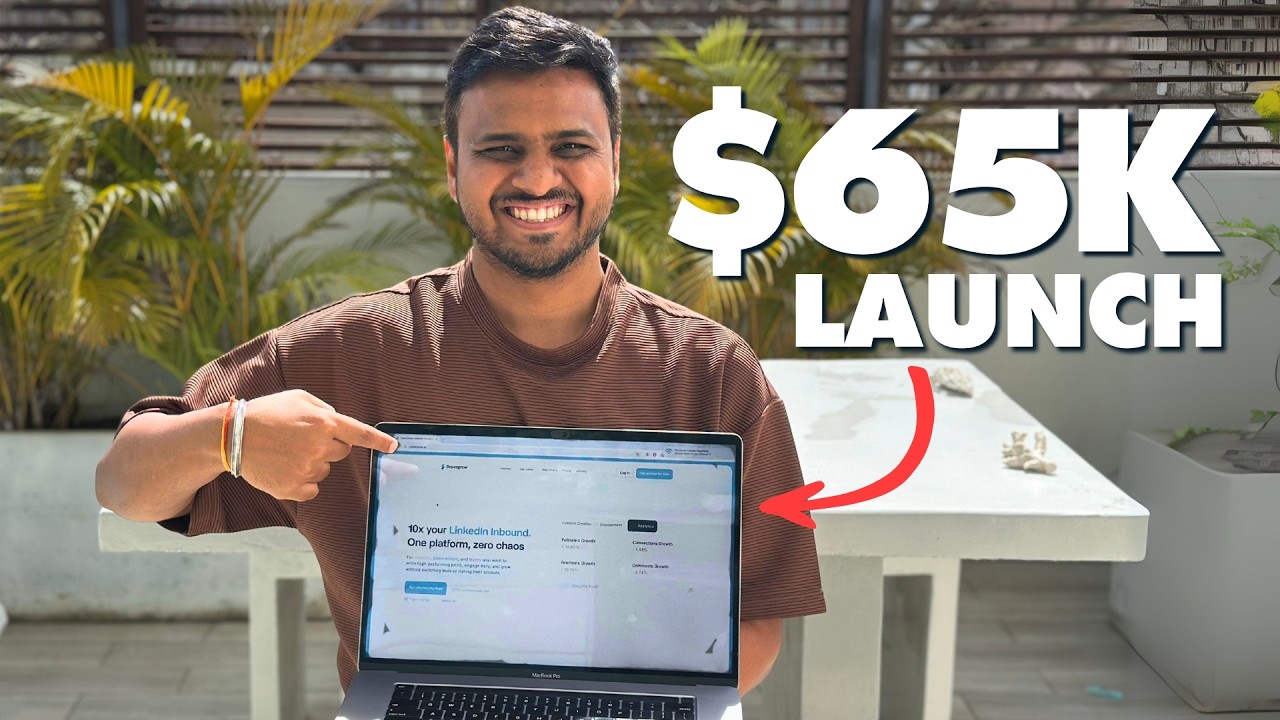
- Launched a lifetime deal (LTD) on Rocket Up, generating $65,000 in three days
- Used LTD cash to fund early operations and gain validation
- Transitioned from LTD focus to a subscription business after the initial launch
- Launched on Product Hunt, became product of the week, and acquired ~50 additional customers
- Turned satisfied LTD customers into brand ambassadors who promoted Supergrow on LinkedIn, Twitter, and WhatsApp groups
- Business growth, current status, or exit details
- Supergrow helps professionals build their personal brand on LinkedIn
- Currently generates more than $19,000 per month (~$230,000 per year)
- Has over 800 recurring customers
- Receives more than 15,000 monthly visits to its landing page
- Maintains a profit margin of 60‑70% after expenses
- Background and origin story
-
Products and Offerings
- Core product
- Supergrow: a SaaS that enables professionals to create LinkedIn content and grow their personal brand
- Converts users’ raw thoughts into LinkedIn‑worthy posts
- Supporting tools or experiments mentioned
- Uses internal tools such as Clarity and Mixpanel to analyze feature usage
- Relies on Intercom for live chat and customer support
- Employs Stripe for payment processing
- Core product
-
Metrics and Financials
- Lifetime deal performance
- Generated $65,000 in three days via Rocket Up
- Rocket Up took a 40% cut, leaving Din’s team with approximately $40,000
- Current financials
- Monthly recurring revenue exceeds $19,000
- Annual revenue surpasses $230,000
- Over 800 paying recurring customers
- Over 15,000 monthly landing‑page visits
- Profit margin ranges from 60% to 70%
- Expense breakdown
- Marketing and affiliate spend: ~$3,000 per month
- Freelancer costs for design and product work: >$1,000 per month
- Remaining expenses contribute to the 60‑70% margin
- Lifetime deal performance
-
Strategy and Growth
- Overall vision and positioning
- Aim to build a better version of existing products in validated markets rather than inventing entirely new categories
- Focus on solving a proven problem (LinkedIn content creation) with incremental improvements
- Primary growth engine or method
- Used a time‑boxed lifetime deal on Rocket Up to obtain cash, validation, early feedback, and brand ambassadors
- Leveraged LTD feedback to rapidly improve the product and transition to a subscription model
- Key tactics, channels, or strategic steps
- Conducted deep competitor analysis (studied Tableau, Content, Authored Up) to identify gaps in content creation
- Built a minimal viable product over a weekend after validating the market need
- Relied on Rocket Up for full‑scale marketing (email blasts, Facebook/Instagram ads, creative assets)
- Limited the LTD to three days and a capped number of users to avoid overselling and protect long‑term growth
- Engaged LTD customers daily via Intercom, turning their feedback into product features
- Added analytics tools (Mixpanel, Clarity) to understand usage patterns and prioritize development
- Launched on Product Hunt after refining the product, gaining additional customers and visibility
- Upsold satisfied LTD customers to the subscription plan to build recurring revenue
- Overall vision and positioning
-
Tech Stack and Infrastructure
- Application stack
- Backend: Ruby on Rails
- Frontend: React with Tailwind CSS
- Database: PostgreSQL
- Storage/asset handling: Supabase
- Hosting: Railway
- Landing page: Framer
- LinkedIn content creation aid: Superguri
- Live chat and support: Intercom
- Product analytics: Mixpanel
- Session recordings: Microsoft Clarity
- Payments: Stripe
- Application stack
-
Lessons and Advice
- Direct advice to other founders
- Do not work in unvalidated markets; instead, enter markets that are already generating revenue
- It is acceptable—and often smarter—to build a better version of an existing product rather than pursuing a completely unique idea
- Avoid the temptation to educate users on a new problem; focus on improving solutions for known demands
- Hard‑won insights and key takeaways
- Lifetime deals provide rapid cash infusion, product validation, and early paying‑customer feedback
- The main downsides of LTDs are high platform cuts (e.g., 40% taken by Rocket Up), increased support burden from angry or feature‑request‑heavy customers, and the risk of attracting low‑value purchasers that may cheapen brand perception
- Limiting the LTD duration and user count (e.g., three days and a capped user base) helps prevent long‑term growth harm while still capturing benefits
- Paying customers give far more reliable and actionable feedback than free users, who tend to ghost when issues arise
- Cheap annual plans lack the urgency and FOMO that drive LTD conversions and rarely match the revenue potential of a well‑priced LTD
- LTD customers can become powerful advocates and even help secure placements like Product Hunt “product of the week”
- After an LTD, actively upsell those customers to a subscription model to build sustainable recurring revenue
- Direct advice to other founders
How I Made $65K in 3 Days
Starter Story • • 15min • #89