-
Leandro
- Background and origin story
- Studied electronics engineering in Buenos Aires, Argentina, but lost passion for it in college and taught himself JavaScript instead
- Freelanced for eight years, which he found frustrating due to lack of autonomy and entrepreneurial control
- During COVID, he quit freelancing entirely with savings and coding experience to build his own product
- Pivotal moments and turning points
- While building a Google Sheets integration, he gained deep knowledge of the Sheets API just as Notion released its official API
- He noticed a gap: Notion users wanted to export their data into Google Sheets but no clean solution existed
- Validated the idea by searching Reddit’s Notion subreddit for keywords like “sheets,” “Google Sheets,” “Excel,” and “CSV,” finding many users asking for exactly this
- Built an MVP in two weeks with no AI tools, just Stack Overflow and Google
- Removed the free plan despite backlash, which caused revenue to jump from $5K to $8K per month within months
- Business growth and current status
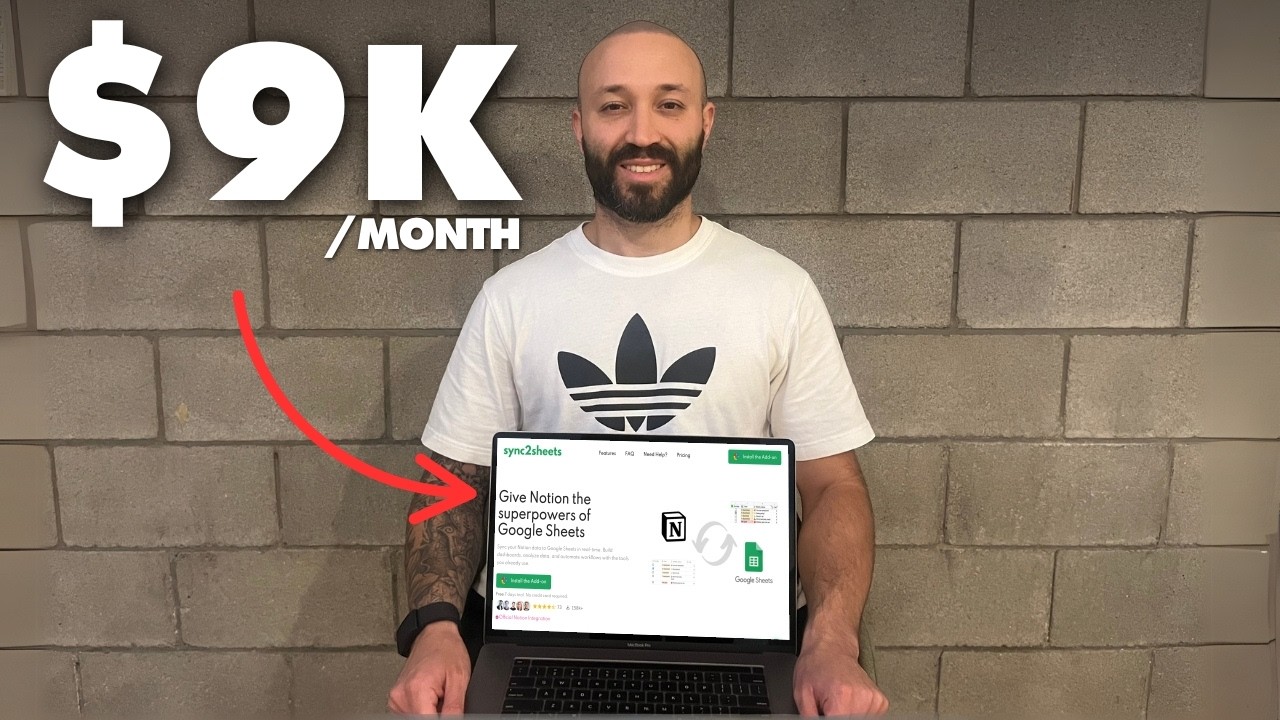
- Sync2Sheets has been running for four years and generates $9,000 per month
- Has over 70,000 total users and more than 450 paying customers
- Gets around 5,000 visitors per month and has roughly $120,000 in lifetime revenue, with most earned in the last one to two years
- Operates largely on autopilot with a 90% profit margin
- Background and origin story
-
Products and Offerings
- Sync2Sheets
- A Google Workspace add-on that runs in the sidebar of Google Sheets
- Syncs Notion databases directly into Google Sheets
- Supports conditional formatting, data validation, dropdowns, column reordering, and column hiding to mirror how data looks in Notion
- F5 Bot
- A free tool Leandro built to track keywords on Reddit and receive email notifications when new relevant posts or comments appear
- Sync2Sheets
-
Metrics and Financials
- $9,000 monthly revenue with approximately 90% margins
- Main expense is Google Cloud infrastructure due to real-time syncing between two services
- Other tools are low-cost
- Over 70,000 users, 450+ paying customers, ~5,000 monthly visitors
- ~$120,000 lifetime revenue over four years
-
Strategy and Growth
- Overall vision and positioning
- Focused on doing one thing extremely well rather than building a bloated product
- Targets the gap between two popular tools where users have a clear, recurring pain point
- Primary growth engine
- Google Workspace Marketplace as the main source of installs
- SEO-driven blog content related to Notion and Google Sheets as a top traffic channel
- Key tactics and channels
- Active Reddit engagement using F5 Bot to find relevant threads and provide genuine value before recommending the product
- Direct conversations with users in Facebook groups, LinkedIn groups, and personal DMs
- Launched on Product Hunt a year and a half after initial release for visibility
- Posted on Hacker News and reached the front page, gaining a massive traffic spike and backlinks
- Used a chat interface on the landing page early on to have real conversations with potential customers
- Overall vision and positioning
-
Tech Stack and Infrastructure
- Built using Google Appscript for the add-on UI and functionality
- TypeScript as the primary language
- VS Code as the code editor, with recent adoption of Cursor
- Google Cloud and Firebase for all infrastructure
- SendGrid for transactional and marketing emails
- Mixpanel for analytics to track individual user behavior
- Paddle as the payment processor (chosen because Stripe is not available in Argentina)
- Handles billing and payments natively
- Modernization is native to the platform
- Tidio for customer support chat on the landing page
-
Lessons and Advice
- Finding ideas
- Look at Zapier’s most common app pairings to find integrations that are painful or messy to set up
- Browse Upwork to see what people are requesting and consider turning those into standardized products
- Pay attention to ideas that keep recurring in your mind; those are worth pursuing
- Validating ideas
- Check if similar products already exist and study their pricing to assess market potential
- Find a clear angle of differentiation before entering the market
- Get five users to try the product while you are still building it to ensure you are solving a real problem
- Building an MVP
- Start with the absolute core function: getting data from point A to point B with no formatting or extras
- Layer in user experience improvements like formatting and conditional logic only after the core works
- Focus on small details that make a meaningful difference to users
- Pricing and monetization
- Charge from the very beginning; do not give everything away for free first
- If users disappear when you introduce pricing, the product was not delivering enough value
- Removing a free plan can dramatically increase revenue even if it causes short-term backlash
- General advice
- Small UI changes like moving a button or changing text can have a profound impact on the business
- Focus only on tasks that move the needle; skip everything else
- Find at least one user willing to pay before investing significant time in building
- Finding ideas
How I Built It: $9K/Month Micro-SaaS
Starter Story • • 15min • #70