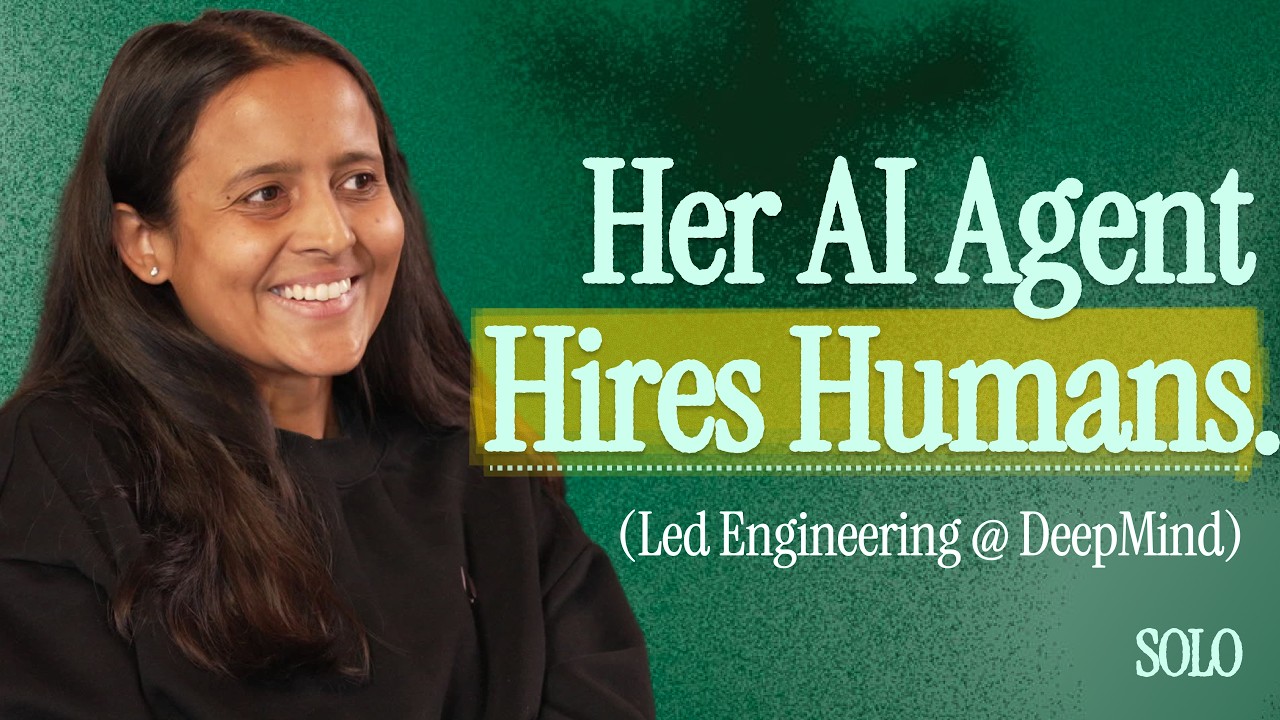
Shivani Poddar, founder of FO, built personal AI agents for a decade — Alexa’s first social chatbot (2016), Facebook’s first assistant on Portal (2018), and Google’s Jules autonomous code agent — before leaving to start a company centered on a contrarian thesis: AI agents need human collaboration to reliably complete real-world tasks, not full autonomy.
The problem with current AI agents
The industry narrative pushes full autonomy, but users experience a recurring failure mode: agents get stuck on captchas, phone calls, negotiations, or taste-dependent decisions, and the work falls back on the user.
Poddar calls this “capture monkey” fatigue — users hand off a task expecting a “done” notification but instead get a “help me” ping, making remediation as tiring as doing it themselves.
The gap is especially acute for the 40% of the world not yet digitized (small businesses, healthcare, government) where a phone call is the only way to get things done.
FO’s solution: human–AI collaboration as a designed system
FO is built as a remote, empathetic, reliable agent that delegates subtasks to vetted human experts when it detects its own failure — not a gig-economy handoff but a secure, domain-expert loop where humans see only what they need.
The agent learns from these interventions over time, creating a team-like dynamic where AI handles scale and humans handle judgment, taste, and edge cases.
This architecture had to be built from the ground up; models trained on copilot-style data don’t naturally introspect or ask for help.
Phone calls as a core capability
Early hang-up rates were ~80% because recipients had no incentive to stay on a cold AI call; FO reduced this to 20–30% by designing for natural turn-taking, regulatory disclosure, and resistance to adversarial probing.
Businesses that receive AI calls quickly recognize the efficiency — one Australian insurer (5B ARR) sought out FO after its AI “shoved insurance on my business” more seamlessly than any prior channel.
A makeup artist used FO to get discovered for high-profile gigs, beating competitors who relied only on SEO; early adopters gain a discovery advantage.
Trust as a two-faceted promise
Privacy trust: agents must not leak personal data (e.g., addresses) to counterparties; one breach destroys trust experientially, not theoretically.
Reliability trust: the agent must actually finish the task; users come for this, and privacy becomes a reinforcing differentiator.
FO pursues SOC 2 and HIPAA compliance; its stack already meets those standards.
Real-world use cases (seeded outside Silicon Valley)
Healthcare: scheduling emergency colonoscopies across 10 offices; completing Medicaid applications in hours instead of weeks with a social worker.
Commerce: international shopping with owned payment rails; outfit matching from photos with discount finding.
Jobs: applying across LinkedIn, email, and portals; humans in the loop improve profile quality.
Social: younger users add FO to group chats as a safe, secret-keeping coordinator.
Building as a solo founder: hiring philosophy
Started with a large employee equity pool so the founding team shares upside.
Avoided cold hiring; recruited known “founding engineers” first (from Jules/Aqua) who had lived zero-to-one chaos, then tinkerers with relentless side projects.
Hires for the “unfair advantage” one year out, not just immediate fires — counterintuitive but pays off.
First hire messages are handwritten, three words: “Want to join a rocket ship 🚀” — signaling personal investment.
Solo founder operating rhythm
Early months: entire team breathes product, celebrates first successful calls (e.g., sushi delivery via AI).
Now: time shifts to distribution, hiring at scale, and upleveling the team; the “ship is always burning” but future-oriented hiring creates leverage.
Critical: build an advisory bench (speed-dial founders, investors, communities) to absorb the unique concurrent stresses a solo founder carries alone.
Case against solo founding
The journey never gets easier; each milestone brings new scaling stresses (compute, users, hiring).
Solo founders carry unique stresses alone — self-regulation, anticipation, and execution across all functions simultaneously.
Skills from big tech (hiring, fundraising, customer access) don’t transfer directly; they must be relearned in stealth, no-name conditions.
Case for solo founding
Don’t rush a co-founder of convenience; the cost of not pursuing the idea exceeds the cost of building solo muscles.
Current AI tools create an unprecedented window: technical founders build pitch decks, non-technical founders build prototypes to attract engineers.
“Just go do it. Good solo founders will figure out how to find AI to do the rest with us.”