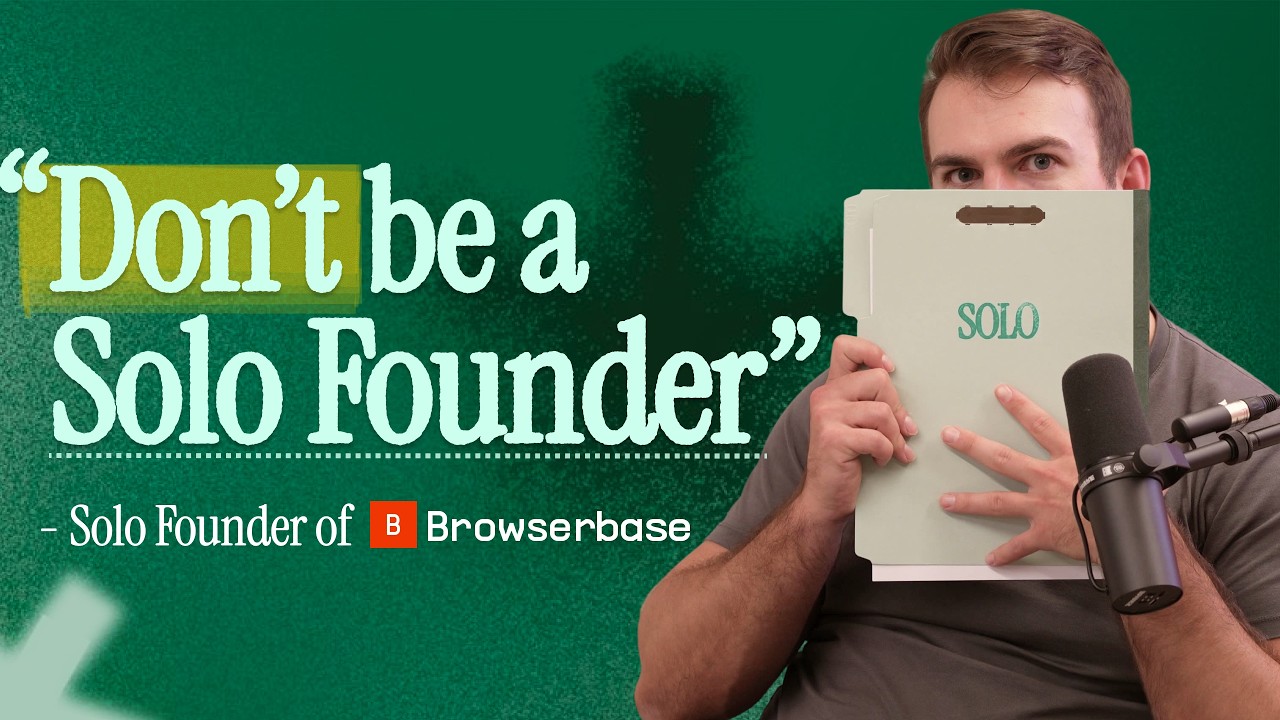
Paul Klein IV went from facing 498 rejections out of 500 internship applications to founding Browserbase, a headless browser infrastructure company now valued at $300 million — a story about resilience, timing, and building developer tools at the right moment.
The Early Grind: 500 Applications, 498 Rejections
In college, Paul applied to 500 internships and received 498 rejections.
The two acceptances he did get were not from prestigious companies — they were from smaller, less-known places.
This experience shaped his mindset: he stopped relying on traditional gatekeepers (resumes, credentials, brand-name companies) and started thinking about creating his own path.
The rejections were not due to lack of skill but rather the noise of the traditional hiring funnel — a system that filters on proxies like school name and pedigree rather than actual ability.
The Pivot to Building
After college, Paul worked at a few startups and began to notice a recurring pain point: developers who needed to automate browsers for scraping, testing, or AI agent workflows had terrible infrastructure options.
Existing solutions were either fragile, expensive, or required significant DevOps overhead to scale.
He realized that as AI agents became more prevalent, the demand for reliable, scalable headless browser infrastructure would grow dramatically — not shrink.
What Browserbase Actually Does
Browserbase provides headless browser infrastructure as a service.
Instead of developers managing their own browser instances, dealing with anti-bot detection, scaling Chromium clusters, or handling session state, Browserbase abstracts all of that away.
Key capabilities include:
Managed headless Chrome/Firefox instances accessible via API
Built-in stealth and anti-detection measures
Session persistence and proxy integration
Scalable infrastructure that handles the operational complexity
The primary use cases are web scraping, automated testing, and — increasingly — AI agent workflows where an LLM-driven agent needs to navigate the web.
Why Now: The AI Agent Inflection Point
Paul identified a structural shift: AI agents need browsers the way humans do.
As LLMs get better at reasoning and tool use, the bottleneck shifts from intelligence to infrastructure — agents need reliable, fast, undetectable browser access to interact with the web.
This is not a speculative bet. Demand from AI companies and agent builders was already materializing when Paul started building.
The timing was critical: Browserbase launched into a market where the need was real and growing, not hypothetical.
Solo Founding at Scale
Paul built Browserbase as a solo founder, which is unusual for an infrastructure company at this stage.
He credits this to a few factors:
Developer tools and infrastructure can be built by small teams if the product is well-scoped.
His deep understanding of the problem from first principles meant he did not need a co-founder to fill a knowledge gap.
He was comfortable with the technical complexity and moved fast.
Being solo also meant he retained significant equity and decision-making control, which mattered when the company reached a $300 million valuation.
Fundraising and the $300M Valuation
Browserbase raised funding at a $300 million valuation, a remarkable number for a solo-founded infrastructure company.
The raise was driven by strong revenue growth and clear product-market fit with AI-native companies.
Paul’s pitch was straightforward: every AI agent needs a browser, and Browserbase is the infrastructure layer that makes that reliable and scalable.
Investors recognized that this was not a niche developer tool but a foundational piece of the AI stack.
Lessons from the Rejection Era
Paul reflects on the 498 rejections as formative rather than discouraging.
The experience taught him to not outsource his sense of worth or direction to external validators.
It also gave him a high tolerance for being told “no” — a useful trait when fundraising, selling to enterprise customers, or pushing through product setbacks.
He emphasizes that the rejections were not personal; they were systemic noise. Understanding that distinction allowed him to keep going without internalizing failure.
What Makes Browserbase Defensible
The moat is not just the technology — it is the operational complexity of running headless browsers at scale reliably.
Anti-bot detection is an arms race; Browserbase continuously updates its stealth capabilities, which requires ongoing investment and expertise.
Switching costs are high once a company builds its agent or scraping pipeline on top of Browserbase’s API.
The network effects are indirect but real: as more AI companies build on Browserbase, the platform becomes the default, which attracts more customers and more investment in the infrastructure.
Advice for Aspiring Founders
Paul’s core advice: do not wait for permission.
The traditional path — get into a top school, land a brand-name internship, join a prestigious company — is one path, but it is not the only one, and it is not necessarily the fastest.
If you can identify a real problem, understand it deeply, and build something people want, the lack of credentials or pedigree matters far less than you think.
He also emphasizes speed of execution: the window for infrastructure plays in AI is open now, and the companies that move fastest will capture the market.
The Bigger Picture
Paul’s story is not just about one company — it is about a shift in how developer infrastructure companies are built.
The combination of AI-driven demand, cloud-native architecture, and solo-founder velocity is creating a new category of company: small teams building critical infrastructure at massive scale.
Browserbase sits at the intersection of two trends: the explosion of AI agents and the ongoing need for reliable web access.
If AI agents become as prevalent as many predict, the companies providing the underlying browser infrastructure will be as essential as cloud compute providers are today.