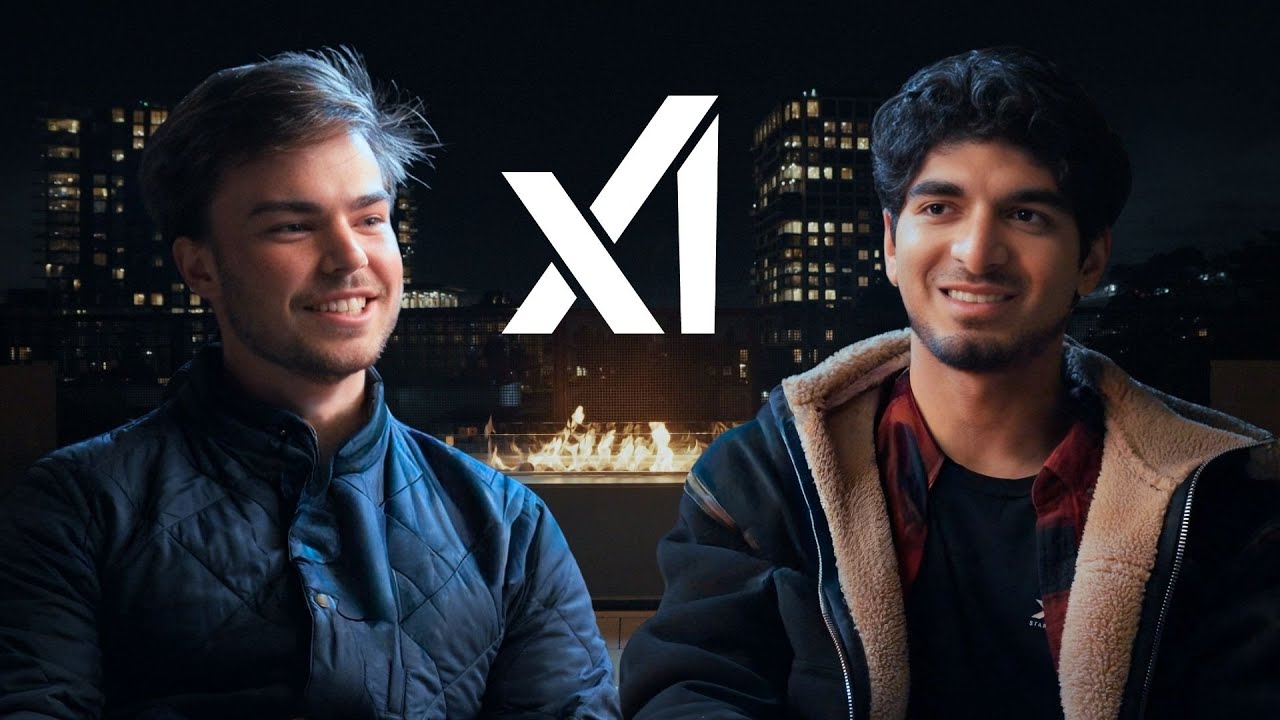
Sulaiman Ghori is an engineer at xAI who joined the company around the Grok 3 era, when it was still a small team of roughly 100 engineers. He describes a culture of extreme speed, minimal bureaucracy, and radical ownership where engineers routinely ship millions of dollars of value per day, iterate on models multiple times daily, and work directly with Elon Musk to unblock problems with a single phone call. The company’s biggest edge is its hardware infrastructure — particularly the Colossus data center built in 122 days — and its unconventional approach to deploying AI at scale, including a plan to run “human emulators” on idle Tesla car computers.
How xAI operates
No artificial deadlines, only “yesterday” — There are no due dates at xAI; everything is expected immediately. Blockers are resolved by going to the root physical or technical cause rather than accepting conventional limitations.
Elon predicts bottlenecks months or years ahead and works backward to remove them. He identifies a core metric tied to financial or physical return, and the entire team focuses exclusively on driving that metric.
Conventional timelines are shredded routinely — Model iterations on Macrohard happen daily or multiple times per day, including pre-training. New GPU racks can go from standing up to running training jobs within hours, not weeks.
The stack is stripped of unnecessary overhead — Engineers found that most software invented in the last decade carries assumed limitations around speed and latency that aren’t physically real. Removing that overhead yields 2–8x improvements.
Three layers of management: ICs, co-founders/managers, and Elon — This flat structure means decisions are bottom-up. Managers still write code. There’s very little top-down direction.
Joining xAI
Sulaiman was recruited by co-founder Greg Yang via an email he almost marked as spam. He had been working on his own startup and an asteroid mining concept before rejoining the interview process.
His first day: a laptop, a badge, and no instructions — No one told him what to do or assigned him a desk. He sat at random empty desks and could point to the person who built any given system in the building. He started helping the Grok/X integration team (Asrock) during his first week.
The company was roughly 100x smaller than other labs at the time, yet had just shipped Grok 3.
Colossus and infrastructure
Colossus was built in 122 days on a temporary land lease structured as a “carnival company” to fast-track permitting. The speed enabled xAI to assume resource availability and plan model sizes (like Grok 4/5) years in advance.
Power is a constant bottleneck — The data center uses 80+ mobile generators on trucks and massive battery packs to balance load. Batteries react to megawatt-scale fluctuations in milliseconds, while generators take time to spin up or down. They must switch seamlessly without interrupting volatile training runs.
Elon’s “fire to fire” problem-solving — When new Nvidia hardware arrived with software issues, Elon would call directly, and a patch would be delivered the next day. Engineers would work side by side with him until resolved, turning week-long blockers into same-day fixes.
Macrohard: human emulators
Macrohard emulates any human digital task — keyboard, mouse, and screen interactions — without requiring any software adoption. It can be deployed wherever a human currently works digitally.
Deployment plan: use idle Tesla car computers — There are ~4 million Teslas in North America, many with Hardware 4, sitting idle 70–80% of the time with power, cooling, and networking already available. Owners could lease compute time, getting their lease paid while xAI gets a capital-efficient “digital Optimus” at far cheaper cost than AWS or Nvidia hardware.
Scaling from 1,000 to 1 million emulators is not the hardest part — The infrastructure already exists on the Tesla network. The challenge is purely software.
The decision to go 1.5x–8x+ faster than a human was made very early and shaped everything downstream. Other labs pursue bigger models with more reasoning; xAI went the opposite direction, prioritizing speed. This also enables faster iteration cycles (1 week instead of 4).
Generalization has exceeded expectations — Tasks the model was never trained on are performed flawlessly. Sulaiman gave Elon untrained test cases that same day with perfect results.
Internal testing revealed surprising behaviors — Virtual employees were unknowingly assigned tasks by real employees. Someone would be asked to “come to my desk” and find nothing there. Org chart pings would go out for people who were actually AI emulations.
Humans forget to document their own processes — When watching human workers to train emulators, the team consistently found 20+ missing steps that the humans had left out of interviews because they were on autopilot. This is the core problem Macrohard solves: repetitive digital work humans do without thinking.
Working culture and talent
“No one tells me no” — If Sulaiman has a good idea, he can implement it the same day and get an answer from Elon or a customer immediately. There’s no deliberation or bureaucracy.
$2.5 million per commit to the main repo — He did five commits in one day, adding roughly $12.5M in value. The leverage is extreme because of the talent density and internal tooling.
Everyone is an engineer — Even the sales team writes code and trains models. At one point, fewer than eight people at the company were not engineers in some capacity. This reduces information compression: the customer talks directly to the builder.
Fuzzy team boundaries — Anyone can fix anything. If Sulaiman needs to update VM infrastructure, he does it, shows the owner, and it’s merged immediately. There’s no strict regiment or permission-seeking.
Hiring emphasizes simple solutions — Sulaiman gives candidates a deceptively simple computer vision problem that most people overthink. He looks for people who find the 10-line solution instead of the 200-line one, especially as AI agents happily write bloated code.
Challenging requirements is a hiring signal — Borrowed from Chester Zai: include an incorrect or impossible requirement in the interview. If the candidate doesn’t push back, they don’t get hired.
Hackathons as recruiting tools — Even if only five people are hired from a 500-person hackathon, the expected return on company valuation exceeds the cost.
Experimentation and speed
Multiple experiments run in parallel — On the model side, 2–3 experiments launch simultaneously, often because a hardware or data prerequisite will be ready in two weeks but something needs to ship today.
Timelines are compressed by questioning assumptions — When given an “unreasonable” deadline, the team spends two minutes complaining, then identifies which assumptions are driving the timeline, knocks them out, and gets a 2x improvement per iteration.
Elon’s timelines have self-corrected — His estimates are now more calibrated from deploying hardware at scale across multiple companies. He updates them daily based on real parameters. His rule of thumb: try to do in one month what would take a year, and you’ll probably do it in two.
Meetings with Elon
Feedback is either very high-level or very low-level — Product direction and customer segment focus come from the top. On compute efficiency or latency, he gives specific technical suggestions and demands experimental proof, not opinions.
Smooth meetings mean thumbs up and keep going — If there’s a total reversal, the team messed up somewhere. Identifying where becomes an implicit muscle built over time.
When wrong Grok outputs appear on X, Elon flags them, whoever is awake starts a thread, a postmortem is written, and the fix ships within 12–24 hours. Making a mistake once is acceptable; making it twice is not.
Surges and war rooms — For Macrohard, the team has operated in a war room for four consecutive months. They outgrew the original room and moved into the gym. Elon once walked into the empty original room, confused, then found everyone in the gym for an impromptu check-in.
“Some nights where months happen” — A co-founder’s post captured the feeling: a single night of intense pushing achieved what might have taken weeks, compressing massive technical progress into hours.
Sulaiman’s background and mindset
Started programming at 11 after his dad gave him a book. Got serious when he realized he could make money writing game hack scripts online, earning a few hundred dollars through a PayPal custody account his dad set up.
Built a 3D printer from Alibaba parts at 13 — A RepRap-style self-replicating printer. The sketchy power supply caught fire, and a copper winding went two inches into his thumb at 3 a.m. He spent an hour trying to pull it out with tweezers, then just cut it off and snipped the rest out over the following weeks.
Ran a fidget spinner factory in his bedroom — Bought 1,000 skateboard bearings from China, set up overnight print cycles, spray-painted and assembled them in his garage, and sold them through a network of kid distributors at other schools. The county shut it down after two months, officially because school food vendors have exclusive selling rights on school property.
“Healthy disrespect for authority” — He wants unconventional outcomes, and institutions enforce convention. He believes creativity comes from free-spirited individuals, not conventional paths.
Built a liquid fuel rocket engine in ~24 hours on a whim before Thanksgiving. Designed it for remote firing but had to stand six feet away with a USB cable because the power supply hadn’t arrived. His jacket caught fire from unburnt ethanol spray due to injector over-pressure events. He keeps the burnt jacket as a trophy.
Chose xAI over SpaceX or Tesla for maximum individual leverage — As the newest and smallest of Elon’s companies, his proportional impact on decisions and implementation is far larger. He also found he’s actually faster at xAI than on his own because the groundwork and team have already solved steps he’d otherwise do from scratch.