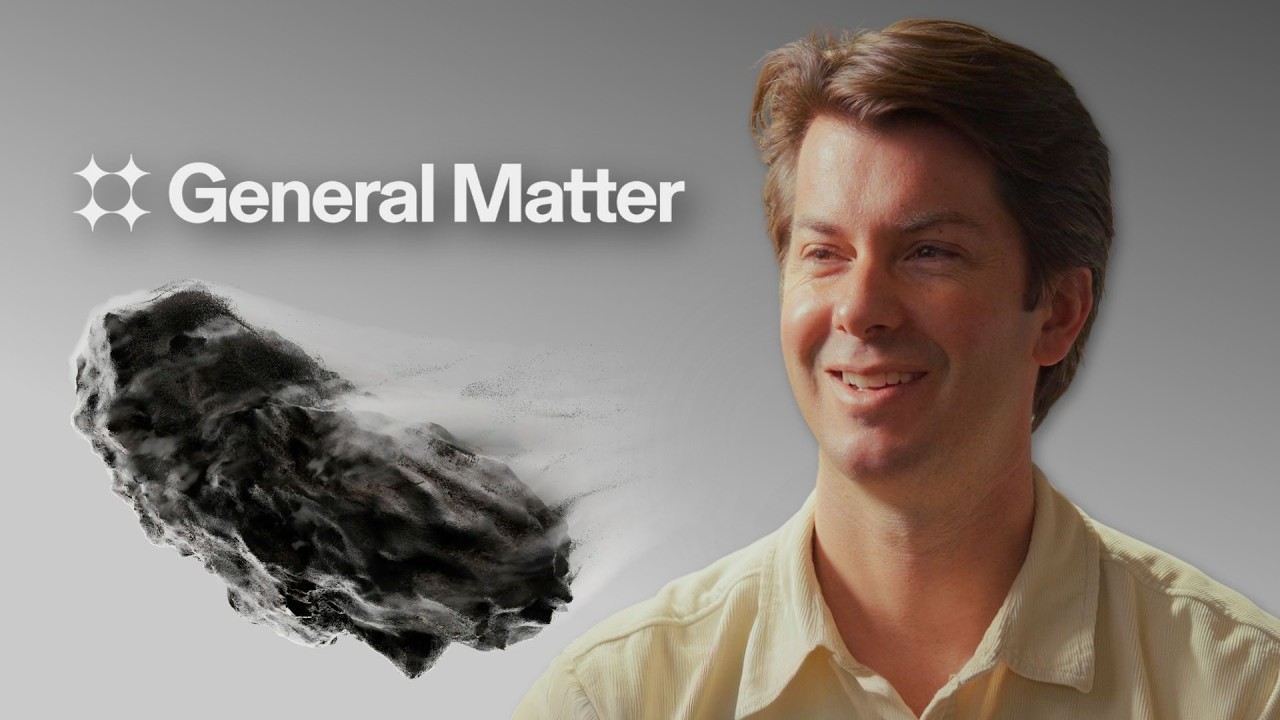
- Scott Nolan is the co-founder and CEO of General Matter, a startup building a privately owned uranium enrichment facility in the United States, a capability the country lost when it shut down its last gaseous diffusion plant in 2013. The episode covers why the US is dangerously dependent on foreign uranium enrichment (primarily Russia and Europe), what happens when that supply is cut off, how the history of enrichment technology led to this moment, and how Nolan’s experience at SpaceX and Founders Fund shaped his approach to solving one of the most critical and overlooked infrastructure problems in the US. The central thesis is that enrichment is the bottleneck for every nuclear reactor in the country, and without domestic capacity, the US cannot expand its grid, power AI data centers, deploy advanced reactors, or maintain energy independence.
The uranium supply crisis
-
Russia supplies roughly 25% of US enriched uranium, and a bipartisan law bans all Russian uranium imports starting January 1, 2028. Currently, utilities operate under a waiver process allowing them to import Russian fuel if no alternative exists, but that waiver expires at the end of 2027.
- If Russia stopped shipments tomorrow, utilities would burn through inventories, try to buy more from Europe, and eventually face the prospect of purchasing from China, which itself may be sourcing from Russia. Prices would spike, utility rates would rise significantly, and brownouts would become likely.
- The nuclear fuel supply chain has enormous lag times: mining takes years to ramp, conversion facilities are near capacity, and enrichment requires large factories running specialized equipment. It cannot be scaled overnight.
- The 2028 ban makes this a near-term reality, not a hypothetical. Nolan started General Matter specifically to address this gap.
-
The US cannot make fuel for advanced reactors at all today. All advanced reactor startups (often called SMRs or small modular reactors) require HALEU (High-Assay Low-Enriched Uranium), enriched to 19.75%, but the US has zero domestic production capability. The only current source is Russia.
- This means every advanced reactor company in the US faces a fuel supply problem before they can even begin operation. The Department of Energy has limited HALEU to distribute, but it is nowhere near enough for commercial-scale deployment.
How the US lost its enrichment capability
- The US was the world leader in uranium enrichment during the Manhattan Project, using a process called gaseous diffusion at three sites: Oak Ridge, Tennessee; Paducah, Kentucky; and Portsmouth, Ohio. At its peak, the US performed 85–90% of global enrichment.
- After the Cold War, Europe and Russia adopted gas centrifuge technology, which is more energy-efficient than gaseous diffusion. The US kept using its older, more expensive process.
- When the Berlin Wall fell, the US decided enrichment was an economic decision, not a national security one. The country had a large weapons stockpile, strong trade relationships, and believed free trade made domestic capacity unnecessary. Over the following decades, the US progressively shut down its gaseous diffusion plants, closing the last one in Paducah in 2013.
- This decision reflected a broader post-Cold War consensus that free trade with Europe, Russia, and China made domestic production of critical materials unnecessary. Nolan argues this was a major strategic error.
- The second-order effect is global influence: because the US cannot produce reactor fuel, Russia and China now supply fuel for over 70% of reactors deployed internationally. Their ability to bundle reactor designs with fuel supply gives them enormous geopolitical leverage.
The US reactor gap with China
- The US currently has 94 operational reactors, the most of any country. China has about 59, but has 28–30 under construction, while the US has roughly two.
- In 2010, the US and China had nearly identical electricity grids (~4,000 terawatt-hours each). Since then, China has nearly tripled its grid while the US has stayed flat.
- This capacity gap is upstream of everything: AI, data centers, manufacturing, and defense all require reliable baseload power. Nuclear is the only proven clean baseload source that can scale.
- If given $25 billion to turn on reactors as fast as possible, Nolan would deploy some AP-1000s (proven ~1 gigawatt reactors) immediately while saving capital for the wave of advanced SMRs expected to be licensed in the coming years.
How advanced reactors change the fuel equation
- The promise of SMRs is to turn nuclear from a decade-long construction project into a factory-built, modular product that can be deployed at scale. But smaller cores require more enriched fuel to achieve efficient reactions.
- Today’s reactors use LEU (Low-Enriched Uranium) at 3–5% U-235. Advanced reactors need HALEU at up to 19.75%. The enrichment process is the same in principle, just more stages of refinement, analogous to further distillation.
- The US has no capability to produce HALEU commercially. This is the core problem General Matter was founded to solve.
How Founders Fund decides to start companies
- At Founders Fund, Nolan spent over a decade investing in engineering-driven companies. The fund’s philosophy is to back founders unconditionally and focus on problems that are critically important but not getting solved.
- The standard approach is to find someone already working on a problem and fund them. Starting a company is the last resort, done only when no one else is addressing a critical need.
- Nolan’s criteria for starting a company: (1) a really important problem that isn’t getting solved, and (2) a realistic shot at helping solve it given his background.
- In the early 2020s, through conversations with advanced reactor companies (including one Founders Fund had invested in), Nolan discovered that reactor licensing was a known challenge, but fuel supply was the much bigger, unaddressed problem. He spent all of 2023 searching for a company solving the enrichment gap and found none. General Matter was incorporated and launched in early 2024.
Why enrichment wasn’t being solved
- The problem was largely invisible: people see reactors operating and assume the supply chain works. Utilities had been buying enrichment services from Europe and Russia at low cost for decades, so there was no impetus to build new domestic capacity.
- Enrichment also doesn’t seem “sexy”—it’s an industrial processing business, not a flashy technology. And historically, it was done by nation-states or government spinouts, leading to the assumption that private companies couldn’t or shouldn’t do it.
- Nolan’s early conversations with the Department of Energy confirmed that yes, this was a real problem, and yes, a private company could help solve it, but it would require close government collaboration.
- The combination of low visibility, lack of sexiness, and government-dominated history meant no private company was working on it.
Lessons from SpaceX applied to enrichment
-
Nolan worked at Boeing as an intern on a classified military program and experienced the “cost-plus” incentive structure firsthand: coworkers told him to slow down because “we have to make this project last.” The incentive was to maximize contract value, not to move fast or reduce cost.
-
He then joined SpaceX in 2003–2004 when it had roughly 50 employees. The contrast was stark. The employee handbook’s first page read: “This is not a science experiment. This is an engineering problem.” The culture was one of extreme urgency, meritocracy, and mission focus.
- Nolan was there for the first two Falcon 1 launch failures. The first failed due to a fuel leak and fire. The second was extremely close, failing only due to fuel slosh instability (insufficient baffling in the second stage tank). The third, which he had left by then, failed due to a fluke timing issue. The fourth succeeded.
- The lesson from early SpaceX: even when you believe deeply in the mission, things can be closer to the edge than you think. The response in later years was to push harder upfront rather than letting companies get near bankruptcy.
-
Key operational lessons Nolan brought from SpaceX to General Matter:
- Parallelization: do engineering, site selection, licensing, manufacturing setup, and construction preparation simultaneously rather than sequentially. This can turn a 20-year timeline into 5 years.
- Question time resolution: instead of accepting that a task “takes a week,” ask whether it can take 4 days. Push on every block of time. “Minutes make hours, hours make days, days make months.”
- Decide at 80% confidence: if a decision is reversible, don’t spend months trying to get to 99% certainty. Pick the best option and move forward. Momentum has real value.
- Don’t beat your head against the wall: if a technical path isn’t working, have the humility to change direction. SpaceX switched from ablative engine chambers to regeneratively cooled all-metal engines when the ablative approach couldn’t handle the required pressures and temperatures. This was a major schedule hit but was clearly the right call.
- The idiot index for timelines: just as SpaceX asked why rockets cost 100x their raw materials, General Matter asks why enrichment facilities take as long as they do and cost what they cost. There is likely a 2x or greater cost reduction available through better facility design, in-house EPC management, and optimized siting.
The idiot index and cost of enrichment
- The “idiot index” (a SpaceX concept) measures the ratio of a finished product’s cost to its raw material cost. For rockets, it was roughly 100:1. For enrichment, the analogy is the cost per unit of enrichment (dollars per SWU—Separative Work Unit) relative to the energy and raw uranium input.
- Historically, gaseous diffusion was extremely energy-intensive. Modern centrifuge processes are more efficient, but the capital cost of building enrichment facilities is enormous, and the energy cost is relatively low.
- Nolan believes there is at least a 2x cost reduction available through designing proprietary technology (not off-the-shelf), managing construction in-house rather than outsourcing to a general contractor, and siting in locations with cheap available energy.
Vertical integration and building the factory
- General Matter decided early that it would need to vertically integrate and do most things in-house, drawing on the SpaceX lesson that outsourcing critical work to third parties who don’t fully understand the mission leads to delays and cost overruns.
- The more surprising lesson from the first year: not only should the company design and build the enrichment technology itself, it should also design and manage the construction of the buildings. Throwing building design “over the wall” to an outside firm requires so much explanation that it’s faster and better to do it in-house.
- This is especially true for bespoke facilities. Standardized buildings (like Amazon warehouses) can be outsourced, but a custom enrichment facility requires the kind of integrated design control that only the core team can provide.
Site selection: Paducah, Kentucky
- General Matter spent about a year evaluating sites across 11 states, looking at over 1,000 parcels of land. They considered factors like state support for energy, nuclear history, tax incentives, land cost, and supply chain access.
- They ultimately chose Paducah, Kentucky, the site of the last US gaseous diffusion plant (shut down in 2013). The community remembers enrichment, understands it’s safe, and actively wants the facility back. The Department of Energy still owns the land, and General Matter worked out a lease for a portion of the site.
- Nolan notes this decision could have taken years of exhaustive analysis, but once they visited Paducah and understood the community’s support, it was obvious. The company has since been able to move forward rapidly on all parallel workstreams.
Maintaining urgency across a multi-decade timeline
- General Matter’s goal is to have its first facility online before the end of the decade, to be in position when the Russian uranium ban takes full effect in 2028 and to serve the wave of advanced reactors needing HALEU in the 2030s.
- The motivation is external: the market needs this now. Every day of delay is a day the US remains dependent on foreign enrichment.
- Internally, the company maintains urgency through a master schedule that breaks the entire project into line items tracked weekly. Every active item is reviewed for status, required completion date, and expected completion date. The team identifies the “long pole in the tent”—the item driving the overall schedule—and over-resources it.
- The process is: decompose the big picture into milestones, break milestones into daily tasks, identify schedule drivers, allocate resources to the critical path, and stay ahead of the next-longest path.
China, war, and energy security
- Currently, the US nuclear supply chain (mining, conversion, enrichment, fuel fabrication) does not depend on China. Mining comes from the US, Canada, Australia, Kazakhstan, and elsewhere. Conversion is done in the US and Canada. Enrichment comes from Europe and Russia. Fuel fabrication is primarily domestic.
- However, China’s enrichment capacity is growing rapidly: from roughly 5% of global capacity five years ago to about 15% today. If trends continue, China could match or exceed Russia’s enrichment capacity within a decade.
- Nolan draws a parallel to the launch market: in 2002, the US was below 30% of global launch capacity. SpaceX’s success pushed it above 90%. Without that intervention, China would likely be dominant. The same dynamic is playing out in enrichment.
- The broader point: the US has stayed flat in critical infrastructure capacity for decades while China grows rapidly. This is true across many sectors, not just nuclear.
The AI data center boom makes this urgent
- When General Matter was founded, the AI data center boom was not a primary motivation. The company was focused on bringing back domestic enrichment capability for advanced reactors and energy independence.
- Since then, projections show AI data center electricity demand could equal the entire current US grid by 2030. Hyperscalers are planning to deploy SMRs “behind the meter” at their own sites because building new centralized nuclear plants and transmission infrastructure is too slow.
- This means the demand for nuclear fuel will increase dramatically in the 2030s. General Matter is sizing its Kentucky facility to satisfy domestic demand through 2040 and designing everything for rapid scaling.
- The AI boom has made it even more obvious that the US needs to double its grid capacity, and nuclear fuel is the gating factor.
What conventional wisdom gets wrong
- “You need nuclear PhDs to build a nuclear company.” The assumption is that a nuclear enrichment company must be staffed primarily by nuclear engineers. In reality, an enrichment facility has no nuclear reactions and no chemical reactions—it’s phase change and separation. The team needs nuclear engineers for safety and licensing, but the bulk of the work is mechanical, electrical, software, and aerospace engineering. This is why General Matter is headquartered in Los Angeles, the hub for that talent, rather than at a national lab.
- Nolan extends this further: some of the best engineers he’s worked with don’t have formal degrees at all. They’re hands-on problem solvers who’ve built systems their whole lives. Great engineering talent comes in many forms.
- “The regulator is the problem.” Many people blame the NRC for making nuclear too expensive and slow. Nolan’s experience is the opposite: the regulator is workable. The real problem is that the industry has historically done things the way they’ve always been done, with cost-plus incentives that discourage innovation and speed. SpaceX proved that a private company can work with regulators to achieve better safety, reliability, and lower cost simultaneously.
How Elon makes non-obvious decisions
- Nolan observed several decisions at SpaceX that seemed wrong in the moment but proved correct:
- Switching from ablative to regeneratively cooled engines: a major schedule hit, but the ablative approach couldn’t handle the performance requirements. The switch was clearly right.
- Going to Falcon 9 earlier than expected: while Falcon 1 was still struggling, SpaceX was already developing Falcon 9. Some people inside the company were surprised, but the small-satellite market Falcon 1 served was tiny. Jumping to the larger market was the right call.
- Choosing reliable, proven components over higher-performance exotic ones: for the vacuum engine nozzle, SpaceX chose a known, reliable, affordable option over a more exotic higher-performance one. This was pragmatic and correct.
- The overarching pattern: decisions fell into two categories—(1) pragmatic choices focused on cost and schedule, and (2) big-picture choices that looked a decade ahead and bet on trends (like cameras over LIDAR at Tesla) rather than optimizing for a dead end.
- Nolan’s summary: “This is not a science experiment. This is an engineering problem.” Stay focused on the core metric, make many small correct decisions, and avoid getting stuck on sacred ideas.
Nolan’s evolution in thinking about company building
- Over 12+ years at Founders Fund, Nolan’s thinking shifted from investing in many early-stage engineering companies to focusing on a small handful of companies that could be truly massive and important.
- He concluded that it’s sometimes easier to build a really hard company than an easy one, because hard, unsolved problems attract the best talent. If the problem is important enough and challenging enough, you get 10x better people, which more than compensates for the difficulty.
- His advice: don’t focus on problems that are already being solved or adjacent to solved problems. Focus on big problems that aren’t getting solved. Dedicate yourself to them. The best talent wants to work on the hardest, most important problems, even for less money.
- This is the founding philosophy of General Matter: enrichment is a critical, unsolved, unglamorous problem, and that’s exactly why it’s worth doing.