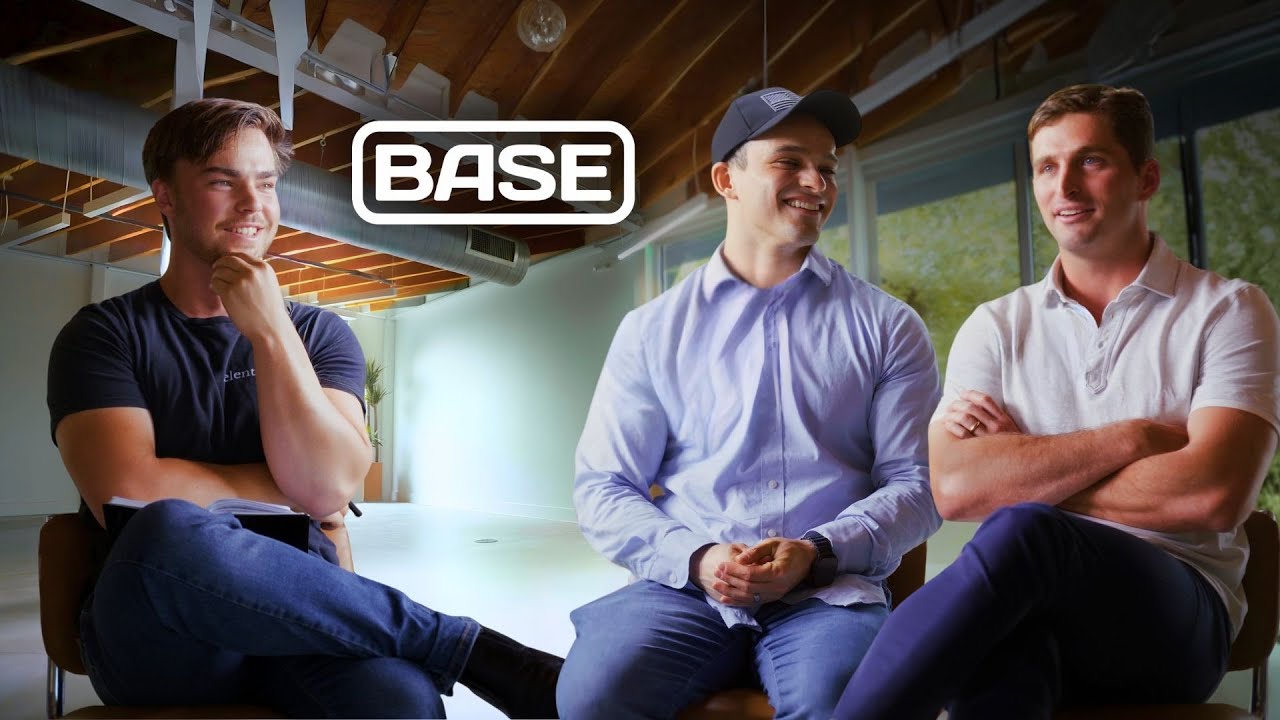
- Base Power is a vertically integrated energy startup co-founded by Zach Dell and Justin Lopas, aiming to lower the cost of delivered electricity to American homes by deploying residential batteries that participate in wholesale energy markets. The company, roughly two and a half years old, has scaled from 40 to 240 employees in about 12 months and is now entering “production hell” with its third-generation fully custom battery hardware. Their core thesis is a flywheel: vertical integration and proprietary technology drive down costs, which enables lower prices, which drives demand and scale, which further reduces costs.
The Business Model and Competitive Advantage
-
Electricity is a commodity, so the only real competitive advantage is cost structure.
- If your electrons are the cheapest and most reliable, customers will buy them.
- Base Power’s cost advantage comes from two sources: vertical integration and technology development.
- The flywheel: lower cost → higher asset-level returns → lower prices for customers → more demand → more scale → lower cost → higher returns → lower prices.
-
Vertical integration means controlling the entire value chain.
- Customer acquisition, hardware design and manufacturing, warehousing, logistics, installation via their own electricians, and long-term battery maintenance.
- Contrast with competitors who piece together external parties for each step.
- The company started by outsourcing everything (Craigslist electricians, third-party hardware, third-party logistics) to learn what good looked like, then brought each function in house once they understood it.
- They deliberately avoided spending years perfecting a product in a lab before touching customers—they got in the field early, took punches, and iterated.
-
The product has evolved through three generations.
- Gen 1: 70% off-the-shelf, 30% custom.
- Gen 2: White-labeled, custom-designed by a third party—this was a mistake they held on to too long, costing roughly six months.
- Gen 3: Fully custom, designed and manufactured in house—this is what they’re now ramping into production.
- The lesson: they should have “burned the boats” and gone straight to Gen 3, rather than stair-stepping through Gen 2.
Culture and Operating Principles
-
“Base pace” is the company’s internal concept for operating speed.
- It means moving as fast as reasonably possible without breaking too much.
- Coined by a third party as “violent execution,” but the team thinks of it as a sustained cadence.
- In any interaction, the ball is either in their court or the counterparty’s—they minimize the seconds it’s in their court.
-
Metrics are displayed on screens throughout the office, team by team.
- Each team lead chooses their own metrics and defines what green, yellow, and red mean.
- Metrics must be actionable, not just informational.
- Example: the deployments team has a queue of customers in a “bad state”—the only green number is zero; everything else is red.
- The approach was influenced by practices from SpaceX and other companies, adapted into Base Power’s own culture.
-
The organization is highly decentralized with strong individual leaders.
- The first five hires (besides the co-founders) became the leadership team, all of whom had run large teams at major companies before.
- Zach and Justin set north stars and ensure everyone speaks the same language, but team leads are given high ownership and autonomy.
- They explicitly chose to hire for domain expertise and leadership capability from day one, rather than hiring junior people and layering senior people over them later.
-
Hiring process is distinctive.
- After interviews, the hiring manager makes the final call—other panelists give thumbs up or down, but it’s not a vote.
- A thumbs up means “I’m willing to fight for this person”; a thumbs down means “I wasn’t blown away.”
- If the hiring manager overrules thumbs-down feedback from others and the hire doesn’t work out, there’s a blameless post-mortem: “What did we miss? What mental models led to this?”
- The hiring manager owns the decision entirely.
-
The office is designed for flatness and proximity.
- No private offices—co-founders sit at the same kind of desks as interns, all in a bullpen.
- All calendars are open; anyone can book time with anyone.
- Two catered meals a day to keep people together and talking.
- Group lunches are sacred on everyone’s calendar; leadership intentionally sits with people they don’t know well, especially field and warehouse workers visiting the office.
-
Directness is a cultural norm.
- If a meeting is wasteful (too many people, bad use of time), they cancel it and replace it with an email.
- Feedback is given explicitly and in the moment—not saved for annual reviews.
- When someone does something misaligned, the response is “Hey, this was bad, let’s not do this again”—not personal attacks, but clear course correction.
Staying Close to the Work and the Customer
-
Gemba walks (from the Toyota Production System) are practiced regularly.
- Everyone from software engineers to policy team members goes to see installations, warehouse operations, or manufacturing firsthand.
- Leadership flies to supplier sites or hardware development teams when problems arise—not always because something is catastrophically wrong, but to stay viscerally close to the actual work.
-
Customer feedback is gathered obsessively and through multiple channels.
- Zach’s email is publicly available; customers email him directly.
- In the early days, Zach and Cole (head of growth) knocked on doors themselves to have conversations about power outages and electricity bills.
- Zach still asks Uber drivers and restaurant companions about their power situations.
- Cole did a “secret shopper” install on his own parents’ house in Dallas, taking detailed notes on the electrician’s experience without revealing his identity.
- These conversations rarely produce wholesale strategy changes but drive small, critical iterations: clearer website copy, better email onboarding, less confusing sign-up flows—things that improve conversion rates.
-
Leadership resists the temptation to separate from frontline reality.
- As companies grow, layers of management create fog between leadership and what’s actually happening.
- Base Power actively fights this by staying as close to the road as possible—no “17 layers of damping.”
Scaling and Production Challenges
-
Headcount grew from 40 to 240 in roughly 12 months.
- This was possible because the founding leadership team had all managed large teams before and didn’t need to be taught how to hire, lead, or coach.
- A strong talent team and the company’s press notoriety helped attract candidates.
- Frontline hiring (warehouse, manufacturing, electricians) was easier to scale because those talent pools already existed.
- Things do break at this growth rate, and the company accepts that as the cost of pushing hard.
-
They are now entering “production hell” with Gen 3.
- Production hell is not one big problem but the summation of many small-to-medium problems: machine lead times, hiring enough people, real estate negotiations, permitting, interconnections, van procurement.
- They experienced a version of this even on the deployment side before manufacturing scaled—permitting delays, interconnection challenges with utilities, hiring enough electricians.
- They expect Q1–Q3 of next year to be particularly intense.
Navigating Regulation and Policy
- Energy is heavily regulated, primarily at the state level.
- Texas allows retailers to put batteries on customers’ homes and directly access wholesale electricity markets—most other states do not.
- Base Power successfully supported a Texas bill that streamlined permitting.
- Interconnection (the utility-side equivalent of permitting) is the next major bottleneck.
- Opening market access in other states is a 12-to-24-month policy effort.
- In non-retail-choice markets, they already have utility partnership models working, though some regulatory barriers make certain markets difficult.
Leadership and Personal Evolution
-
There is no playbook for growing into a CEO role at a company scaling this fast.
- Zach and Justin’s approach is bottoms up: show up every day, work hard, set ambitious goals, push each other, and learn from the talented people around them.
- They aggressively and regularly seek feedback from their teams, asking specific questions like “What behaviors would you like to see more or less of?” rather than generic “Any feedback?”
- They tailor their leadership style to the individual they’re working with rather than using a one-size-fits-all approach.
-
Frank Slootman is an admired leadership model.
- They admire his balance of intensity and focus—two things that can easily miss each other (high intensity without focus, or high focus without intensity).
- On the intensity side: leaders set the emotional tone for the entire organization. If you bring intensity every day, your team mirrors it one for one. Zach observed this firsthand working closely with Elon Musk at SpaceX.
- On the focus side: they’ve said no to an enormous number of potentially interesting projects (generation, different retail products, new states) to stay laser focused on building the most profitable and largest distributed battery fleet in the world.
-
Pulling in timelines is a core leadership skill.
- Two levers: remove work (descope) or work harder/faster.
- Working harder has a ceiling (people need sleep, sustainability matters), so the primary lever is deleting parts, processes, and steps that aren’t truly necessary.
- Learned from Elon at SpaceX: skipping unnecessary steps is far and away the fastest way to accelerate schedule.
- Parallelizing serial processes (running all safety certification tests simultaneously instead of sequentially).
- Setting specific dates (November 3rd) rather than vague timeframes (Q3) to drive urgency.
-
Alignment comes from a deeply mission-driven culture.
- Everyone in the office can articulate the mission: affordable, reliable power / lower the cost of electricity for all.
- Monthly all-hands meetings review three northstar goals tied to specific metrics.
- A detailed monthly update goes to the whole company on progress and tradeoffs.
- Quarterly “Engine of Success” presentations reinforce the playbook for how the company wins.
- The strategy itself—the flywheel—has stayed essentially the same since the original founding memo; only the tactics and ambition level have evolved.
The Co-Founder Relationship
- Zach and Justin’s relationship has strengthened over time.
- They are very different people with different skill sets, temperaments, and approaches.
- They have healthy conflict daily—they push each other and make each other better.
- Over time, they’ve learned each other’s idiosyncrasies, mannerisms, and triggers, and have built deep trust: each knows the other will handle their responsibilities well.
- Both expected the company-building process to be painful and are motivated by the grind itself—they describe it as “chewing glass” and compare it to athletic competition.
- They see the same trait in many Base Power employees: people who push themselves hard outside of work tend to push themselves hard inside of work too.