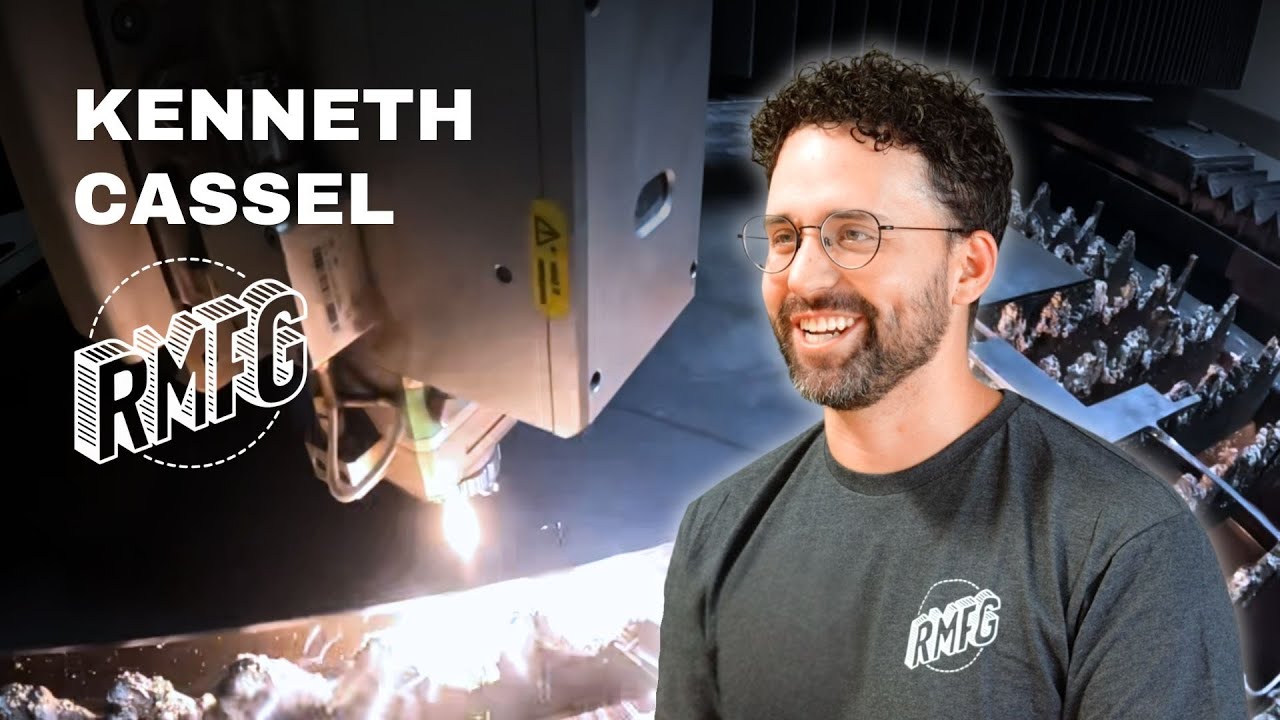
Kenneth Cassel is the founder of RMFG, a metal fabrication startup in Fort Worth, Texas, that makes custom sheet metal parts using fiber laser cutting and other fabrication processes. He’s building the company through a series of radical pivots, personal frugality, and deep customer relationships, with the goal of creating a beloved brand in manufacturing that combines software, automation, and hands-on fabrication.
Kenneth’s background and path to manufacturing
Grew up poor; his mother is from Peru and his father had 11 siblings and was homeless as a child
Originally studied music (saxophone, jazz band) at University of North Texas but dropped out when he realized music education career prospects were grim, especially after having his first son at age 20
Worked full-time doing maintenance (plumbing, electrical, HVAC) at a large private gas station chain, working 50+ hour weeks including weekends, holidays, and overnights
Taught himself programming after building a kegarator project with a Raspberry Pi, then went back to school for computer science in the evenings while still working full-time
Eventually landed a software engineering internship, quit his job and school, cashed out his 401k, and went all-in on the internship, which turned into a full-time role
Built a Vim teaching course that made ~$10K/month, then built a course platform for developers called Slip, which got him into Y Combinator in summer 2021 as a solo founder
The pivot journey
After YC, spent about a year on developer education but realized it wasn’t venture-scale, especially as AI tools like GitHub Copilot were emerging and threatening the market
Talked to YC partner Diana about shutting down or pivoting; decided to pivot rather than return capital
First pivot: built software for off-the-shelf robot arms, doing vision-based robotic control for manufacturers (text-directed pick and place), trying to rent robots as a service
Struggled to get traction with manufacturers who were bombarded with salespeople and hard to take seriously as outsiders
A pivotal moment came when a robotics founder friend was selling $3,000 industrial sheet metal mailboxes on Etsy but couldn’t find fabricators to keep up with demand, losing tens of thousands monthly
Kenneth and co-founder Alfredo started in a detached garage (described as a “shack in the wilderness” near a lake with deer walking around), doing robotic welding demos
Realized the real problem wasn’t robots vs. humans but simply finding reliable fabrication capacity
Decided to become manufacturers themselves: needed to buy a fiber laser cutter and move into commercial space
Betting the farm on a $200K laser
Had ~$300K left in the bank; couldn’t get financing for industrial equipment as a startup with no revenue and no manufacturing background
Bought a fiber laser cutter outright for ~$200K, leaving ~$100K in runway (roughly 4-5 months at their low burn rate)
The delivery day was the most stressful day of the startup journey: the rigger arrived visibly stressed and angry, swearing and throwing papers, saying the laser wouldn’t fit through the garage door
The laser barely fit through the garage door into the warehouse
The equipment sales reps were confused that they had no customers and no experience cutting metal
Spent the first month in an empty warehouse with just two desks, writing customer-facing software before any equipment arrived
First three months went well; raised a small round and have been live for about a year
Getting early customers
First customers came from Twitter and the YC network
First customer was Pete (now at Toolpath), who ordered through their API (the only customer to do so)
Also got customers from Instagram and word of mouth
Kenneth personally drove 200 miles to Austin to deliver parts to Pipe Dream’s Garrett in person, renting a truck to do it, because he believed in meeting customers face-to-face even for small orders
Emphasizes that manufacturing is relationship-based and that going above and beyond (like the YC “do things that don’t scale” ethos) builds lasting customer loyalty
Building the team and hiring
Found manufacturing talent through Twitter: hired John Rogen (who later went to SpaceX) after seeing him tweet “all I want for Christmas is a Trump fiber laser”
John’s replacement Ryan was found through John’s recommendation; they were on the same FIRST Robotics team that won Worlds
Looks for candidates with evidence of what they’ve built (personal websites, portfolios, camera roll of projects)
Uses FIRST Robotics and FSAE as strong signals for hardware talent
Notes that many mechanical engineering graduates don’t have portfolios, which is a red flag
Things going wrong and learning from mistakes
Early mistakes included sending customers the wrong material (stainless instead of what was specified)
Believes in being earnest, admitting mistakes immediately, and fixing them as fast as possible, citing research that a small problem quickly resolved leads to the best customer experience
Shipped a large order (50% of revenue at the time) to Beantock (YC company doing indoor vertical farms) in cardboard boxes instead of crates; FedEx dropped the parts off the pallet and destroyed most of them
Didn’t have insurance on the shipment; chose to remake all the damaged parts rather than deal with insurance claims
Bought a used PEM (hardness insertion) press from a metal shop two hours away that didn’t work; the seller claimed it worked but it had been sitting unused for 3-4 years with a jammed cylinder
Bought a new PEM press to replace it, but the delivery company cracked the touch screen on the new machine; Kenneth used his maintenance background to order a replacement screen and fix it himself
Buys used equipment at auction but has learned to test thoroughly in person before purchasing
Building in Fort Worth vs. Silicon Valley
Fort Worth is the second-largest manufacturing hub in the US with abundant aerospace and manufacturing talent
Industrial real estate is relatively cheap compared to SF or LA
Primary reason for being in DFW is family-based, but the manufacturing ecosystem is a strong secondary advantage
Believes you can build anywhere, citing Peter Beck starting Rocket Lab in New Zealand where there was no aerospace industry
Has a supportive landlord with a manufacturing background who likes “collecting interesting tenants” and has been pro-startup in resolving issues and doing tenant improvements
Scaling up and future vision
Started in a space that was too partitioned with too much office space; began taking over common areas for sheet metal storage, signaling the need for a bigger facility
Currently turning down a handful of orders per month (sometimes tens of thousands of dollars) due to lacking specific capabilities
Investment decisions are “vibes-based” rather than spreadsheet-driven: if a few customers ask for something, they bet more will want it, knowing some customers just go elsewhere without asking
Prime directive: make more parts, faster, cheaper, at higher mix and volume, continuously improving
Wants to build a beloved brand in manufacturing, like the well-known competitors that engineers love
Sees assembly, fabrication, and welding as the next frontier that hasn’t been offered with quick turnaround and instant quoting
Believes manufacturing is one of the most interesting and needed spaces right now, combining hardware, automation, software, and AI
Thinks the company could be generational; he could work in manufacturing for the rest of his life
The ceiling is super high: the largest manufacturing companies do tens of billions in revenue
Most exciting thing: getting new machines delivered by semi-truck, which he compares to the best birthday or Christmas present