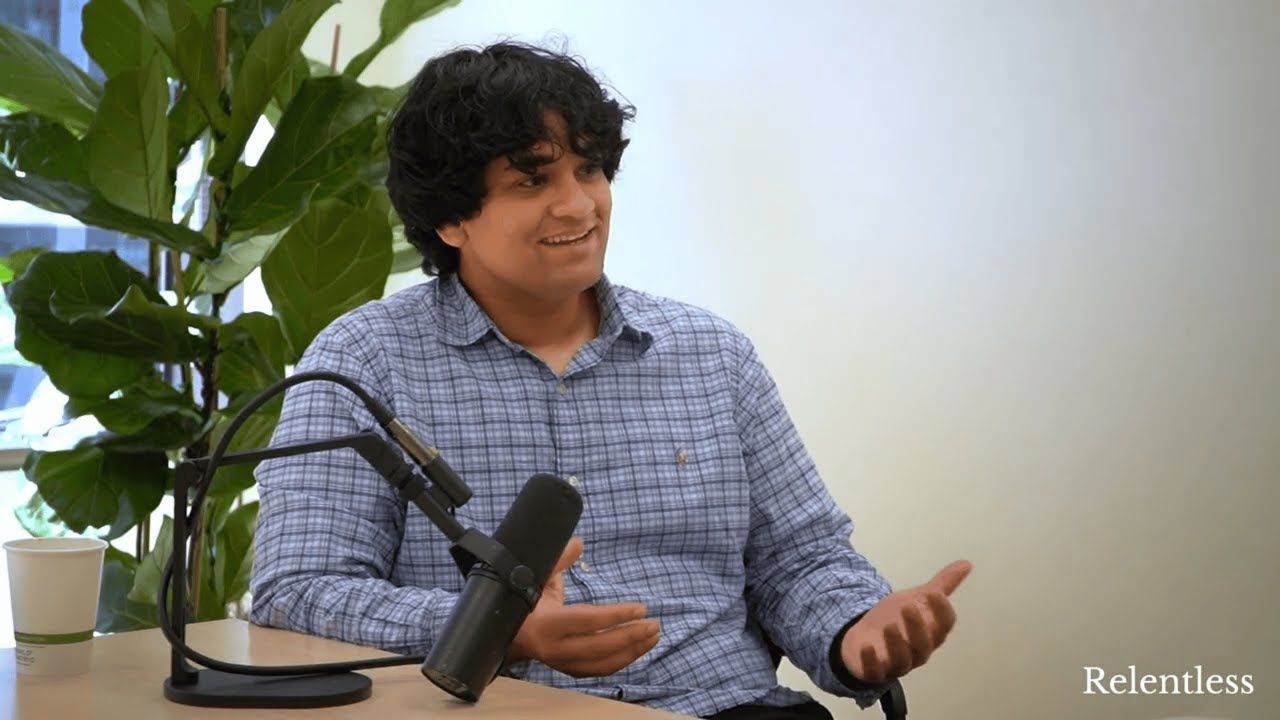
Rahul Sonwalkar is the founder and CEO of Julius AI, an AI-powered data science tool used by millions that lets non-technical users analyze data, generate visualizations, and run statistical analyses using natural language prompts. His path to building Julius was shaped by a childhood fascination with building things (sparked by watching The Social Network at age 11), a series of failed early projects, and hard-won lessons about retention, morale, and the difference between big-company and startup dynamics. The conversation traces his journey from building a homemade email service as a kid, through failed startups and hackathon projects, to the iterative process that eventually led to Julius finding product-market fit.
Early projects and formative lessons
Built his own email service at age 11 after losing access to his Gmail account, convincing 12 friends to sign up for first-name-based addresses on a cheap domain — a proto-version of what services like hey.com later attempted.
Tried to build a social network after watching The Social Network, gluing together PHP and MySQL tutorials to create login and authentication systems. No one used it. The lesson: you can’t just copy an idea and expect it to work; network effects and product hooks matter, even if he didn’t have that vocabulary yet.
Launched PodcastComments.com during COVID lockdowns after moving to San Francisco, trying to recreate the YouTube comment section experience for podcasts that had moved to Spotify. Spent a month building a mobile app (his first), launched it, and got zero traction. Key lesson: he wished he had validated demand before writing a single line of code.
Built Waterview in college — a tool to help hackathon participants skip boilerplate setup (login, database, backend) and focus on their actual projects. Got downloads and positive feedback at hackathons, but retention was zero because hackathon participants never continued building afterward. This taught him that retention matters and that you need to build something people use as part of their daily workflow, not just for weekend events.
College, ambition, and early influences
Attended a state school in Texas on a full ride because his family couldn’t pay for college. Found the environment unambitious — peers just wanted to finish classes and get jobs at insurance companies — so he sought out hackathons to find like-minded builders.
Optimized college for efficiency: chose courses where exams were the bulk of the grade, skipped assignments, pulled all-nighters before tests to get A-minuses, and spent the rest of the semester on his own projects.
Role models: Bill Gates for his contrarian early bet on software as a product (when everyone thought software was free), his strategy of making Windows the default OS so all applications became Windows-compatible, and his competitive dominance that required DOJ intervention. Napoleon for sheer ambition and work ethic (napping on horseback to maximize working hours).
The truck tracking startup
While working on Uber’s pricing team, Rahul noticed that logistics companies had no real-time truck tracking — they literally called drivers on the phone to ask where they were. The 2018 ELD (electronic logging device) mandate meant all trucks already had tracking hardware, so the idea was to make it easy for logistics companies to access that data.
Shippers and brokers were enthusiastic — some even paid before the product existed. But truck drivers themselves refused to share location data. After talking to hundreds of drivers at trucking hubs in the East Bay and Stockton, the answer was uniformly “hell no.”
The experience reinforced how hard it is to change behavior in entrenched industries, and ultimately he shut it down to focus on what would become Julius.
The founding and evolution of Julius
Initial insight (pre-ChatGPT, 2022): language models were getting remarkably good at writing code (GitHub Copilot could predict which Python modules to import). Companies like Uber and Facebook were extremely data-science-driven, but most people in finance, marketing, and ops had data they couldn’t analyze. Could AI help non-technical people write analysis code?
Iterated through four failed versions over about a year, mostly focused on text-to-SQL approaches. SQL turned out to be too limiting for complex analysis, and there wasn’t enough SQL training data for models to be reliable.
The fifth iteration switched to Python — more training data, richer ecosystem of analysis libraries, better for iterative exploration. This version was named Julius (after Julius Caesar; the company was originally called Caesar Labs). They launched on July 12th, which turned out to be Julius Caesar’s birthday — a coincidence discovered a year later.
Got a cease-and-desist from Microsoft over the name “Excel Copilot” (which Rahul had been using). His takeaway: incumbents will always try to stop you; ignore them and keep building.
Finding product-market fit
Launched a plugin in the GPT store in July 2023 and gained a few thousand users quickly. OpenAI then shut the store down overnight, cutting off their main acquisition channel.
Relaunched as the “official V1” immediately, treating the shutdown as a forced re-launch. This is when they realized they had genuine product-market fit — they had paying users who loved the product and were tweeting about it.
Grew from ~5,000 to ~500,000 users over the following year, driven primarily by word of mouth and SEO. Key to this growth: constantly shipping new features that showed deep attention to user needs (e.g., clicking on data columns triggers AI-generated charts predicting what the user wants to see), actively iterating with users, and sharing progress on social media.
Startup philosophy and company culture
Big companies vs. startups: In big companies, one “no” can kill your idea because you need buy-in from everyone. In startups, you can get 50 “no”s — all that matters is finding the one “yes” (investor, first user, first employee) and clawing forward from there.
Morale is the most critical resource: Startups die when founders lose motivation. High morale and momentum can compensate for being outnumbered or under-resourced. Rahul draws a parallel to Napoleon’s Waterloo campaign — outnumbered but driven by belief.
Everyone does support: Rahul has personally answered 5,100 support tickets; his CTO Matt has answered 3,500. There is no dedicated support team. This direct user contact drives product decisions and feature prioritization.
Hiring philosophy: Looks for “high slope” — people with a high learning rate who multiply a team’s output rather than just adding to it. Values energy and vibes because startup problems are unique and there’s no playbook; you need people who enjoy showing up and can figure things out from first principles.
Personal brand and networking
Personal brand: Rahul describes it as having a comedic undertone with obvious seriousness — building something real while having fun doing it. His advice: just be yourself rather than copying someone else’s style.
Reaching out to powerful people: Approached investor Germo at a 2022 happy hour, was the only person in a crowd of admirers to actually pitch their company and ask for investment. Germo said yes via email afterward. Rahul’s philosophy: the worst that happens is “no,” and these people were once in your shoes — they remember.
Historical parallel: Steve Jobs called Hewlett-Packard as a teenager asking for parts, and HP gave him a summer job. The lesson is to just ask for what you want.
Looking forward
When asked about the hardest thing he’s overcome, Rahul says past challenges seem easy in retrospect — you forget the pain and move forward. The hardest challenge is probably still ahead, but he’s confident he’ll overcome it the same way he has everything else: by just continuing to try things.