-
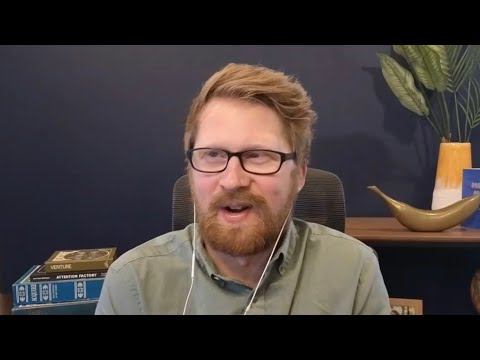
Turner Novak is the founder of Banana Capital, host of The Peel Podcast, and a prominent tech investor and content creator on Twitter (164K+ followers) and TikTok. He grew up in Grand Rapids, Michigan after immigrating from Canada as a child, raised by a single mother who bootstrapped a wedding gown business from their home. His path into venture capital was unconventional: he didn’t come from Stanford or a PM role at Uber, but instead built a public track record through Twitter threads, a blog, and a “fantasy VC portfolio” over roughly two years while working in Michigan. He eventually landed a role at a VC firm and later raised his own fund, Banana Capital, which he closed in May 2022 during a brutal fundraising environment. The conversation covers his upbringing, gaming background, content strategy, investment philosophy, and how he thinks about consumer trends, cross-geography business models, and creator-led brands.
-
Early life and entrepreneurial influence from his mother
- His mother started by sewing her own wedding gown, then helped friends, eventually turning it into a paid business — a bootstrap approach Turner sees as a universal pattern: start doing the work before you’re getting paid, rather than “faking it.”
- Their home had multiple rooms filled with sewing machines, fabric rolls, and work-in-progress gowns for multiple clients at once.
- His parents separated when they moved from Winnipeg, Canada to Grand Rapids, Michigan. His mother struggled financially — volunteering at friends’ businesses for gift cards, using church food pantries, and doing cash-under-the-table work.
- Turner was on a one-year temporary visa every year until senior year of high school, when he finally got his permanent residency (green card), which was required to afford in-state tuition.
-
Gaming background and its connection to persistence
- He was briefly ranked #2 in the world at Gears of War, though he notes the ranking rewarded volume of play as much as skill — he estimates he was among the top 100 players but played far more than anyone else (roughly 12 hours a day during that stretch).
- He’s more proud of a Call of Duty achievement: completing a full prestige in a single day during a double XP snow day, playing roughly 18 hours straight.
- He sees a direct line from gaming to his Twitter/content career: relentless persistence and not giving up, even when things aren’t working initially.
-
Twitter and content strategy: from serious analysis to humor as top-of-funnel
- He started on Twitter trying to get a job in VC, so his initial approach was 99% serious, 1% humorous.
- His first notable thread analyzed Snapchat’s major redesign (the one Kylie Jenner tweeted about, after which the stock began a ~90% decline). He argued from a product and Wall Street perspective that the redesign would improve margins and cash flow. It got ~100 likes and ~50 followers — modest, but a reporter at Business Insider (Alex Heath) picked it up, which helped him start meeting people.
- He gradually noticed that meme/humor accounts focused on tech and venture got outsized engagement and that founders loved them. He also observed that traditional VC content marketing was poorly received by founders.
- He pivoted to humor as a top-of-funnel strategy: funny tweets get millions of views and attract attention; serious tweets get 5,000–10,000 views but are the “bottom of the funnel” that lead to real business outcomes (founders reaching out, co-investors connecting, deals happening).
- Today he estimates only ~1% of his public content is serious; the podcast is his vehicle for shifting back toward substantive content.
- He describes Banana Capital as “a meme account that monetizes with venture capital” (management fees) rather than sponsored influencer posts, though the podcast does have episode sponsors to cover production costs.
-
Investment philosophy: why he’s directionally correct on consumer social apps
- He combines data analysis (actual performance vs. narrative) with direct observation of consumer behavior, reasoning that even great numbers don’t matter if usage goes to zero.
- Living outside major tech hubs (Michigan, not SF/NY) helps him avoid bubble thinking and social signaling. He’s not attending the same parties as co-investors, which he believes leads to more independent decision-making.
- He emphasizes timing in contrarian bets: being right but too early (e.g., AI in the 90s, crypto a few years ago) can look the same as being wrong. He’d rather be contrarian and right at the right time.
- He uses his wife as a gut-check on consumer trends — she’s typically ahead of him in noticing shifts in consumer behavior. He’s made at least two investments after she started using a product, and he passed on at least one deal that other VCs dismissed but she validated (a product targeted at Middle America rather than coastal elites).
- He avoided crypto almost entirely (one tiny investment in a friend’s company) during the period when it was “the thing” in VC, which was difficult given peer pressure. He attributes this partly to not being caught up in the social dynamics of the crypto investing world.
- He’s critical of the VC business model broadly: firms are incentivized to raise larger funds (more management fees) and deploy capital, which can lead to investing because you “must deploy” rather than because the opportunity is genuinely compelling.
-
Cross-geography business model investing: PDD/Temu and Joker
- He studied Pinduoduo (PDD), China’s largest e-commerce platform by number of active customers, which went from zero to ~$200 billion market cap in five years (2015–2020). PDD’s leadership repeatedly said they would never leave China.
- When Temu (PDD’s US arm) launched in the US in late 2022, he took it seriously because PDD had ~$16 billion on its balance sheet — comparable to what TikTok spent to blitz-scale in the US. He saw Temu as a fix to the Wish.com model (cheap goods, terrible experience) with real operational muscle behind it.
- This fits a broader thesis: ~30% of his portfolio companies are based outside the US. He looks for business models that work in one geography and could be adapted to another where the same consumer needs exist but competition is less intense.
- Example: Joker (grocery delivery in Emerging Markets, now focused on Latin America). His thesis was that grocery delivery is a high-frequency behavior that can serve as a wedge to sit in front of Amazon in e-commerce purchase behavior. He liked that Joker was vertically integrated (unlike Instacart’s marketplace model), that Emerging Markets had lower labor costs and less e-commerce competition, and that e-commerce penetration and mobile adoption were inflecting in those markets.
- He notes that Amazon’s advertising business (sponsored listings) generates roughly $30 billion in revenue and is likely the majority of Amazon’s enterprise value — a high-margin cash flow engine. Grocery has ~$100 billion in offline advertising spend (shelf placement, in-store promotions) that is largely unmeasured, representing a massive opportunity for whoever can digitize and capture it.
-
Breaking into venture capital: the long road from Michigan
- He was always interested in investing and business, but his circumstances (visa status, financial constraints, family) kept him in Michigan. He studied accounting and worked multiple jobs during college — at one point working 40 hours a week across three jobs while taking 18 credits.
- His first job was in a factory making shelves for JC Penney and Sears, starting at 6am, making ~$9/hour with double-pay Saturday overtime.
- He worked at a bank lending to small businesses (1.5 years), then at a nonprofit endowment managing their investment portfolio (3.5 years) — which he describes as the best investing experience available in Grand Rapids. There he realized that every VC claims to be top-quartile with proprietary deal flow and process, and they all come from similar backgrounds (Harvard, etc.).
- To break in, he built a public track record starting around 2017–2018: Twitter threads, a blog, and a “fantasy VC portfolio” (like fantasy football but for venture — fake memos on fake investments). The quality wasn’t great, but it demonstrated an ability to source unique, under-the-radar companies and form independent theses.
- He got five VC interviews over the course of a couple months from this approach and eventually landed a role.
- His cold outreach strategy is unusual: he doesn’t do much cold outbound at all. Instead, he’s built enough of a public presence (Twitter, TikTok, podcast) that his outreach is effectively “warm” — recipients have already seen his content. He estimates his cold response rate is ~80% because of this.
-
TikTok strategy: parody as brand-building
- He was initially skeptical of TikTok (when Musical.ly rebranded), but after using it, he thought it was the best product he’d ever used and predicted SoftBank’s investment would force it to succeed in the US.
- His TikTok content is almost entirely not serious — parody videos mocking stock/day-trading influencers. The first one was a deliberately bad analysis of Shopify’s earnings (he was holding his baby, saying things that made clear he didn’t know what he was talking about). Shopify’s founder Toby replied to it.
- He targets classes of people or concepts rather than individuals, and tries to make fun of himself. He avoids singling people out because he respects how hard it is to create content or start a company.
- The videos get 50,000–500,000+ views and serve as top-of-funnel brand awareness that makes all his other outreach warmer.
-
Creator-led brands: MrBeast, Prime, and the future of marketing
- He sees MrBeast and Prime (Logan Paul/KSI) as the new consumer brands, comparable to how Kellogg’s used characters like Tony the Tiger and Toucan Sam to sell cereal to kids.
- MrBeast has introduced recurring characters into his content who will eventually launch their own products — this is the playbook.
- Younger generations don’t identify with corporate brands (Procter & Gamble) the way previous generations did; they identify with individuals and personalities.
- Influencer marketing has existed for generations; what’s changing is that influencers are now capturing the margin themselves by launching their own products rather than sponsoring existing brands.
- The key is understanding platform algorithms: platforms push whatever content drives their monetization, so creators need to figure out what the platform wants and ride that wave rather than fighting it.
-
Most difficult experience: closing Banana Fund II in May 2022
- Closing his fund in May 2022 was the hardest thing he’s done. The tech startup and investing environment was terrible — horror stories everywhere, extremely difficult fundraising conditions. He managed to close it anyway.
#1 - Turner Novak, Banana Capital
Relentless • • 53min → 7 min • #1