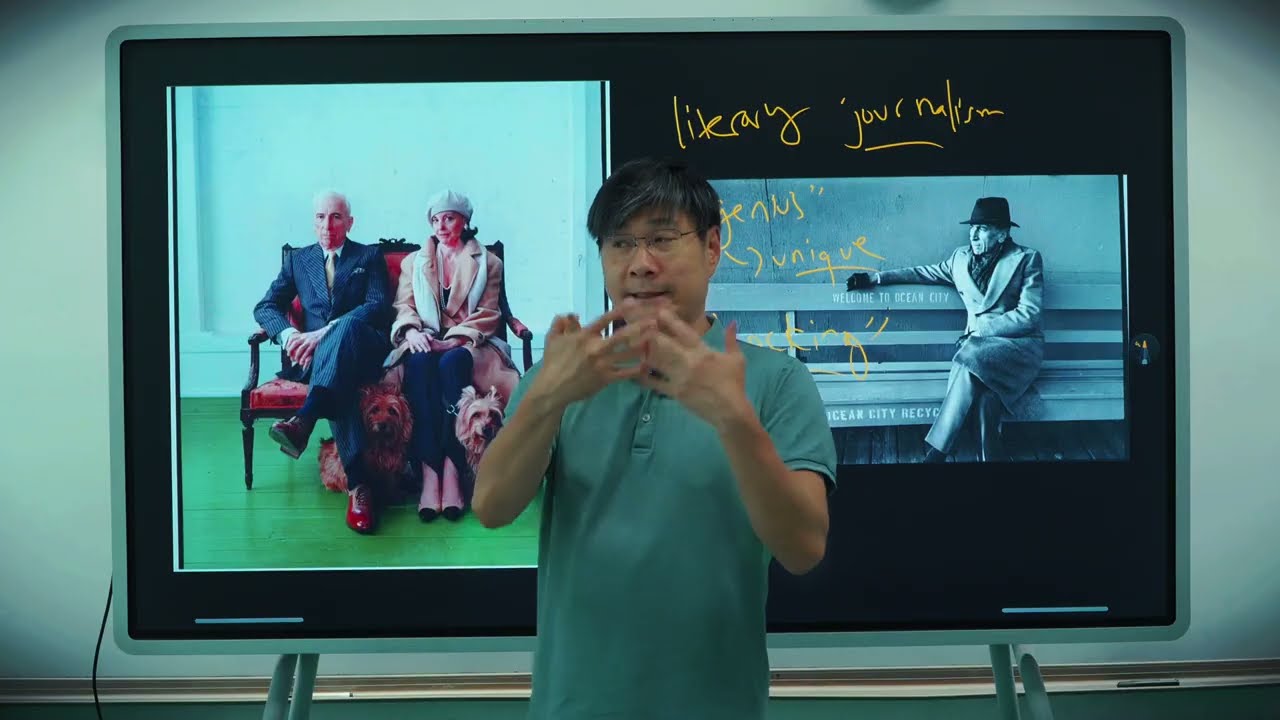
Gay Talese is a 94-year-old literary journalist widely considered the greatest American journalist of his generation, known for immersive, empathetic profiles that transcend time and culture. His book Thy Neighbor’s Wife (1979) was a massive bestseller that also destroyed his career because he spent roughly a decade engaging in and documenting sexual subcultures — managing a massage parlor, attending orgies, and participating in group sex — at a time when such public behavior by a famous married man violated every social convention. The book is rarely discussed today because it is deeply controversial and disturbing, yet the speaker argues it is one of the most courageous and enlightening books ever written because it uses sex as a lens to explore humanity’s fundamental religious need to return to God.
The Kabbalistic Framework
The speaker introduces the Kabbalistic concept of the Tree of Life to frame the book’s deeper meaning: God is the “will to bestow” and created Adam Kadmon as the “will to receive,” but Adam Kadmon’s ego caused him to reject God, shattering the vessels and scattering divine sparks across the world. Humanity’s purpose is to repair the world (tikkun) by gathering those sparks of divine light, which have become trapped inside material “husks” — our bodies and ego-driven desires.
Three key principles of the Tree of Life:
It is fundamentally sexual in nature — two forces (bestowing and receiving) combining to create something new, mirroring thesis, antithesis, synthesis.
It describes the fundamental movement of the universe: beings creating other beings to complete themselves.
Our mission is to liberate the divine spark within us from the material husk that imprisons it.
Thy Neighbor’s Wife explores three different solutions to this fundamental problem of liberating the soul.
Solution One: Meditation Through Masturbation (Harold Rubin)
Harold Rubin is a teenager in an abusive household who escapes by becoming obsessed with nude photographs of a model named Diane Weber. He collects 50 photos of her across 200 magazines and memorizes every detail of each image.
His masturbation is reframed as an act of religious devotion — he approaches the images with the meticulous care of a priest performing a sacrifice, feeling empathy for the women in the photos (he feels discomfort when a model is posed awkwardly), and engaging in an imaginative dialogue with them.
Through years of meditating on Diane Weber, Rubin achieves self-acceptance and a deeper understanding of his own desires, mirroring the Kabbalistic union between the receiver and the bestower.
However, this solution ultimately fails: Rubin never meets the real Diane Weber because she is not a real person to him — she is a fantasy. Meeting the real woman would shatter the fantasy and thus shatter his religion. Meditation through fantasy detaches a person from the real world.
Solution Two: Embracing Sex to Break Taboos (John and Barbara Williamson)
John and Barbara Williamson believe modern society makes people miserable by repressing them — people lie about their jobs, their marriages, and their desires, imprisoning the soul inside a social husk. Their solution is to liberate people through free sex, removing the shame and guilt that give sex its power over the psyche.
They create a sex cult, recruiting married couples to have sex with each other’s partners. Their first recruit is John Bolero, an unhappy insurance salesman, and his wife Judith, a homemaker.
In a pivotal scene, Judith listens from another room while her husband has sex with another woman. Her scream is described as cathartic — purging her of ego and fear. Later, she herself has sex with John Williamson, and when her husband discovers them, his ego is shattered, theoretically freeing his divine spark.
The Williamsons scale this up into the Sandstone Retreat, a sex club in California that Gay Talese himself visits and documents.
This solution also fails: the theory is that enough sex will dissolve guilt and liberate the soul, but in practice the guilt compounds. Talese observes John Williamson watching a muscular Black man have sex with his own wife Barbara and sees that Williamson is visibly disturbed — the husk extends rather than dissolves. Williamson eventually falls into deep depression and abandons the sex cult, reportedly opening a tiger sanctuary.
Solution Three: Creating Sparks of Light Through Courage and Imagination (Gay Talese)
The third solution, which the speaker argues is the one Talese himself arrives at, is that the world is not broken — it is perfect. Humanity’s purpose is not merely to find existing sparks of light but to create new ones through love, imagination, and the courage to live uniquely.
This is the Dantean vision: we are here to do what God cannot — extend the boundaries of the universe by creating transcendent memories that travel beyond time and space and inspire others to imagine and dream.
Talese’s own life embodies this. He grew up as an Italian Catholic immigrant in predominantly Protestant Ocean City, New Jersey, always an outsider marked by guilt, shame, and fear. After his decade-long sexual journey, he returns to Ocean City in his mid-40s and goes to a nude beach — something the immigrant boy inside him could never have imagined doing.
On the beach, naked, he spots sailboats full of clothed people from Ocean City — his own community — watching, mocking, and spying on the nudists with binoculars and telescopes. These voyeurs represent society’s fear, ego, and shame.
Talese steps forward, separates himself from the other nudists, and stares directly back at the boats, recognizing friends and acquaintances among the passengers. He is unabashed. In that moment, he shows them — and himself — that he was once afraid like them but has now liberated himself.
Why Talese Succeeded Where Others Failed
Harold Rubin failed because fantasy detached him from reality. John Wilson failed because indulging the material husk only strengthened it. Talese succeeded because he used writing and imagination to create sparks of light.
Drawing on the semester’s teaching about consciousness: consciousness exists across infinite dimensions, and at a certain level all beings are one. Memories are stored not in individual brains but in universal consciousness. The most powerful, imaginative, and unique memories become shared — these are the sparks of light.
Talese spent years interviewing people, drawing out their deepest memories and truths, and writing them into literature that expands the imagination of the universe. By living courageously — risking his career, his reputation, and his sense of self to search for truth — he created sparks of light that inspire others to search for their own.
The ultimate message of Thy Neighbor’s Wife: the purpose of life is not merely to find divine sparks but to create them through courageous, passionate, unique living, and to share them so that others are inspired to do the same.