This episode serves as a midterm examination where the host fields questions from viewers about geopolitics, game theory, and global conflict, but first analyzes a newly announced two-week ceasefire between the United States and Iran, which he argues is not genuine and will not hold.
The US–Iran Ceasefire Is Theater
Donald Trump announced a two-week pause in hostilities and that US and Iranian officials will meet in Pakistan to negotiate a long-term ceasefire, using a “10-point Iranian plan” as the framework.
The plan amounts to what the host calls a near-complete US surrender: a guarantee never to attack Iran again, full Iranian control over the Strait of Hormuz, the right to enrich uranium, removal of all sanctions (including secondary sanctions and UN/IAEA resolutions), reparations for war damage, withdrawal of US combat forces from the Middle East, and an end to hostilities against Iran’s proxies including Hezbollah and the Houthis.
The host argues that if the opening negotiating position is already total capitulation, it reveals Trump is not serious—comparable to a seller asking $1,000 for a $100 book and the buyer immediately accepting, which signals something is wrong.
Three reasons the ceasefire will fail:
Continued US military buildup: The US is still sending aircraft carriers (USS George Bush) and forces to the Middle East, suggesting the ceasefire is a stalling tactic to position ground troops to seize the Strait of Hormuz, possibly triggered by a false flag attack by Israel.
Iran’s Mosaic Defense: Iran’s military is organized into 31 semi-autonomous provincial cells with no centralized command, meaning even if Iran’s political leadership negotiates peace, the IRGC fighters on the ground will not comply. Implementing a ceasefire would require Iran to rein in these units, which would effectively mean civil war. The Mosaic Defense functions like a dead man’s switch—it only ends if one side is defeated.
Ongoing US airbridge: Massive movements of US ground troops, planes, artillery, and tanks continue despite the ceasefire, indicating neither side’s political leadership has control over their respective militaries.
The ceasefire already has a major loophole: whether Lebanon is included. Israel launched over 100 strikes in 10 minutes across Lebanon, killing at least 250 people, immediately after the ceasefire was announced. The US claims Lebanon was not part of the deal; JD Vance called it a “legitimate misunderstanding.” The host argues this shows the Americans and Israelis are not serious about maintaining the ceasefire.
The host speculates that Iran’s willingness to negotiate reveals a schism between Iran’s political leadership and its military, which will worsen over time and cause Iran to lose ground as the US and Israel develop a more coherent strategy.
As the war drags on, global economic suffering will turn public opinion against Iran, and even Iran’s allies Russia and China may pressure Iran to end the war—but due to the Mosaic Defense structure, Iran cannot end the war short of total victory or total defeat.
How the World Works: Occultists, Secret Societies, and Agents
The host explains his model of how global events are driven:
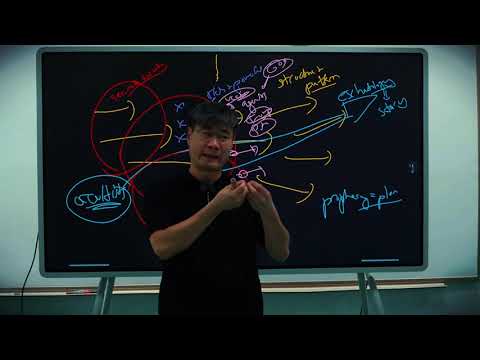
Occultists (poets, prophets, religious thinkers) are the primary drivers because they imagine the world. They study historical patterns the way astrologers study stars, creating eschatology—a story that is both prophecy and plan, describing how history should end and obligating its adherents to make it happen.
Secret societies form around these eschatologies. Rich and powerful people join them to gain knowledge of historical patterns (to protect wealth and power) and to build networks.
Agents (like Donald Trump and Vladimir Putin) are appointed to move the world in the desired direction. They are like vectors or puppets, but they also have agency and free will—figures like Napoleon, Caesar, Hitler, and Stalin were all initially supported by secret societies but eventually betrayed them, believing they had a higher calling from God.
The system is not a top-down conspiracy but a dynamic, fluid game where different societies compete, elites switch loyalties, and agents pursue their own visions. No one sees the whole picture, which is why it does not look like a grand conspiracy.
The host uses this framework to predict long-term directional trends in global affairs even without knowing the specific plans of each secret society.
China Is a Construct of Empire, Not a Civilization
China is not a true civilization or nation state but a construct and vassal of the US-led imperial system—a mirage created by embedding the system’s elements (finance, universities, media, culture) into Chinese society.
The same process occurred in the GCC: before the empire, it was desert; the system turned it into a seemingly vibrant cosmopolitan center by importing universities (Georgetown, NYU), media, and culture.
China was allowed into the WTO and sends students overseas to maintain the mirage of a modern, flourishing economy.
When the system comes under strain (as it is now from the Iran war), the mirage collapses because there is no underlying civilizational soul—only appearance.
China is desperate for peace in the Middle East because if the global economy collapses, China collapses with it. There are reports that China has pressured Iran to negotiate a ceasefire.
The host rejects the idea that China, digital currency, or renewables are genuine alternatives to the system—they are all extensions and projections of the same system and will fail when it fails.
The Hollywood–Pentagon Complex and the Illusion of Control
No one in the system truly understands how it works. Each sector (culture, media, education, military) believes it is in control and dictates policy, but each is living in its own bubble and fantasy.
This is not unique to America—it is a universal feature of how the system operates. People find it easier to live in delusion than to be objective, because delusion enables cooperation with colleagues and friends.
Individuals cannot navigate coming changes alone; they must form communities—educate themselves, build relationships, share resources, and commit to one another.
The host also recommends starting a family, arguing that children give life energy, purpose, and meaning. He has three children and says his daily motivation is ensuring their happiness and health, not fame or money. Death and destruction do not matter; what matters is living a creative, purposeful, significant life that extends the imagination of the universe.
Competing Empires and the Move Toward Multipolarity
The current unipolar moment (American global dominance) is unique in human history and unsustainable. The world is moving toward a multipolar order with three competing empires:
The American Technate: America retreats into a continental fortress (greater North America), abandons global policing, and trades with the world from a position of self-sufficiency.
The Third Rome: Russia exerts control over its territory.
Pax Judeica: Israel builds dominance in the Middle East.
These empires will both cooperate and compete. The multipolar world may last only 10–20 years before further transformation.
America’s Leverage: Sea Trade and the Strait of Hormuz
The world depends on American-controlled sea trade. The US Navy can allow its own ships to travel freely while blocking Chinese, Iranian, and Russian ships from accessing global markets.
The counterargument—that Eurasia and Africa could unite via railways (China’s Belt and Road)—is undermined by Iran, which is the geographic pivot. If Iran is destroyed, China cannot access Belt and Road routes and Russia cannot trade with Africa.
The Strait of Hormuz is not the real issue; the real issue is the vulnerability and fragility of a global economy dependent on cheap energy. Iran can destroy pipelines and energy production in the GCC with drones (pipelines are combustible and extremely vulnerable). Iran has already attacked a pipeline in Saudi Arabia.
Trump as Agent: The Method Behind the Madness
Trump’s erratic behavior is a calculated strategy with three advantages:
Paralyzing: Enemies cannot predict how to respond to someone who changes positions daily.
Distracting: Attention focuses on Trump’s antics while backstage operations proceed unnoticed.
Flexible: He is not committed to any strategy and can change course at any time.
Trump is a genius at politics, media, and accumulating power—but not at geopolitics or military strategy. His ultimate goal is a third term, which he needs to implement his Technate vision. The Iran war serves this goal: if it goes badly, he can declare martial law and expand his powers. The Democratic Party has no strategy and is passively hoping to win the midterms.
Trump makes all decisions himself; those around him tell him what he wants to hear.
Economic Restructuring: Finance and AI Collapse, Resources Rise
If the petrodollar, AI, and treasury bond bubbles collapse, the US will not suffer permanent catastrophe because it can restructure:
Finance will be allowed to collapse. AI will be bailed out (Trump is close to AI leaders like Peter Thiel and Sam Altman). Resource manufacturing (oil, food, water, fertilizer) will become the dominant center of gravity.
This is a revolution within America—moving power from one elite (finance) to another (resources/AI).
Transnational capital will not lose power if the empire collapses; it will redistribute to the best short-term investment opportunities, which the host argues is Israel and the Middle East. Capital will diversify across countries (Japan, Germany, etc.), but the largest concentration will flow to Israel.
How to Combat Bias and Seek Truth
Three techniques the host uses:
Doubt: Constantly question yourself. Making predictions is a mechanism for self-reflection when they prove wrong.
Debate: Engage with people who think differently. The host watches YouTube videos across the political spectrum to hear other perspectives.
Imagination: Make speculative, imaginative leaps not backed by evidence. The truth is not in front of you—it is often behind you or far away. Do not be afraid to leap into the unknown.
Why Nation States Cannot Unite Against America
Nation states are not real entities but collections of elite interests. The people are resources exploited by elites, whose loyalties are to themselves, their families, and their overseas wealth—not to their nations.
Elites in Asia and the Middle East store their wealth and families in the Western world, making them loyal to the West. They are “carbon baggers” protecting their own interests.
Countries closely tied to the West (like the GCC) are unstable and likely to collapse. Countries isolated from the West (like Iran) are more cohesive.
Most nation states (Australia, Japan, South Korea, European countries) are vassal states co-opted by the CIA and incapable of independent action. Pakistan, mediating the ceasefire, is also a vassal state.
Civil War in America
If civil war breaks out, it will likely never end—it is in the nature of American society’s vastness and ambition. The intensity may shift, but conflict will persist for hundreds of years.
Using the game theory formula of cohesion, energy, and openness, the host identifies Texas as the clear winner among US states. California and New York will suffer economically.
Christian nationalists will win because they have a coherent philosophy with direction, strategy, and purpose. AI will win because it provides technological support to Christian nationalists. The “professional managerial elite” on the coasts are “completely useless” and will lose.
Individuals cannot survive alone regardless of money or preparation. Survival requires family and community.
Nuclear Weapons Are a Trap for Iran
Iran should not develop nuclear weapons. At most it could have 10, while America has 1,000. Threatening nuclear use would justify an American nuclear response.
More importantly, nuclear weapons create complacency—the false belief that one is safe. Without them, a society is forced to be creative, resilient, and strategically minded. Nuclear weapons are a bad thing, not a good thing.
Israel, Pax Judeica, and the Parasite–Host Dynamic
Pax Judeica is not the same as Israel. Pax Judeica is a project of transnational capital; Israel is the host. The same relationship exists between America (host) and Wall Street (parasite).
It does not matter if Israel is destroyed—transnational capital can hire Chinese, Filipinos, and Indians to rebuild it. What matters is the spiritual cohesion of a people willing to die for their beliefs, which is far harder to build than any city.
Nuclear weapons have institutional constraints (the nuclear football, multiple taboos) that make their use extremely difficult regardless of how “crazy” a leader is. The host does not believe nuclear weapons will be used in this war.
Generational Wealth Transfer and the Young
As chaos continues, wealth will transfer from the young to the old, worsening generational inequality. In times of conflict, capital always triumphs because it can foresee, distribute, and exploit risk. The oligarchy (old) has all the capital; the young have nothing. The young will be asked to die in the Middle East so the old can maintain power.
Why No New Global Economic System Will Replace the US-Led One
The US dollar is a contract system requiring an enforcement mechanism (the US military). It is extraordinarily costly: the US population absorbs the cost of global liquidity through inflation and unaffordability, and the US military must be willing to fight anywhere at any time.
No other nation or group of nations is willing to absorb these costs. Russia and China will not take over the system. Regional powers (Japan, Germany) cannot cooperate sustainably because domestic populations will demand maximum benefit, making multilateral systems unstable.
The global economy will fracture, not be replaced.
Materialism, Religion, and Survival
The host does not claim everyone will undergo a spiritual transformation. Those who do—turning to religion and community as the world collapses—will survive. Those who remain materialistic and refuse to adapt will not.
He estimates that 90% of humanity may be wiped out in the coming 50 years of chaos, largely because people refuse to change their minds and prepare for the new world.
Individual Purpose in a World of Secret Societies
It is pointless to worry about secret societies or the end of the world. Individuals should focus on personal transformation: learning, developing spiritually, intellectually, and emotionally, reading books, and asking questions.
Chinese Students in America
The era of globalization—Chinese students learning English, studying in America, and returning home for good jobs—is over.
The host is critical of Chinese students, arguing they are extrinsically motivated (grades, degrees) rather than genuinely passionate about learning. Without the credential, they do not know what to do. To thrive in the future, they need to learn intrinsic motivation and love learning for its own sake.