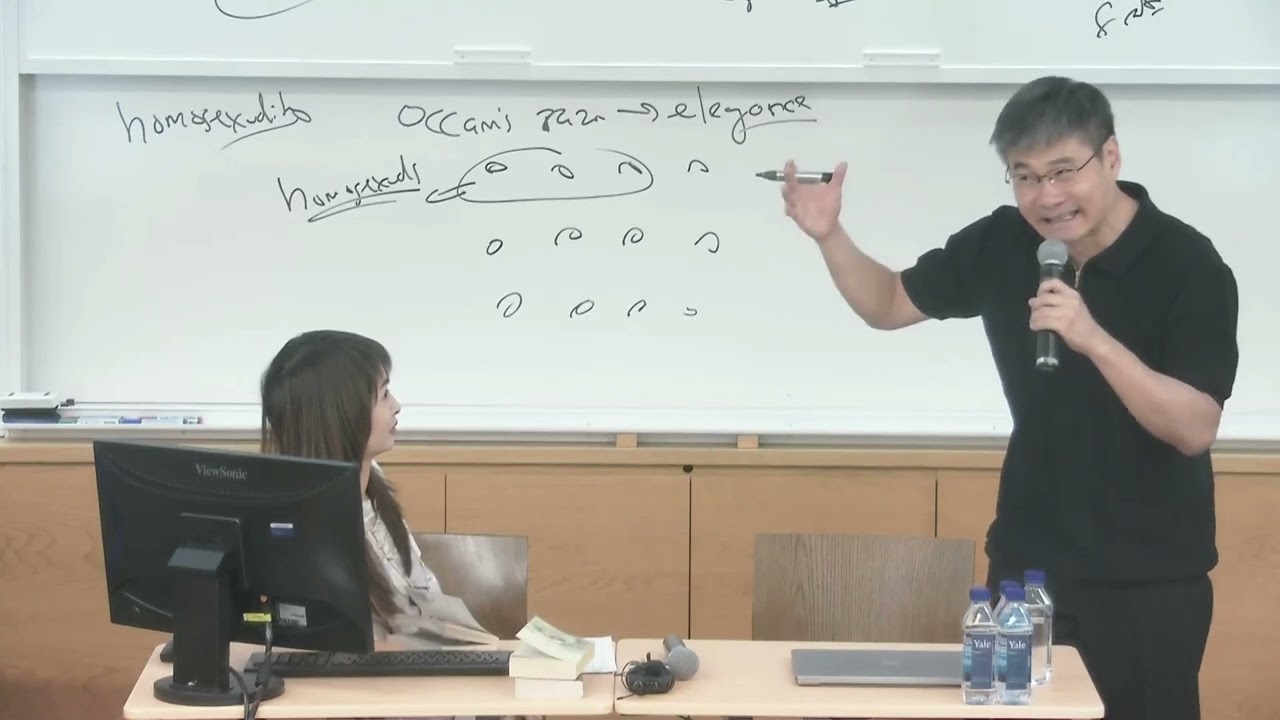
This session continues a seminar on Dante’s Divine Comedy, focusing on Inferno Cantos 20–32, while clarifying earlier points on pride versus ego, the sin of homosexuality, and the structure of hell’s punishments. The discussion emphasizes that Dante’s punishments reflect God’s perfect justice and often mirror the sin itself, and that the journey through hell is as much about the deepening relationship between Dante and Virgil as it is about cosmology.
Clarifications from Previous Class
Pride vs. Ego
In the Cabala tradition, the ego is the body and material desires that cover the divine spark; Dante differs by treating the ego as potentiality—it can lead toward faith, hope, and love, or astray.
Pride is the perversion of ego: it demands that others subordinate to your ego, creating a feeling of superiority that limits access to God.
Virgil is presented as the classic example of pride in the Divine Comedy, though this becomes more explicit in later cantos.
Homosexuality and Factionalism
The instructor revises an earlier explanation: the problem with homosexuality is not self-indulgence but factionalism.
The punishment (being pelted by missiles, forced to stay in groups, with harsher punishment for straying) fits people who conspire as a group against the common good—like a mafia, fraternity, or faction.
Homosexuals in history, because persecuted, formed secret societies to help each other rise in bureaucracies (examples given: Imperial China, the Vatican, Washington DC, Hollywood), creating “the gay mafia.”
This group loyalty forces others to form factions, leading to elite infighting, monopolized resources, inequality, lawlessness, and corruption in society.
The core problem: when elites lose responsibility for society and only pursue their own desires, society loses its anchor and falls into decay.
The instructor notes that in today’s more accepting society, the hypocrisy is gone—people no longer pretend family matters—which removes even the pretense of virtue and leads to open corruption.
Inferno Cantos 20–22: The Grafters (Circle of Fraud)
Grafters (corrupt officials) are punished in boiling pitch; if they try to escape, demons tear them apart, after which they resurrect and repeat the cycle.
The punishment fits because grafters are compelled to “get away with it”—they believe they are smarter than everyone else, but in hell this is impossible.
Paradox: Demons in the circle of fraud are themselves deceptive. Virgil, afraid, confronts them with pride and arrogance, claiming divine protection. The demons lower themselves, which is suspicious.
The demons offer to guide Dante and Virgil to another bridge. Dante verbally challenges Virgil for the first time, saying they shouldn’t trust the demons. This is an act of love—Dante is protecting Virgil, not showing off knowledge.
A grafter tricks the demons by promising to bring more sinners to them; he escapes, and two demons fall into the boiling pitch. The trick works through sophistry (manipulating words without technically lying, since hell’s rule is that speech to Dante and Virgil must be true).
Inferno Canto 23: The Hypocrites
Hypocrites wear gilded cloaks that are lead inside—beautiful on the outside, unbearably heavy. They walk slowly, burdened forever.
Hypocrisy is pretending to be better than you are, saying one thing and doing another, to gain benefit by deceiving others. The lies you tell weigh on your consciousness.
Two hypocrites, Catalano and Loderingo, were peacekeepers in Bologna who were corrupt.
Caiaphas, who condemned Jesus, is crucified on the ground and everyone walks on him.
A friar lies to Virgil about a bridge being broken; Virgil realizes he has been deceived. The friar’s punishment fits: he gave false counsel.
Inferno Cantos 24–25: The Thieves
Thieves are punished by serpents that bite them, killing them; they then resurrect and are bitten again, endlessly.
Why is thievery worse than genocide? The key is the immortality of the soul (to be explained in Paradiso): the body dies but the soul lives. What matters is whether people can live a life of faith, hope, and love. Thievery destroys trust and social cohesion, making it impossible for victims to live that life, thus moving them away from God.
Thievery is worse than murder because it is secretive—no one knows who did it, so everyone must suspect everyone else, destroying the social fabric.
Vanni Fucci is the only soul seen in the Inferno who curses God. He stole from a church and someone else was blamed, so he got away with it—he is angry that God intervened to punish him. He is the “perfect criminal” upset that his perfect crime was foiled.
In Canto 25, thieves undergo metamorphosis with snakes—human and serpent forms merge and transform. This is unusual for Dante, who is normally economical. Speculations include: contrasting heaven’s grandeur with hell’s restriction, showing the sinners becoming less human, Dante proving he can write metamorphosis as well as Ovid, evoking fear and dread as we approach Lucifer, and referencing the serpent in Genesis who robbed Adam and Eve of paradise.
Inferno Canto 26: Ulysses (Odysseus)
Ulysses and Diomedes are punished in a flame, burning constantly (compared to the Sicilian bull, a brass sculpture in which victims were burned alive).
Ulysses recounts his final voyage: he abandoned his father, son, and wife Penelope out of longing to gain experience of the world. He rallied his men, sailed past the known world, saw the mountain of Purgatory, and fell off the edge of the earth.
Why is he in hell? He betrayed his family—his father, son, and wife needed him, but he abandoned them for ambition. He had no anchor. The flame represents his ambition without grounding in love.
The key lesson: the individual can only exist within a community. Without family and society, we are nothing. This is why exile was considered the worst punishment in Dante’s time—he himself was exiled from Florence.
Inferno Canto 27: Guido da Montefeltro
Guido, a military strategist, gave fraudulent counsel to Pope Boniface VIII on how to take a city (promise amnesty, then betray). He became a friar to repent, believing the pope’s promise of salvation.
When he died, St. Francis came to take him to heaven, but a black cherub (fallen angel) intervened: “You cannot absolve a man who has not repented, and no one can repent and sin at once. The law of contradiction does not allow it.”
Paradoxes: Why would St. Francis agree to help a corrupt pope? Why does a fallen angel have more power than St. Francis? The explanation: the pope claimed the keys to heaven, and St. Francis had to honor the contract, but God’s justice and the law of contradiction override the church’s authority—a revolutionary idea at the time. Actions matter more than words.
Inferno Canto 28: Sowers of Discord
These sinners caused civil war and division; their punishment is being split and mutilated by a devil with a sword, then resurrected to be split again.
Muhammad is split in half; Ali has his face opened from chin to forehead. Dante treats Islam as a heresy splitting from Christianity, and Ali as causing the Shia-Sunni schism.
Curio caused the civil war between Caesar and Pompey by giving false counsel.
Bertran de Born carries his severed head like a lantern; he caused discord between a king and his son.
Modern examples discussed: Donald Trump (polarization), Mark Zuckerberg (social media algorithms provoking anger and division), and media figures who manipulate public consciousness.
Inferno Canto 29: The Falsifiers (Alchemy, Imposture, Counterfeiting, False Witness)
The lowest area of hell is for falsifiers: alchemists (leprosy), impostors, counterfeiters, and false witnesses.
Why is alchemy the worst sin in fraud? Because it attempts to warp the fabric of nature itself, not just society. It is a crime against God’s creation.
Modern parallels: AI (artificial intelligence = creating intelligence artificially, like turning lead into gold), nuclear energy (splitting the atom), artificial insemination/genetic manipulation (creating “perfect” offspring). The internet is not alchemy because it facilitates normal human communication; AI is alchemy because the intent is to create God.
Master Adam (counterfeiter) and Sinon (false witness who convinced the Trojans to accept the Trojan horse) argue about who is worse. They are both manipulating the perception of reality.
The common thread of all falsifiers: they hijack the imagination. In Paradiso, imagination makes us co-creators with God; here, it is used for evil, limiting people’s imaginative space and creating evil in the world. Modern equivalents: social media influencers who hijack the social imagination.
Inferno Canto 30: More Falsifiers
This canto includes Gianni Schicchi (impostor who impersonated a dead person to rewrite a will), Myra (disguised herself to commit incest with her father), Master Adam, and Sinon.
The argument between Adam and Sinon is the first time two souls argue in the Divine Comedy, each claiming the other is worse.
Virgil scolds Dante for watching the bickering: “To want to hear such bickering is base.”
Inferno Canto 31: The Giants
As Dante and Virgil enter the final circle, they encounter giants—Nimrod (Tower of Babel, now speaks only gibberish), Ephialtes (chained for challenging the gods), and Antaeus (unchained, who carries them to the bottom).
Symmetry with Paradiso: Angels lead us to the empyrean in heaven; giants lead us to the depths of hell. Angels are made of divine light; giants are made of clay and rock. Angels sing (high vibration, harmony); giants are silent (low vibration, numbness, discord). Sin becomes a giant that weighs you down.
Inferno Canto 32: The Frozen Lake
At the very heart of hell, instead of fire and brimstone, there is a frozen lake—a shocking, revolutionary image.
Dante warns that describing the bottom of the universe is not a task for a childish tongue.
The session ends here; the next class will explain why the center of hell is frozen and introduce Lucifer (who is not truly the king of hell).
Key Themes Across the Session
Punishment mirrors the sin (contrapasso): grafters who thought they could escape are caught; hypocrites who wore masks are weighed down by lead; thieves who stole trust are destroyed by serpents; falsifiers who warped reality are frozen.
The journey is a love story: Dante and Virgil’s relationship deepens through conflict and mutual protection. Dante’s challenge to Virgil is an act of love, not pride.
Imagination is central: it can lead us to God or be hijacked for evil. The Divine Comedy constantly demands that the reader use imagination to understand paradoxes and deeper truths.
Individuality requires community: without family, society, and love, the individual is nothing. Exile and betrayal of one’s own are among the worst sins.
God’s justice transcends human institutions: even the pope’s authority cannot override the law of contradiction and divine truth.