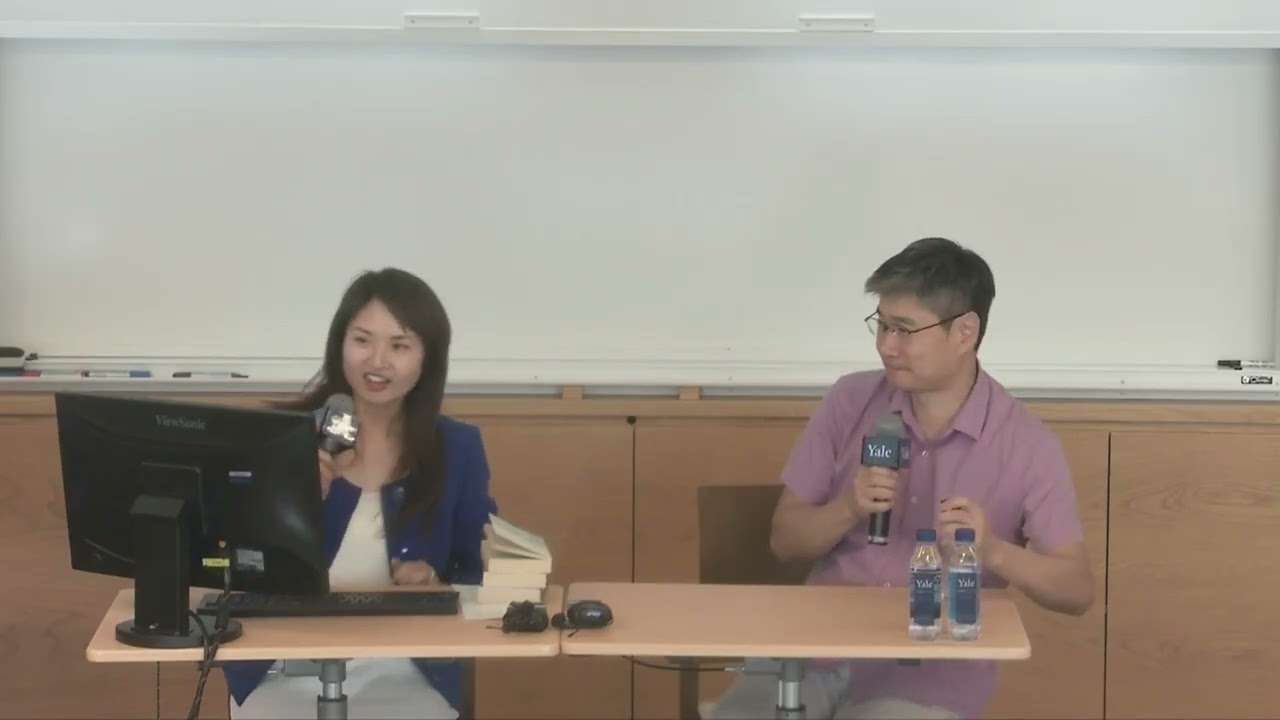
This session of a live-streamed, free Dante seminar, taught from Beijing and focused on the Paradiso, explores how Dante reimagines the virtues of faith, hope, and love as active acts of imagination rather than passive obedience, and frames his own exile and suffering as necessary conditions for creating the Divine Comedy.
Opening and Class Context
The instructor begins by praising students for critical engagement with the text, particularly a question about a simile in Canto 6 that links the Greek myth of Palus and Athena to the Roman myth of Romulus and Remus.
He explains that Dante deliberately combines unrelated myths to force the reader’s imagination to find connections, which is presented as the essence of poetry.
A discussion of why Beatrice appears masculine in some illustrations leads to the idea that Beatrice functions as Dante’s alter ego, representing his feminine side and serving as an internal dialogue necessary for creativity.
Core Thesis: Dante vs. Virgil and the Church
The instructor advances a grand thesis: a “cosmic war” exists between Virgil and Dante, representing two opposing worldviews.
Virgil (and by extension, the Catholic Church influenced by Paul and Augustine) promotes a poetry of obedience, where faith, hope, and love mean obeying authority to avoid sin, given humanity’s inherently fallen state.
Dante, in contrast, promotes a poetry of imagination, where faith, hope, and love are active, creative forces that require human imagination to exist. The Divine Comedy is framed as the “big bang” of Western civilization because it enables this new, imaginative understanding.
A student challenges the Eurocentric framing and the apparent contradiction between Dante’s rejection of obedience and his emphasis on vows and obedience to God. The instructor distinguishes between passive obedience to a pessimistic God and the active, imaginative commitment of faith, hope, and love.
The Failure of the Franciscans and Dominants
In Canto 11, Thomas Aquinas narrates the story of St. Francis and the Franciscan order, which began with a vow of poverty but became corrupt.
The corruption is explained through a dual mechanism: first, human ego and fear make true poverty socially isolating and frightening; second, the order’s perceived holiness led the rich to bribe them with donations to share in their salvation, gradually making them wealthy.
The instructor notes that the Franciscans also served as a political tool for the Catholic Church to maintain legitimacy against criticism of its wealth.
In Canto 12, Bonaventure describes the Dominican order, founded to combat the Cathar heresy through re-education and intellectual inquiry rather than violence, but which became corrupt through the accumulation of power and wealth.
Both orders, despite their noble founders, failed, raising the question of how to bring salvation to humanity when good institutions are doomed to be co-opted.
Dante’s Personal Crisis and the Prophecy of Exile
The instructor shifts to Dante’s personal situation: he is in exile from Florence, has lost all property, and faces a life of poverty and uncertainty. The central question becomes how he reconciles this suffering with his divine mission.
This is contrasted with Virgil’s Aeneid, where Aeneas is told a prophecy of future glory (founding Rome) that propels him to greatness.
In Canto 17, Dante’s ancestor Cacciaguida gives him a starkly different prophecy: he will be exiled unjustly, blamed for his exile, lose everything, depend on the charity of others, and must isolate himself from his vengeful political faction.
This prophecy, rather than despairing Dante, gives him purpose. He understands his exile and isolation as necessary conditions for writing the Divine Comedy. The prophecy removes his ego and fear by assuring him that his suffering is not his fault and is part of a divine plan.
The Solution: Imagination and the Divine Comedy
The instructor argues that the Divine Comedy is Dante’s solution to the chaos, violence, and corruption of his time. The missing element in Europe is imagination, which is suppressed by fear.
Fear limits imagination, causing people to react with violence (e.g., hitting back when struck). Imagination, which is released by love and the absence of fear, allows for empathy—the ability to imagine oneself in another’s position and thus forgive.
The Divine Comedy is presented as a work of art that proves God is love not through logical argument, but by being a beautiful and truthful emotional experience that transforms the reader over time.
The instructor claims that this transformation, sparked by Dante’s poem, directly enabled the Renaissance, which began in Florence, Dante’s city, and that making Dante part of a region’s curriculum will cause it to flourish.
The Examination in Heaven: Redefining Faith
In Canto 24, Dante is examined on the three virtues by three apostles. The first test is on faith, administered by St. Peter.
Dante initially defines faith by quoting Paul’s Epistle to the Hebrews: “Faith is the substance of things hoped for, the evidence of things not seen.”
The instructor highlights a paradox: Paul, the founder of the Church’s doctrine that Dante criticizes, is not present to test Dante; instead, Peter does. This signals Dante’s subtle but crucial departure from Paul’s formulation.
Dante then expands on Paul’s definition, explaining that faith is a “substance” (a foundational cornerstone) and an “evidence” (an argument). The instructor interprets this as a shift from Paul’s passive “believe in the plan” to an active model where faith is an imaginative act that animates the universe and upon which reason must be built.
The highest hope founded on this faith is salvation, interpreted as the return of all beings to God to make God whole.