This episode examines German civilization as one of four major powers competing for global dominance, arguing that it represents perhaps the most advanced civilization humans have ever created, despite being systematically dismantled after World War II. The central theme is the German concept of “unity of power” or “unity of will” — the idea that a nation’s strength comes from the collective mobilization of its people’s desire and will toward a shared purpose.
The Rise and Destruction of Prussia
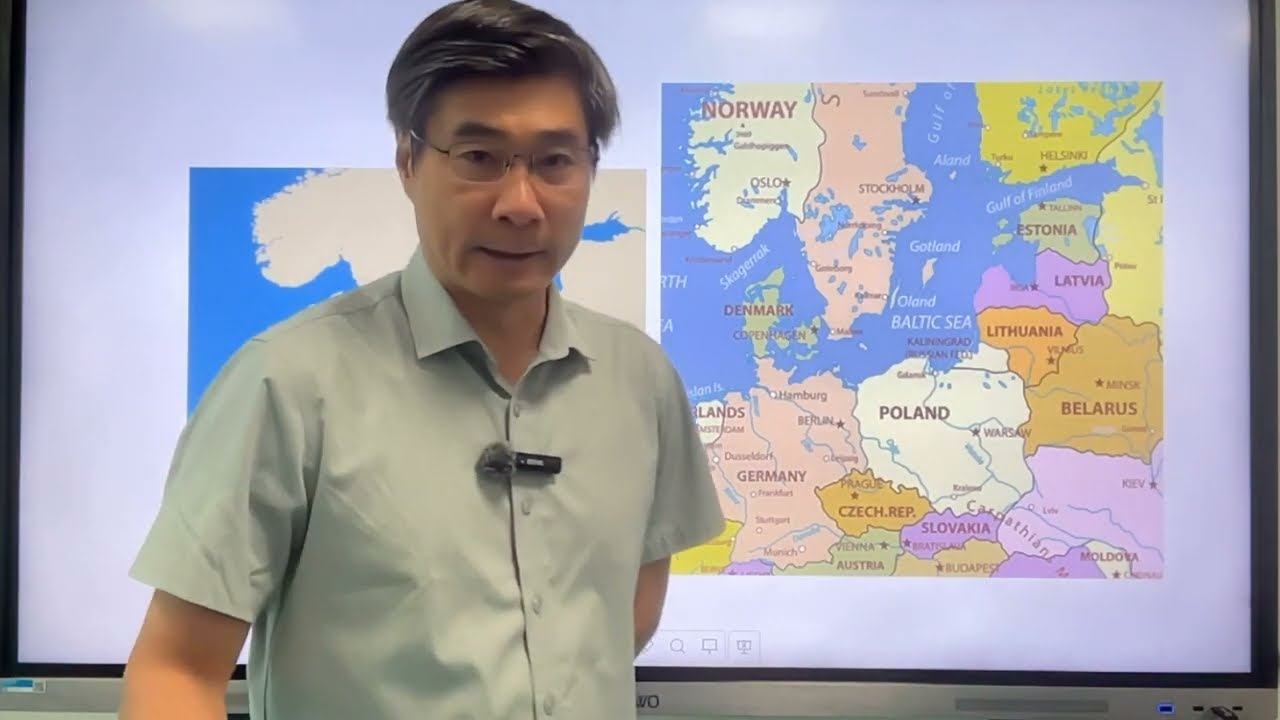
Königsberg, once the capital of Prussia and a major European center of philosophy, science, and culture, was destroyed after World War II and replaced by the Soviet city of Kaliningrad.
It was the birthplace of Immanuel Kant, Hannah Arendt, and numerous scientists, mathematicians, and musicians.
Before its destruction, it was considered one of the most tolerant cities in Germany for Jewish residents.
The Allies deliberately targeted Prussia for elimination, branding it a militaristic society bent on world domination.
Prussia’s military reputation obscured its extraordinary cultural and intellectual achievements.
In Nobel Prizes for science through the mid-20th century, Germany dominated globally, only being overtaken by the United States around 2000.
The common Western prejudice, captured by Voltaire’s quote — “Where some states have an army, the Prussian army has a state” — mischaracterized Prussian society.
Unlike other militaristic civilizations (Romans, Spartans, Aztecs), Prussia was simultaneously creative and militaristic because it was fundamentally a humanistic society forced into military confrontation by its geography.
How Prussia Became a Great Power
Prussia emerged from the Holy Roman Empire’s thousands of competing German city-states, consolidating through competition with powerful neighbors like France, Poland, Lithuania, Russia, and Sweden.
Three key characteristics drove its success, shared with Muscovite Russia:
Open cooperative competition: Surrounded by enemies, forced to be innovative, open, and tolerant.
Advantaged by disadvantage: Limited resources forced investment in human capital and education.
Vassalage: Long periods under foreign domination (Swedes, Poles, Lithuanians) cultivated reflection and resilience.
Prussia differed from Muscovite Russia in being more democratic, progressive, and open, due to its position within Europe rather than under Mongol influence.
Frederick the Great and Enlightenment Reforms
Frederick the Great, Prussia’s nation builder, was not merely a military leader but an “enlightenment despot” heavily influenced by Immanuel Kant.
He reformed the judicial system to establish rule of law accessible to the poor.
He abolished torture in the military, a revolutionary step at the time.
He established religious tolerance for Catholics, Protestants, and Jews.
He granted basic freedom of speech.
Most importantly, in 1763 he established a public school system — over a century before Britain and France, and later copied by Japan and America.
Post-Napoleonic Reforms and the Modern University
After defeat by Napoleon in 1806, Prussia engaged in deep reflection and copied key reforms of the French Revolution:
Abolished serfdom, allowing peasants to become landowners.
Destroyed monopolies to encourage free market competition.
Opened civil service to the middle class, previously restricted to nobility.
William von Humboldt created the modern research university at Berlin University, transforming education from passive lecture-based learning to active research and thesis writing.
He conceptualized public education as a meritocracy to grow the middle class and give it greater economic power.
These reforms enabled Prussia to defeat Napoleon within a few years and reestablish itself as a great power.
Carl von Clausewitz and Total War
Carl von Clausewitz, the greatest military strategist in history, analyzed Napoleon’s success and concluded that modern warfare required mobilizing all of society’s resources for total war.
A nation must engage its citizens, increase their morale, and make them willing to die for the nation.
This insight shaped German military thinking going forward.
The 1848 Revolutions and Prussian Response
In 1848, revolutions erupted across Europe as the middle class and workers rebelled against feudal structures maintained since Napoleon’s defeat in 1815.
Britain avoided revolution because discontented citizens could emigrate to colonies like Canada, Australia, and New Zealand — a pressure valve other nations lacked.
Prussia, despite expectations of violent suppression, responded with remarkable restraint:
The king approved arming citizens to ensure safe negotiations.
He agreed to parliamentary elections, a constitution, and freedom of the press.
He promised to merge Prussia into a unified Germany.
He attended funerals for citizens killed in the rebellion, wearing the revolutionary tricolor (black, red, and gold, now Germany’s flag).
This demonstrated the Prussian understanding that surrounded by enemies, national unity required respecting the people.
Otto von Bismarck and the Welfare State
Otto von Bismarck, the “Iron Chancellor,” founded the Second Reich (unified Germany), with the Holy Roman Empire being the First Reich.
His famous “iron and blood” speech rejected liberalism and argued that great questions would be decided by violence and sacrifice, not speeches and majority decisions.
However, he was extremely pragmatic and also sympathized with workers’ plight, recognizing the insecurity of their existence.
Under his leadership, Germany created the world’s first welfare state:
Health insurance, accident insurance, and pensions.
Worker protection from abuse and child labor laws.
By the late 19th century, if you could be a citizen anywhere in the world, Germany was the best place to be, as workers had rights while being exploited in Britain, France, and America.
This gave workers a stake in the nation, making them willing to fight and die for it, making Germany the most powerful nation in the world.
Internal Divisions and Political Challenges
Germany was not a liberal democracy; it faced multiple internal divisions that threatened unity:
Catholics: A third of Germany, Bismarck tried to suppress them by cutting funding and imprisoning priests loyal to the Pope, but this failed and he had to compromise.
Liberals: Wanted political rights (freedom of speech, assembly, voting) for the middle class.
Socialists: Wanted democracy for all, worker protections, unions, and class consciousness.
Communists: Wanted wealth redistribution, abolition of private property, and were an international movement.
Polish nationalists: Slavic people with their own language and identity, later forming Poland.
Anarchists: Believed government was unnecessary and people were self-organizing.
All these groups were persecuted as threats to German unity.
After World War I, Germans reflected on their loss and concluded that political divisions had weakened them, creating the conditions for Hitler and the Nazis to rise by promising to suppress division and create one unified political entity.
World War I and Its Aftermath
When Germany became too powerful, Britain could not allow a European hegemon and entered the war, just as it had against Napoleon.
World War I pitted Germany (with the ineffective Ottoman and Austria-Hungary empires) against Britain, France, and Russia.
Germany nearly won, creating a stalemate, which forced America to enter to save Britain and protect its financial investments through lend-lease.
Even after America entered, Germany had not clearly lost until the 1917 Russian Revolution scared German generals.
The Russian Revolution terrified German military leaders because Germany had the strongest working class in Europe, making revolution at home a real possibility.
Paul von Hindenburg, head of the German military and nation, forced the government to surrender to prevent revolution.
The 1919 Treaty of Versailles imposed harsh and unfair terms on Germany:
Massive debt, military reduction, loss of territory to France.
Most damagingly, Germany was forced to admit complete guilt for starting the war, which was unjust as all parties shared blame.
The army forced the government to sign, believing they could rebuild as they had after defeat by Napoleon — accept terms, rebuild, and seek revenge.
The Weimar Republic and Philosophical Foundations
The Weimar Republic (1919-1933) was marked by hyperinflation, social discontent, and chaos, leading Germans to engage in deep reflection on how to rebuild.
Arthur Schopenhauer provided key philosophical foundations:
The underlying force of the universe is “will” or desire, which manifests physically in human bodies.
Before manifestation, the will was one; after, multiplicity creates conflict as we see the world through selfish perspectives.
The solution is compassion and recognizing our unity through art, which allows us to contemplate the world’s wholeness.
Some should engage in self-denial (like monks) to achieve enlightenment by refusing to procreate, struggle, or suffer.
He secularized Buddhist and Hindu ideas into a logical system.
Music is uniquely powerful because it copies the will itself, not just ideas, allowing us to rediscover the unity of the world.
Richard Wagner, Germany’s national poet, was inspired by Schopenhauer to create a “total art” combining music, painting, theater, and philosophy.
His Ring Cycle (15 hours, four parts, performed annually at Bayreuth) is Germany’s national epic, inspiring The Lord of the Rings.
The plot centers on a ring forged from gold that represents desire — the source of evil and suffering.
The gods, heroes, and mortals all seek the ring, causing misery until it is finally destroyed, which also destroys the world but allows for a new beginning.
This embodies Schopenhauer’s idea that destroying desire destroys the world but enables renewal.
Nietzsche’s Corrections to Schopenhauer and Wagner
Friedrich Nietzsche built on but corrected Schopenhauer and Wagner in three major ways:
Optimism vs. pessimism: Schopenhauer was a “pessimistic Plato” while Nietzsche was an “optimistic Aristotle.”
Will to power vs. will to life: Schopenhauer saw humans as biological beings wanting to procreate; Nietzsche saw the will to power — the drive to expand ourselves and impose our will on reality, to become gods ourselves.
Multiplicity as creativity vs. conflict: Schopenhauer saw multiplicity as conflict; Nietzsche saw it as the source of action, innovation, and progress.
The ideal person: For Schopenhauer, the compassionate monk who denies himself; for Nietzsche, the Übermensch (superman/overman) who steps outside history to control it, exemplified by Napoleon.
The Übermensch ignores public opinion and community consensus, looking deep within to determine what is right for himself alone.
Nietzsche criticized Christianity and modernity for negating desire, which negates truth, beauty, creativity, and progress, turning people into slaves.
He compared society to a zoo where humans are caged animals, weakened and made obedient through fear, pain, and institutional control.
Education with grades and tests degrades the capacity to think independently, making people more obedient to power.
Nietzsche, combined with Schopenhauer and Wagner, inspired a rejection of Christianity and return to paganism:
Christianity has a God defining good and evil; paganism has many gods but fate is beyond their power, so individuals must define good and evil themselves.
Christianity demands faith and obedience; paganism demands action.
Christianity focuses on individual free will (freedom to obey the powerful); paganism focuses on unity of will, finding a leader who represents collective will.
The Rise of Hitler and the Nazi Party
Paul von Hindenburg, who had ordered Germany’s surrender in World War I, appointed Adolf Hitler chancellor in 1933.
Hitler was originally a German army spy tasked with infiltrating and influencing the German Workers’ Party (Nazi Party).
The army financed the Nazi Party to counter the more powerful socialist left, which threatened revolution.
Hitler, a charismatic speaker, eventually became the party’s leader.
The Nazi Party was a minority; the socialists were the majority, but the army supported the right to inhibit the left.
Carroll Quigley, a respected Georgetown professor and Bill Clinton’s teacher, explained that Germany was threatened by two forces:
Communism from the Soviet Union.
International capitalism, as global bankers conspired to create a central banking system controlling the world economy — a system that succeeded and exists today.
Hitler and German nationalists opposed both.
The Night of the Long Knives: The army ordered Hitler to kill the Nazi Party’s extreme right-wing leaders (Brownshirts), eliminating the radical wing.
After this, the Nazi Party and army became symbiotic — the Nazis ensured unity of will at home through suppression, while the army conquered abroad.
Hitler’s Speeches and Unity of Will
Hitler was a fantastic, charismatic speaker whose speeches created unity of will, inspiring Germans to see themselves as the Übermensch who would unite and triumph like Napoleon.
Unity of will creates “synchronicity” — the organization and mobilization of people into one task, exemplified by Germans and Japanese standing in perfect order in crowded subways.
Key themes from Hitler’s speeches:
“If men wish to live, they are forced to kill others… One is either the hammer or the anvil. We confess that it is our purpose to prepare the German people again for the role of the hammer.”
“Nothing is possible unless one will command, a will which has to be obeyed by others, beginning at the top and ending only at the very bottom… everyone is proud to obey because he knows he will likewise be obeyed when he must take command.”
He blamed “international Jewish financiers” as a metaphor for national elites conspiring to undermine German vitality, representing both capitalists and communists.
“There is only one watchword for this struggle: I have never learned the word surrender.”
Even in 1942, when Germany was clearly losing, Hitler maintained that faith and unity of will could triumph over reality: “Reality does not matter because we impose our will on reality.”
The Destruction of Königsberg and Its Consequences
The destruction of Königsberg represents one of the greatest injustices in human history, eliminating a cradle of the Enlightenment and epicenter of human civilization.
Three major consequences:
The German question remains relevant; the desire for unity among German people has not been destroyed, raising the possibility of another Hitler arising with nothing to stop him (since Prussia, which had opposed Hitler, was eliminated).
Kaliningrad is now Russian territory; if Europe blockades it, this could trigger World War III as Putin would be forced to intervene.
Königsberg’s destruction reduced humanity’s innovative potential because science comes from philosophy, which comes from culture — destroying a center of philosophical innovation destroys scientific progress.
The Nature of the Übermensch
Hitler, like Napoleon and Julius Caesar, was a total expression of will and desire with no compassion, sympathy, or empathy, believing he was on a divine mission.
The army needed someone to play the role of Übermensch to unite the German people so the army could seek vengeance; Hitler auditioned and got the role.
This pattern repeats in history — the speaker draws a parallel to Donald Trump as a similar figure chosen by the American military to lead against Putin.
The appeal of unity of will is more psychologically powerful than materialism — people would rather sacrifice for a grand civilizational mission than live meaningless lives pursuing money.
These movements are intoxicating and religious in nature, explaining why Germans fought so bravely against the entire world to the bitter end.
You can kill a civilization and destroy a city, but you cannot destroy the desire for unity of will because it is fundamental to what makes us human.