- The French Revolution is presented as the most significant event in human history because it marks the radical break from the religious worldview that had underpinned all prior civilization and ushers in the modern period. The episode sets up a three-part series arguing that the Revolution succeeded only through the cooperation of three types of genius: the poet (Rousseau), the prophet (Robespierre), and the prince (Napoleon). Today’s class focuses on Rousseau and the Enlightenment ideas that made the Revolution possible.
Four Religious Worldviews in Human History
- Animistic (Ice Age, hunter-gatherers): defined by balance, harmony, and oneness. Humans saw themselves as interconnected with plants and animals; life and death were part of a continuous cycle, so death was not feared.
- Polytheistic (Greek, Roman, Viking worlds): defined by action, ritual, and fate. No one, not even the gods, can escape their fate. Courage means facing your pre-ordained fate with honor and dignity, as exemplified by Hector confronting Achilles knowing he will die.
- Monotheistic (Jews, Christians, Muslims): defined by faith, orthodoxy, and truth. There is an eternal truth called God; faith in Him is expressed through a fixed set of beliefs that must not be questioned. Christianity specifically was a tool developed by the Roman Empire to assimilate Jews and later barbarian economic migrants.
- Modernism/Deism: God created the universe and then left it, having made it perfect. Humans must use the gift God left behind to understand the universe’s laws and perfect their lives accordingly. This is the founding religion of both the American and French Revolutions.
- The three pillars of modernism are reason (replacing faith), debate (replacing orthodoxy), and progress (replacing truth). These form the foundation of modern universities, scientific institutions, and school systems.
- Each new worldview believes it is superior to the previous one and seeks to displace it, generating conflict throughout history. All four worldviews still coexist today, with monotheists and modernists as the dominant competing groups.
The Structural Changes That Created the Middle Class
- Dante’s Divine Comedy acted as a prophecy that helped people make sense of new structural forces, unleashing the Renaissance, the Reformation, and the Scientific Revolution. Combined with the gunpowder revolution, these produced three massive shifts in European society:
- From feudalism to the nation-state (decentralization to centralization)
- From rural to urban (agriculture to industry)
- From religion to science
- These changes created new demographic, political, and economic groups collectively called the middle class, which had always existed as a minority but now became increasingly powerful as the drivers of economic change.
Three Categories of the Middle Class
- Bourgeoisie (factory owners, merchants, bankers, lawyers): the elite of the middle class. They work closely with the nobility, are heavily taxed, and tend to be conservative because they already have the status they want. Over time, kings and nobles become increasingly dependent on them for financing wars, industry, and infrastructure.
- Petite bourgeoisie (school teachers, restaurant owners, notaries, provincial lawyers): comfortable but not rich, aspirational, and opportunistic. They are the most likely to lead revolutions. Most radical leaders of the French Revolution were provincial lawyers, not members of the elite bourgeoisie. Mao Zedong is cited as another example of a petite bourgeoisie revolutionary.
- Proletariat (artisans, craftspeople in urban centers): not poor peasants but precarious, because new technology (like the sewing machine) threatens to replace their specialized skills. They tend toward violence and serve as the foot soldiers of revolutions.
- These categories are not static; there is interchange between them, and loyalties shift according to circumstances. During the French Revolution, the nobility and peasants actually allied to suppress the revolution because the revolutionaries wanted to destroy the Catholic religion, which the peasants loved. This produced a civil war between peasants and the urban proletariat.
Middle Class Identity: Education, Achievement, Morality
- To establish group solidarity, the middle class adopted Enlightenment principles of reason, debate, and progress, crystallizing into three markers of identity:
- Education: reading books and newspapers, differentiating themselves from the nobility and peasantry.
- Achievement ethos: the belief in striving to be better and ensuring one’s children live better lives. Peasants don’t expect their children’s lives to improve; the nobility don’t particularly care; for the middle class, it is essential.
- Morality, especially sexual morality: the poor have no control over their bodies (prostitution is rampant in industrializing cities). The middle class differentiates itself by claiming the resources to protect their bodies and adhering to strict moral codes. The modern concept of childhood also emerges here: poor children work from age six and may be dead by twelve, whereas middle class children can be given a protected childhood.
The Enlightenment: British vs. European
- The Enlightenment was a movement to systematize and internalize Dante’s ideas to create a new European middle class identity. A crucial difference: Dante said love is the light God left in us; Enlightenment thinkers said it is reason.
- Love requires connection with another person, which places a restraint on reason. Reason is independent; you can reason by yourself. This independence means reason alone can justify anything, including concentration camps, nuclear bombs, and genocide.
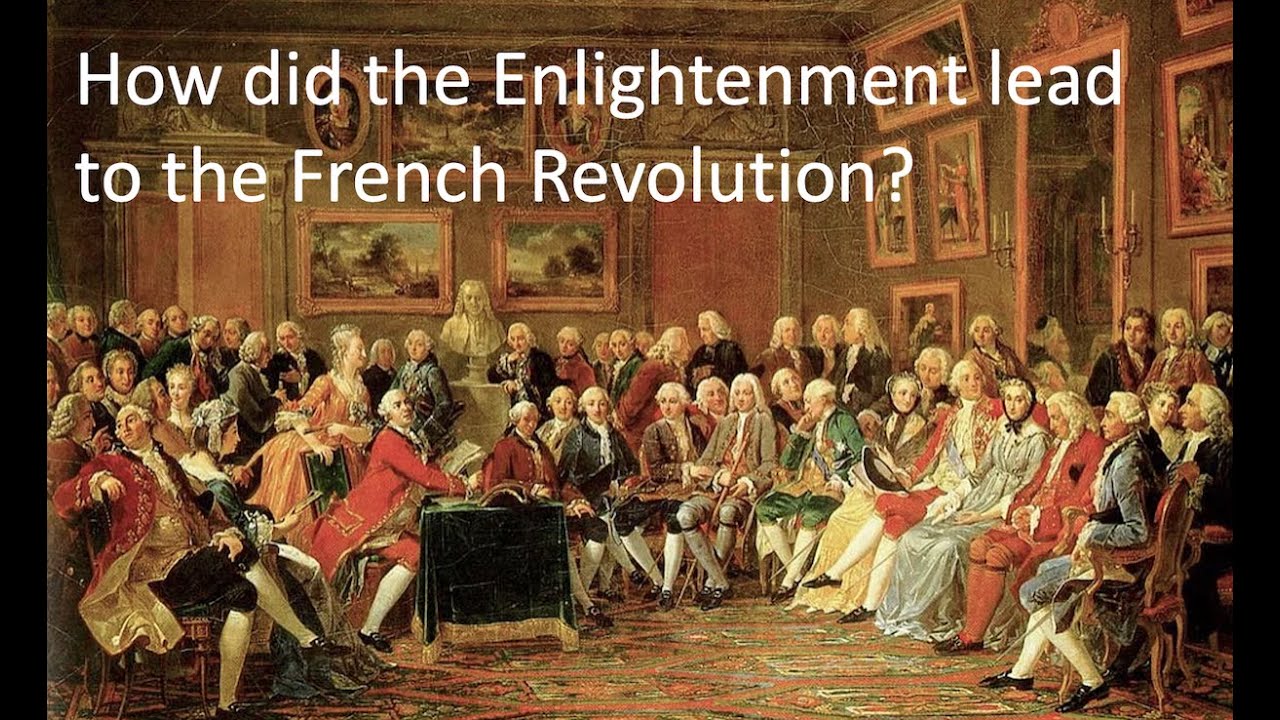
- Enlightenment ideas spread through salons in continental Europe (organized by wealthy bourgeois women like Madame de La Barde, focused on manners, refinement, and intellectual debate) and through coffee houses in Britain.
- The British Enlightenment and the European (continental) Enlightenment have contrasting ideas, even though historians often treat them as one movement.
Major Enlightenment Thinkers
-
René Descartes (Meditations on First Philosophy): Asked how we know God exists and how the soul exists. He argued that all accepted beliefs must be demolished and rebuilt through radical self-doubt and self-examination. The only thing he could know with certainty was his capacity to doubt: “I doubt, therefore I am” (Cogito ergo sum). The capacity to doubt is the soul. God must exist because someone gave humans the capacity to doubt; God must be good because a perfect being is incapable of fault. (The professor notes this is actually a tautology.) Descartes’ core claim: individual reason is more powerful than the church, dogma, or society.
-
Johann Wolfgang von Goethe (Faust): Considered the greatest German writer; Faust is a quintessential Enlightenment work. It reimagines the biblical story of Job. In the Bible, God crushes Job for daring to question Him, reinforcing that humans have no right to doubt God. Goethe inverts this: God bets Mephistopheles that Faust will never lose his curiosity. Faust pursues knowledge, love, and worldly experience, commits terrible acts (Gretchen kills her mother, brother, and baby), but is ultimately saved by God because his relentless curiosity and striving pleased God. The message: God loves curiosity, exploration, and growth. God forgives. To be alive means to constantly struggle and progress; complacency is the only sin. The final line Faust speaks before his soul is claimed: “Stay a while, you are so lovely”—he wants to freeze the moment of fulfillment, which is precisely when he loses the bet, but God saves him anyway.
-
Immanuel Kant (“What is Enlightenment?”): Defined enlightenment as man’s emergence from self-imposed immaturity—the inability to use one’s own reasoning without another’s guidance. The cause is not lack of understanding but laziness and cowardice. The solution is free and open debate: if people can hear different opinions, they can judge for themselves what is true because God gave them reason. Kant argues for absolute freedom of expression (even hate speech), because censorship denies people’s freedom to exercise reason. He distinguishes between a person’s role as an employee (bound by institutional rules) and as a scholar addressing the public (who must have unlimited freedom). No generation has the right to bind future generations to its ideas; progress requires each new generation to question and negate the previous one’s ideas.
-
Voltaire: A celebrity of the Enlightenment and essentially a troll who mocked the nobility and clergy. The middle class worshipped him, but he was not a deep thinker, so the professor does not spend much time on him.
-
Jean-Jacques Rousseau: The most influential Enlightenment thinker in France; his ideas directly drove the French Revolution.
Rousseau’s Key Ideas
-
Emile (on education): Children’s faculty of reason has not developed before age 12. Forcing them to learn math or language before then is like making a crawling child walk—it deforms them. Before age 12, education should be “negative”: keep children healthy and let them play, but do not teach them structured subjects. This frees them from bad mental habits and prejudices. By doing nothing at first, you end with a prodigy. The modern concept of childhood comes from Rousseau. He contrasts peasants (dull creatures of habit and obedience, like automatons) with savages (sharp, curious, forced to reason at every step because they have no prescribed tasks or superiors). To educate well, let the child be a savage, not a peasant. Schools are designed to control children, not educate them.
-
Discourse on the Origin of Inequality: Private property is the source of all inequality, war, and patriarchy. The first person who enclosed land and said “this is mine,” and found others simple enough to believe him, founded civil society. If everyone had rejected the concept of private property, all subsequent evils could have been avoided.
-
The Social Contract: Called the bible of the French Revolution. Opens with “Man is born free, and everywhere he is in chains.” Even those who think they are masters are more enslaved than their slaves because the system enslaves everyone. Rousseau distinguishes between the general will (what people would agree to if reasoning purely in the common interest) and the particular will (what people want as members of specific interest groups). Good society must be based entirely on the general will. If laws express the general will, they are inherently just and acceptable to all. Good government can be measured objectively: count, measure, compare—the metric system originates from this idea and is now used by every country except America and Britain (the two nations most opposed to the French Revolution).
- The French Revolution is fundamentally idealistic: it believes people are capable of reasoning toward the common interest. The American Revolution denies this.
- Rousseau rejects Christianity in government (“Christian republic”—the two terms are mutually exclusive) because Christianity preaches servitude and is favorable to tyranny. He proposes a civil religion based on reason: belief in a beneficent God, heaven and hell, reward for the just, punishment for the wicked, and the sanctity of the social contract. The one dogma of exclusion: intolerance, because the cults being rejected (Christianity, Islam) are themselves intolerant. This secular state religion becomes the basis for the French nation-state and leads to civil war with peasants who want to remain Catholic.
Why People Are Loyal to Religion (and Later, the Nation)
- People are loyal to religion because religion encapsulates everything they are habituated to: land, family, tradition, food, culture. People are creatures of habit because doing things out of habit feels good; breaking habits feels bad, and feelings are how people judge good from bad. Religion is the framework that holds all these loyalties together, which is why people will die for it.
- The French Revolution begins the process of transplanting religious loyalty into the nation-state. People will come to die for the nation just as they once died for religion, which explains the devastating wars of the 20th century (World War I and World War II).
How a Religion Can Be Based on Reason
- Traditional religion is received from God through priests. Enlightenment thinkers, especially Rousseau, argue that because humans have reason, they can access God directly and do not need priests. From first principles, one can deduce the basic elements of a rational religion: God exists; there is heaven and hell; good people go to heaven, so one should do good; and beyond these basics, individuals are free to believe anything that does not contradict these principles. Rousseau does exactly this in The Social Contract, and it becomes the blueprint for the French Revolution’s civil religion.