The Great Pyramid of Giza, built around 2500 BCE under Pharaoh Khufu, is the last surviving wonder of the ancient world and stood as the tallest man-made structure for roughly 4,000 years. This lecture examines three central questions: how it was built, why it was built, and why pyramid construction eventually stopped. The speaker challenges the mainstream “tomb theory” and proposes instead that the pyramid was Egypt’s equivalent of the Manhattan Project—an attempt to harness divine power to create eternal peace, unify the nation, and demonstrate mastery over nature.
How the Great Pyramid Was Built
The construction method has been debated for centuries. The old Greek theory (from Herodotus) that stones were hauled up external ramps in steps has been architecturally disproven.
A more recent theory by French architect Jean-Pierre Houdin proposes:
An external ramp was used only for the base level.
Two internal counterweight structures (like pulleys) were built to lift stones higher.
An internal spiral ramp surrounded these structures, allowing workers to haul stones upward.
The pyramid was essentially built from the inside out, then covered with polished limestone casing that reflected sunlight, making it appear like a fallen star.
Without blueprints or modern writing, workers likely relied on a physical model built beside the pyramid to guide construction—something critics have dismissed but the speaker argues was feasible given the Egyptians’ strong oral memory and imagination.
Why the Pyramid Was Built: Challenging the Tomb Theory
The mainstream view holds the pyramid was a tomb designed to ease the pharaoh’s transition into the afterlife, functioning as a “resurrection machine.”
Three logical problems with the tomb theory:
No mummy or body has ever been found inside any of Egypt’s approximately 100 pyramids.
If pharaohs were divine benefactors (as Egyptian mythology holds), their primary purpose on Earth would be to help humanity, not selfishly build their own tombs.
A pharaoh could not guarantee living the 26–30 years needed to complete construction.
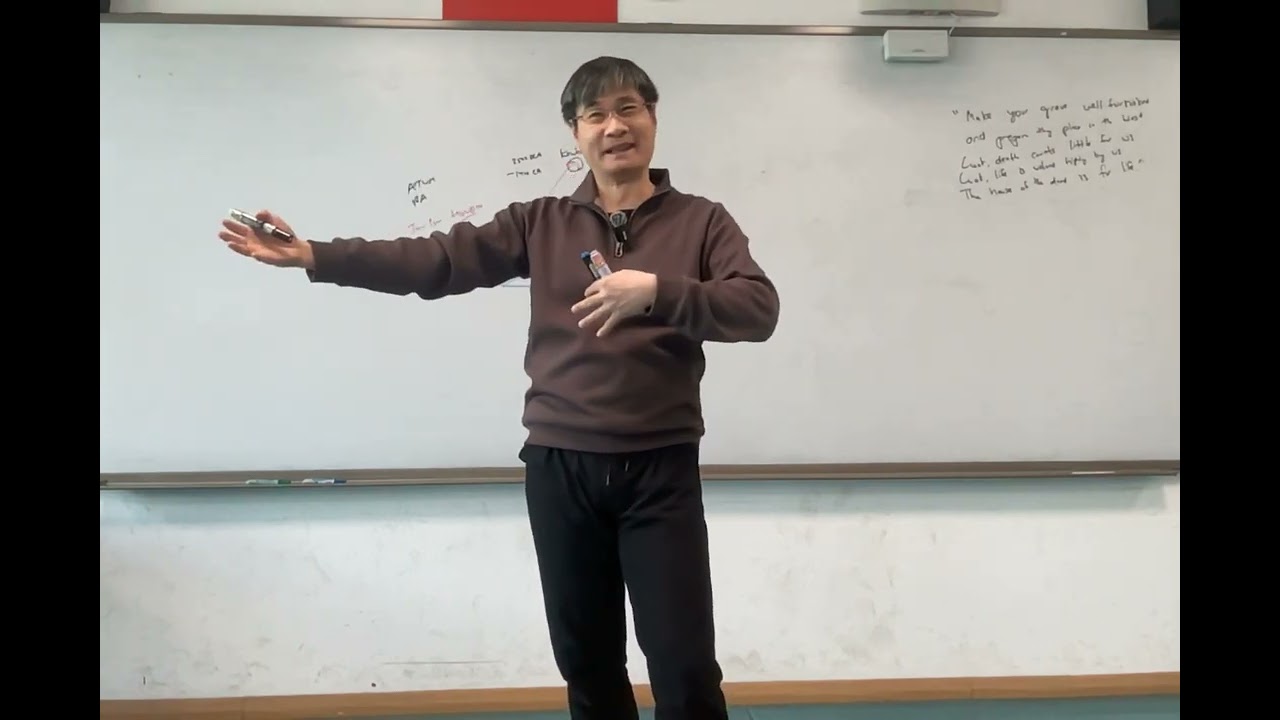
Textual evidence cited for the tomb theory includes a pharaoh’s writing to his son: “Make your grave well furnished… The House of the Dead is for life,” suggesting the pyramid ensures immortality.
Nikola Tesla’s alternative theory: The pyramid was an energy-generating battery system—the King’s Chamber resonates at the same frequency as Earth, the pyramid’s alignment captures electromagnetic energy, and the granite-limestone construction traps solar and lunar energy. The speaker finds this more plausible than the tomb theory but notes it lacks scientific proof and raises the question of what the energy was used for.
The Speaker’s Theory: The Pyramid as Egypt’s Manhattan Project
The speaker proposes the pyramid was conceived as a national project to harness divine power and create eternal peace—comparable to the Manhattan Project, which mobilized 130,000 people and the world’s best scientists to master atomic energy.
The pharaoh’s mummy as a divine portal:
If the pharaoh was divine, his body after death became a sacred mechanism—a portal to communicate with him in the heavens and channel his power on Earth.
Worshippers in the Grand Gallery prayed before the mummy, drawing divine energy downward; the limestone casing reflected this energy across all of Egypt.
The Grand Gallery as a symbolic womb: Its dark, enclosed shape evokes both birth and death—a nexus of life and death, heaven and earth, myth and reality.
The pyramid as a reversal of the Big Bang: Through collective worship, Egyptians sought to create oneness, wholeness, and unity—cleansing sin and forging a moral, unified nation.
How the Pyramid Was Meant to Create Eternal Peace
Cultural unification: Egypt contained at least four distinct cultures with separate mythologies. The pyramid served as a singular sacred object uniting all faiths under the worship of the pharaoh.
Deterrence through awe: Enemy scouts seeing the pyramid would perceive it as God on Earth and flee rather than attack.
Domination of nature: Egypt’s wealth depended entirely on the Nile River’s flooding cycles. The pyramid was meant to demonstrate divine control over nature—ensuring the Nile’s “good mood” and preventing drought or destructive floods.
Reinterpreting the pharaoh’s words: “Death counts little for us” means pharaohs, as gods, do not fear death. “Life is valued highly” means their concern is the well-being of the Egyptian people. “The House of the Dead is for life” means the pyramid is the pharaoh’s legacy of benevolence—a gift ensuring Egypt’s eternity, stability, and prosperity.
Evidence Supporting the Theory
Egyptian mythology: Gods like Atum (life), Osiris (civilization), and Horus (kingship) gave everything to humanity. It makes more sense that the pharaoh helped Egyptians achieve eternal peace than that gods forced them to build tombs.
Architectural achievement through devotion: The pyramids were not built by slaves (used only for non-religious labor) but by tens of thousands of laborers motivated by religious devotion—the same force behind the world’s greatest churches, temples, and mosques.
Cult of the skull: Ancestor worship involving decorated skulls as portals to the spirit world was common globally; using the pharaoh’s body as a heavenly portal fits this pattern.
Cave paintings and early temples: Sites like Göbekli Tepe show a long human pattern of building religious monuments to connect the earthly and spiritual worlds—the pyramid represents the ultimate expression of this impulse.
Why Pyramid Construction Stopped
The 4.2-kiloyear event (~2200 BCE): A century-long drought struck Egypt. Since the pyramid’s purpose was to control the Nile and prevent such disasters, this failure triggered a crisis of faith in the pharaoh’s divine power.
Collapse of the pyramid economy: Centralized planning required for pyramid construction created three systemic problems:
Inequality (those outside the plan grew poorer)
Corruption (officials stole resources)
Waste (the system was inherently inefficient)
Nihilistic religious belief: The afterlife-focused religion encouraged elites to hoard wealth (grain, precious metals) for their tombs rather than invest in the nation’s present well-being—squandering Egypt’s resources for personal eternal gain.
Transition to the Middle Kingdom: After the Old Kingdom collapsed, Egypt adapted by decentralizing power into a priestly bureaucracy (similar to China’s Confucian system) and importing new ideas, leading to renewed flourishing in the Middle and New Kingdoms.
Why the Knowledge Was Lost
The pyramid economy required three elements: specialization (e.g., granite carving, measurement), institutionalization (passing knowledge through guilds and families), and systemization (coordinating all elements through writing, finance, and administration).
Imhotep, the pharaoh’s Grand Vizier, was deified for creating this complex system.
After construction, records were likely deliberately destroyed to maintain the pyramid’s divine mystery and inspire awe—the Egyptians wanted it seen as a gift from God, not a human engineering feat.
By Herodotus’s visit (~400 BCE), Egyptians had lost the expertise entirely and could not rebuild a pyramid even if asked.
Why the Speaker’s Interpretation Differs from Mainstream Academia
The speaker argues modern minds differ from ancient Egyptian minds in three fundamental ways:
Preliterate vs. literate: Egyptians relied on oral tradition, giving them stronger memories and greater imaginations. They could memorize and visualize the entire pyramid structure without written plans—just as people today memorize the Quran or Homer.
Pre-scientific vs. scientific: Modern thinking is constrained by the scientific method’s step-by-step logic and materialism. Ancient Egyptians accessed ideas through divine inspiration and focused on feeling and belief, not just observable evidence.
Pre-capitalistic vs. capitalistic: Modern society is utilitarian (education for jobs, money, consumption). Ancient civilizations were religious and community-oriented, focused on contributing to collective well-being, asking big questions about good, evil, justice, and peace.
The Great Pyramid endures in global imagination because it reveals the limitations of modern thinking—despite superior technology and wealth, contemporary civilization lacks the imagination and will to build anything comparable.