-
Jim Ratcliffe: the blue-collar billionaire who does things “just because”
- Born in Manchester, England (a working-class city), studied chemical engineering and accounting, worked at a private equity firm, then at age 40 risked everything—mortgaging his home and using all his savings—to buy a BP chemical spin-off for $80 million with only $3 million in equity and the rest debt. By 1997 that company was worth ~$1.5 billion. He built it into Ineos, a ~$40 billion revenue chemical giant, by acquiring unwanted conglomerate spin-offs and doubling EBITA in five years.
- Now one of the richest people in England, he spends his wealth on passion projects rather than pure profit:
- Funded Nike’s Breaking2 project where Eliud Kipchoge ran a sub-2-hour marathon
- Owns Team Sky cycling (8 Tour de France wins), one-third of Mercedes F1, an America’s Cup sailing team, and 25% of Manchester United
- Founded the Grenadier car company after Jaguar refused to restart Land Rover Defender production—he loved the classic Defender so much he built his own SUV brand. The company has lost ~$2 billion since 2018 and was negative $300 million last year, but has a cult following in Europe and America. He openly doesn’t care that it’s a bad business.
-
The “side quest” mentality and raising kids with confidence
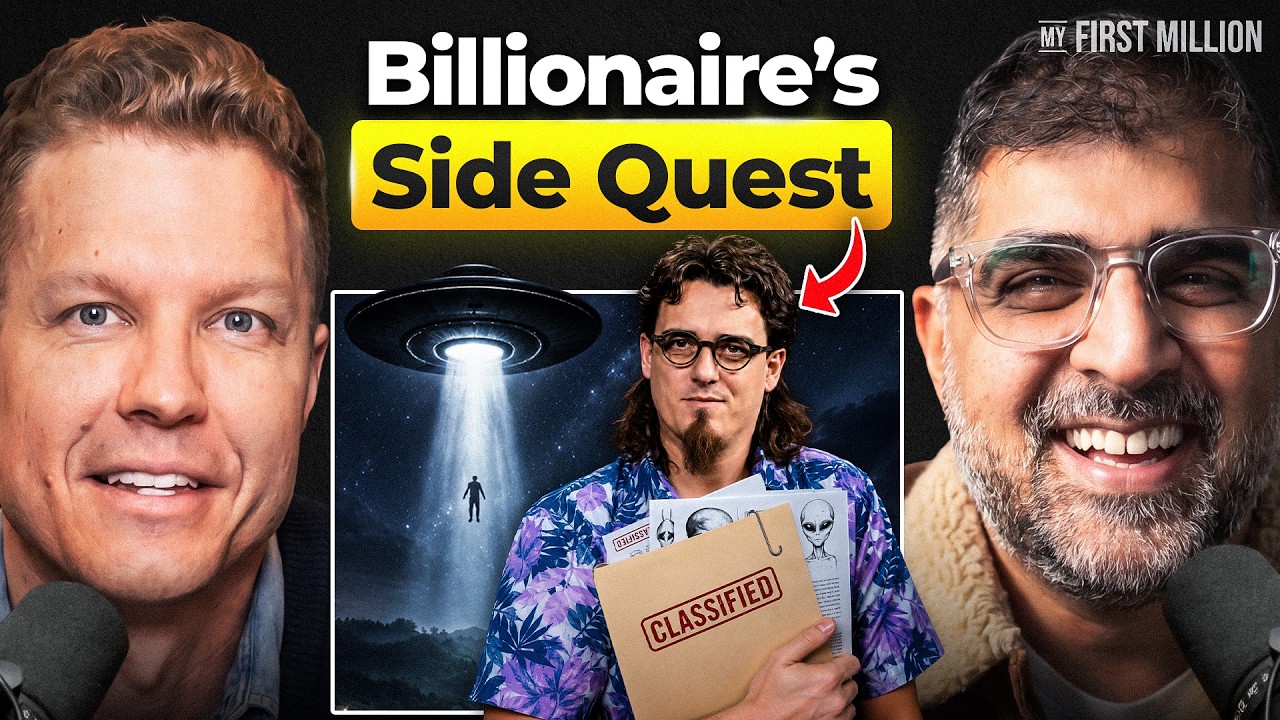
- Both hosts admire people who pursue passion projects “just because”—Palmer Luckey (Oculus, Anduril) wanting to privately fund an X-Files-style alien hunt, Jim Ratcliffe making cars at a loss, and Luckey wearing Hawaiian shirts because that’s what he grew up in and refusing to change after getting rich.
- Discussion of how confidence is built through adventure and adversity, not taught directly—people from disadvantaged backgrounds often develop an “insatiable hunger” that can’t be bought.
- Childhood obsessions as clues to adult purpose:
- Dan Brown’s father left treasure maps instead of Christmas gifts, sparking a love of puzzles that led to 200+ million books sold
- Robert Greene’s advice: figure out what you loved at age 12, before social pressure and jadedness set in
- Monish Pabrai’s framework: personality is mostly hardwired by age 5; between 8–18 is a golden window for specialization; parents should observe their child’s nature, feed their obsessions during that window, and get them a strong peer group
- Warren Buffett collected discarded betting slips at horse tracks as a kid, finding hidden value in what others threw away—essentially the same skill as value investing
- Sean’s childhood signs: improv competitions (foreshadowing podcasting), and playing Madden/NBA 2K only in franchise mode as GM, never actually playing the games (foreshadowing his shift to investing and incubating companies rather than operating them)
- The metaphor: life is like screwing into the wall at the wrong angle until you find your natural alignment—then everything clicks with minimal effort
-
Social commerce: random TikTok creators making millions selling other people’s products
- A new e-commerce model has emerged where everyday non-famous people make short-form videos (TikTok, Instagram Reels) selling products for affiliate commissions—no brand deals needed, just grab a product and make content
- How it works:
- Brands “seed” products to thousands of creators (not influencers—regular people who understand short-form video)
- Creators make 30–40 videos per month across multiple accounts, rapidly testing what works
- Brands get 3,000–5,000 pieces of content per month instead of 10–20 from an in-house team
- Content looks informal and authentic—filmed in bedrooms, casual tone—because that’s what performs
- When a video pops off, other creators remix and iterate on it, creating a “hive mind” that gets smarter over time
- Creators only get paid on commission (typically 15–20%), so brands have zero upfront ad spend risk
- Real examples:
- Goalie (apple cider vinegar gummies) grew to ~$500 million in revenue using this model, with a tiered incentive system: $10K/month earned 15% commission, $1M/month earned a Miami condo or Lamborghini
- Comfort (a basic fleece hoodie) went from $0 to $500 million/year in ~5 years
- Profitability vs. value:
- These businesses can be cash-flow positive because marketing costs are a fixed percentage of revenue paid only on sale, not upfront like traditional ads
- However, they trade at lower multiples because the growth depends on a single channel/tactic whose longevity is uncertain
- The pattern: best brands start janky and get legit over time
- Moiz Ali started Native deodorant by finding the top-selling natural deodorant on Etsy, slapping his own label on it, running cheap Facebook ads, and packing orders on his kitchen table. He tested formulas by running around the block with different sticks and having his brother smell his armpits. Sold to Procter & Gamble for $100 million+.
- Athletic Greens started with a classic infomercial-style landing page (beach body, six-pack dude, giant orange arrow, “Rush My Order” button) and evolved into a premium brand with Hugh Jackman and clinical trials
- The lesson: start scrappy, validate demand, then invest in brand, packaging, and diversified sales channels over time
- B2B application: B2B companies rarely use these proven B2C tactics, representing a major arbitrage opportunity—most B2B marketers don’t come from the consumer world and don’t know these playbooks exist
What Palmer Luckey does when he's not building billion-dollar companies
My First Million • • 48min → 3 min • #10