This episode of My First Million explores three business opportunities the hosts believe are poised for significant growth: oxytocin-based interventions for relationship bonding, fraternal-organization models that monetize loneliness through financial products, and faith-based media studios that build owned audiences and monetize via subscription and community governance.
Oxytocin dosing for marriage counseling and social connection
Palmer Luckey (Anduril/Oculus founder) answered “what would you do starting from zero?” with: end the tragedy of divorce through oxytocin doping for marriage counseling, arguing most people who split should stay together, especially for kids.
Oxytocin is the mammalian pair-bonding hormone released during childbirth, breastfeeding, sex, cuddling, and eye contact; prairie vole studies show it drives lifelong monogamy and partner guarding.
Small human studies suggest oxytocin increases distance from attractive alternatives and amplifies existing social feelings (positive or negative) rather than creating artificial attraction.
The compound is unregulated and purchasable in bulk (e.g., Sigma Aldrich); biohacking communities (especially autistic/Asperger’s and PTSD subreddits) have been self-experimenting with nasal sprays for years, logging daily effects on eye contact, conversation quality, and emotional warmth.
Companies like BlueChew and Hims already sell adjacent men’s-health products; the hosts predict oxytocin nasal sprays will enter mainstream telehealth within 12 months, marketed for divorce prevention, team cohesion, and social deficits.
Caveats: limited clinical data, safety/efficacy not proven, but the framing — “highlighting” existing feelings rather than a “love potion” — makes the concept more plausible and marketable.
Fraternal organizations as a loneliness-solution business model
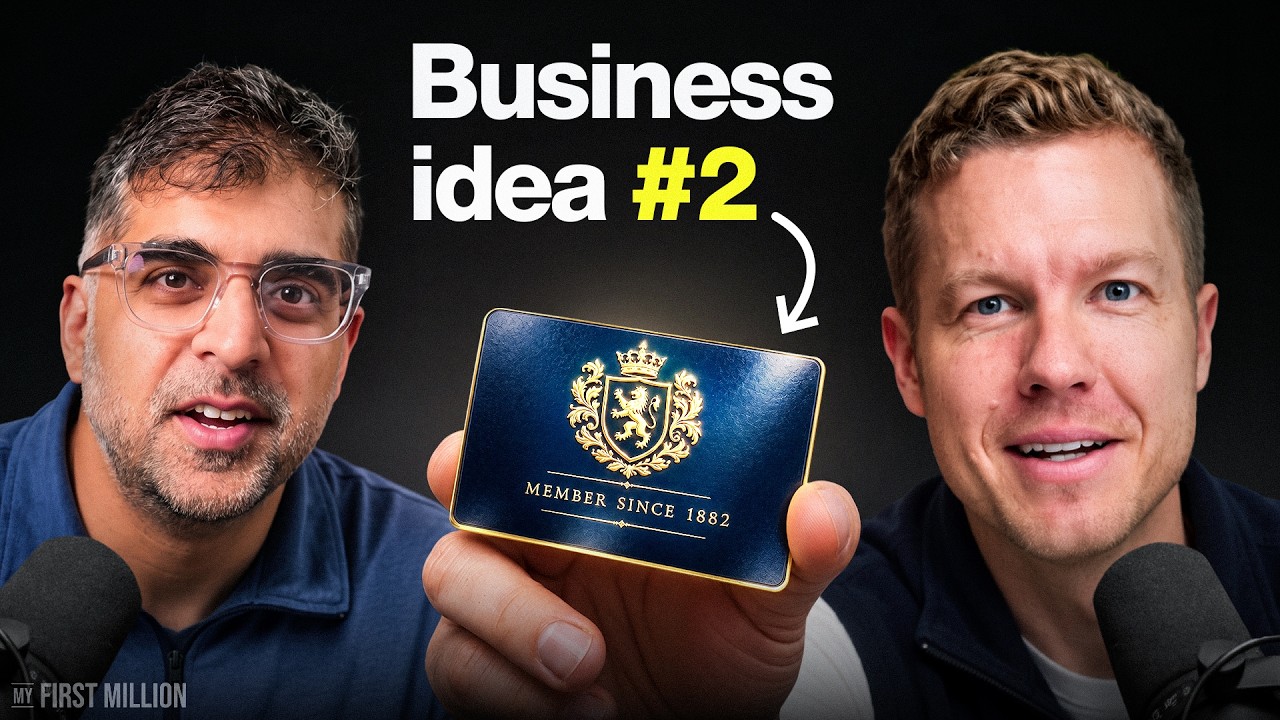
Knights of Columbus (founded 1882 by Father McGivney in New Haven) began as a mutual-aid society for widows/orphans; today 2–3M members, $30B assets, ~$10B annual revenue, 14,000 local chapters.
Core model: shared-identity community (Catholic men) meets locally for charity/service; monetizes by selling life insurance and financial products to members who trust the brand.
Growth driver: men aged 30–40 are now the fastest-growing segment, reversing decades of aging membership.
Parallel examples: Good Sam (RV owners, discounts + tailored insurance), USCCA (concealed-carry holders, training + self-defense liability insurance, ~$400M revenue), AARP (licenses brand to UnitedHealth for Medicare plans).
Key insight: the community is the customer-acquisition channel; the financial product is the high-margin backend. Tax advantages exist for mutual-benefit structures but aren’t required for viability.
Health-care sharing ministries operate similarly but carry regulatory ambiguity (not legally obligated to pay claims); the hosts prefer the insurance-partnership model over direct underwriting.
Faith-based and values-driven media studios
Angel Studios (founded by Neal Harmon, ex-PooPourri/Squatty Potty marketer) — values-based “A24 for faith audiences”: 3M paying members ($13–20/mo), $450M ARR, public company.
Origin: built a content-filtering tool to strip profanity/sex from mainstream films; sued by studios; pivoted to producing original “clean” content (The Chosen — 200M viewers, 7 seasons).
Distribution innovation: members vote on greenlighting projects (70% threshold); marketing via guerrilla stunts (e.g., Kevin James in a tux holding flowers at the Super Bowl with empty seats beside him).
Unit economics: $14M production + $40M marketing = $54M all-in; theatrical split ~50% to exhibitors, so a $250M box-office hit yields ~$125M to studio — ~2.3x return on the hit, which must cover multiple flops.
A24 comparison: reacted to Hollywood’s risk-averse “four-quadrant” sequel strategy by acquiring low-budget indie films ignored by majors; built brand via limited merch, viral marketing, and auteur trust.
Broader pattern: every dominant trend creates a counter-trend opportunity (Facebook → Snapchat, calorie abundance → GLP-1s, screen saturation → brick/screen-time apps); values-based media is the reaction to Hollywood’s homogenization.