-
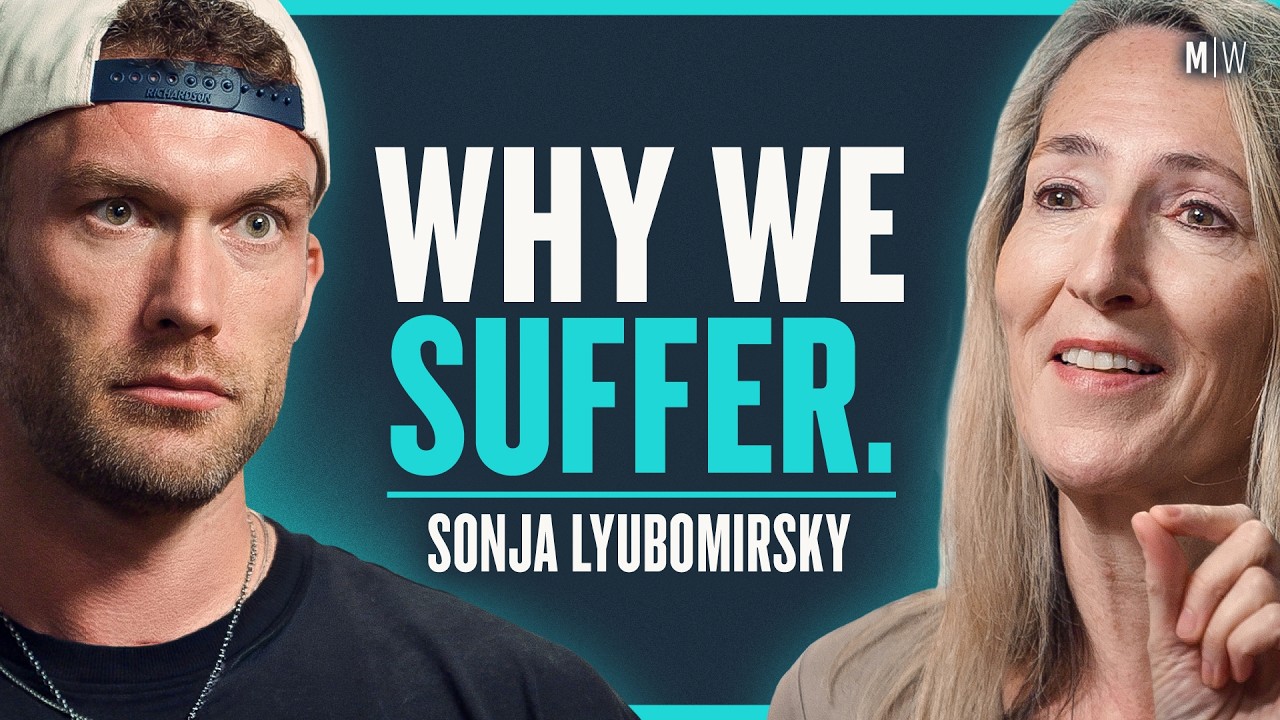
The key to happiness is feeling connected and loved — Sonja Lyubomirsky, after 36 years of studying happiness interventions, realized that the strategies that work (gratitude letters, acts of kindness, social connection) all succeed because they make people feel more connected and loved by others. This isn’t a cliché — it’s an evolutionary imperative. Humans who didn’t feel belonging wouldn’t have survived, found mates, or passed on genes. The episode explores why so many people today don’t feel loved despite being surrounded by people who care, and what to do about it.
-
Feeling loved is not the same as being loved — Many people are loved but don’t feel it, like a cup with a leak or a lid. The real goal isn’t to make yourself more lovable (through achievement, beauty, or broadcasting your best qualities) but to feel genuinely known by others. Admiration is not connection — you can impress someone without ever being truly known, and that leaves you wondering whether they’d love the real you.
-
The biggest barriers to accepting love include:
- Attachment style: Anxiously attached people watch for signs of rejection; avoidantly attached people miss signs of love entirely.
- Mismatched expression: People often express love in ways that don’t land for the recipient (e.g., sending gifts when the partner needs words of affirmation). The “love languages” framework is debunked as a matching predictor of relationship quality, but useful as a heuristic — everyone benefits most from words of affirmation and quality time, and the more languages your partner uses, the better.
- Low self-esteem: If you don’t love yourself, you won’t believe others’ love is genuine, and poor self-image can actually make you less lovable. Lyubomirsky notes there are no proven evidence-based interventions that reliably boost self-esteem, though contributing to community, helping others, and personal growth are plausible pathways.
-
Receiving love is a skill that can be practiced — People often deflect compliments or generosity, which robs both parties of feeling good. Like any skill, accepting love gets better with practice, even when it feels unnatural at first.
-
A sharing mindset is essential to being known — You don’t have to trauma-dump, but you do need to reveal more of yourself than the highlight reel: your opinions, your struggles, what matters to you. This requires reading the room and testing the waters. The UK’s culture of mocking and dismissing surprising opinions can create a vicious cycle where people share less, are known less, and feel less loved.
-
Vulnerability creates connection, not rejection — The “vulnerability paradox” is that we fear revealing weaknesses will make people like us less, but on average it makes them like us more. Lyubomirsky shares a story of completely blanking during a talk and saying “I don’t know what to say” — an experience she found mortifying but that audiences found deeply human. The “pratfall effect” shows that competent people who show human flaws are more likable, not less.
-
Validation before advice — Most people are poor listeners: studies suggest 25% of the time our mind is wandering or we’re rehearsing our response. The instinct is to fix, advise, or minimize — but what people usually need first is to feel heard and validated (“that must have been really hard”). Only after validation should you consider offering advice. The “nail in the head” viral video perfectly illustrates this: the woman in pain doesn’t want solutions, she wants acknowledgment.
-
Nonviolent communication (I-statements) is a powerful tool — Instead of “why do you always do this?” try “I feel hurt when you do this.” The hardest part is the request: making a specific ask (“I’d love for us to come up with an agreement about chores”) is vulnerable because it risks rejection, but it’s the only way to actually change dynamics.
-
The five mindsets that make people feel loved:
- Curiosity: Genuine interest in another person’s inner life, with enthusiasm. This is rare and deeply gift-like.
- Listening: Active, warm listening — not waiting to respond.
- Sharing: Revealing yourself at the right pace.
- Open heart: Warmth, kindness, wanting the other person to be happy.
- Multiplicity: Seeing the other person as a complex quilt of positive and negative traits, not reducing them to one bad moment or one annoying behavior. This is the hardest mindset in practice — people agree with it in theory but immediately call someone a jerk when they see a specific behavior.
-
How you respond to good news predicts relationship success better than how you respond to bad news — “Capitalizing” (enthusiastically celebrating a partner’s wins) is a stronger predictor of relationship duration and quality than supporting them through hardship. This is hard because good news can trigger insecurity, envy, or fear (e.g., a job offer in another city), but genuinely celebrating is what builds lasting bonds.
-
When the other person doesn’t reciprocate, you may need to walk away — If you’re doing everything right (sharing, listening, curious, warm) and the other person consistently doesn’t respond, Lyubomirsky’s blunt advice is that you may have made a poor choice. The discomfort often comes from wanting something from someone who simply can’t or won’t give it — like trying to force a square peg into a round hole.
-
Advice doesn’t land evenly — it exaggerates existing predispositions — “Advice hyperresponders” means that the people who already lean toward a behavior are the ones who absorb advice to do more of it, while the people who actually need the opposite message ignore it. This explains why some people cycle through relationships too fast while others stay in bad ones too long — different people, different problems, same advice.
-
Hedonic adaptation is the biggest misconception about happiness — People think “I’ll be happy when X happens,” but they adapt to new circumstances and return to baseline. The hack is variety, novelty, surprise, and gratitude — gratitude specifically counteracts the tendency to take things for granted. Beautiful views are one thing people don’t adapt to, likely because they’re always changing and evolutionarily significant (water, mountains, vantage points).
-
Top habits to feel more loved, starting tomorrow:
- Have a 15-minute conversation with someone you want to feel loved by.
- In that conversation: share more, listen more, show curiosity with warmth and acceptance.
- Lyubomirsky’s own habits: sleeping with her phone outside the bedroom, texting a friend the moment she thinks of them, and a standing Friday dinner open to 6–8 people.
- When someone says “let’s get together,” never leave without making a firm plan with a specific time and place.
-
Introverts can act more extroverted and get happier — In Lyubomirsky’s most surprising study, both introverts and extroverts who were instructed to act more extroverted (sociable, talkative, energetic) for a week experienced the biggest happiness boost her lab had ever seen. The introversion week didn’t make people less happy. The popular idea that introverts get depleted by socializing isn’t well supported by evidence — it may actually be extroverts who get depleted, because they’re social more often.