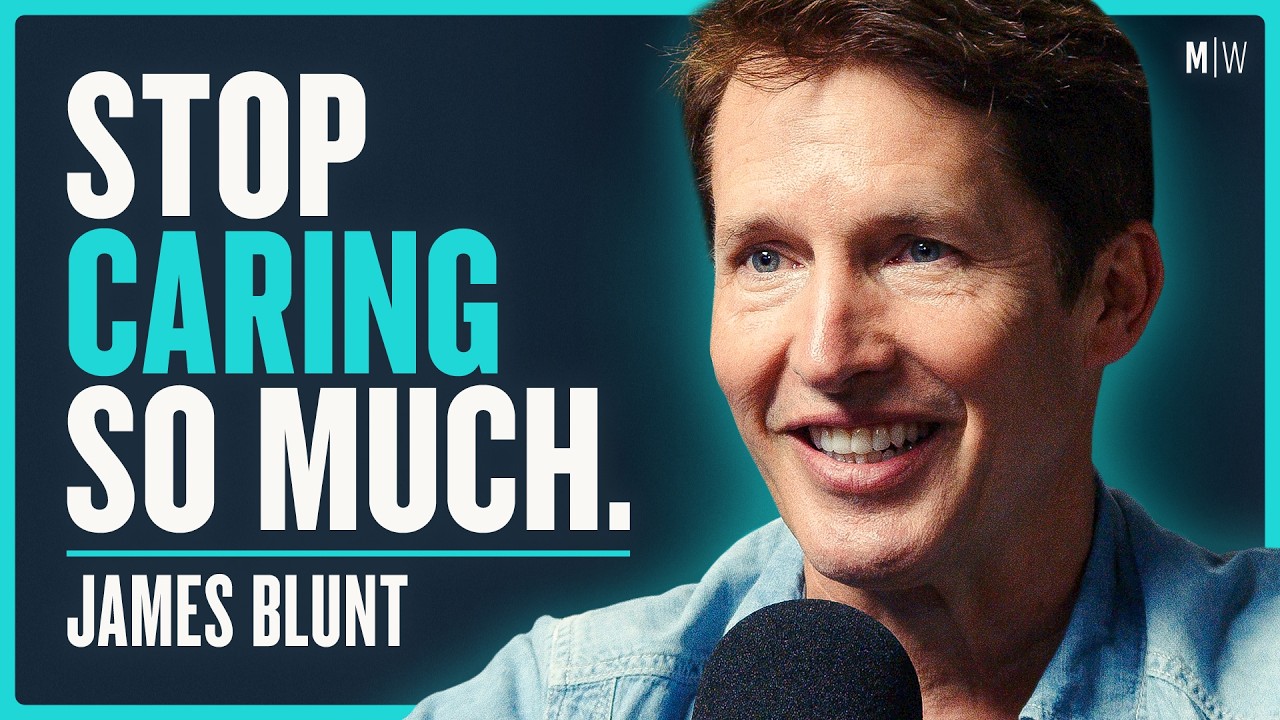
James Blunt, British singer-songwriter and former army officer, reflects on a life shaped by constant movement — from boarding school at age seven through military service in Kosovo to sudden global fame with “You’re Beautiful” and the album Back to Bedlam — and the strange freedom that came from learning to stop caring whether people like him.
Childhood and boarding school forged independence and emotional distance
Blunt was sent to boarding school in Berkshire at age seven while his parents lived in Germany; they dropped him off without explaining he would stay, and the matron told him he would see them at Christmas.
The experience made him “incredibly independent” — he had to work for older pupils (one known only as “God”), fetching tea, doing laundry, and in return getting contraband alcohol and protection.
He describes it as “a little bit like education prison” and notes that inmates in boarding school develop skills similar to real prison inmates.
As an adult and parent, he would not send a seven-year-old to boarding school because “you miss out on the childhood of your own children.”
A transient upbringing and army career built a lifestyle of constant motion
Blunt’s father was in the army; the family moved every two years — Cyprus, Germany, Hong Kong, Yorkshire — and he was sent out to knock on doors to find friends, knowing each friendship would last only two years.
He joined the army himself, attended Sandhurst, and served in Kosovo in 1999 as a peace enforcer with NATO during the conflict between Serbs and Kosovo Albanians; he calls it “the right war” because “two people are killing each other and we’re getting in the middle and saying enough.”
Army life drilled idleness out of him: “I work very hard now. I walk fast. I work long hours. I’m very very organized. My tour bus is a very tidy place. A tidy bus is a happy bus.”
Even now he lives between Verbier (Switzerland), Ibiza, and the UK: “I get itchy feet. I’m just constantly moving and that’s from my childhood.”
Songwriting began during army downtime; the ceremonial role by day, gigs by night
There is “a lot of downtime in the army” — “the rush to wait” — and Blunt brought a guitar on operations; the experiences were “inspirational for songs” much like war poets.
After Kosovo, he was posted to London as the Queen’s ceremonial bodyguard (Household Cavalry), riding horses down the Mall in armor by day and sneaking out to play small gigs by night.
He formed a band from fellow soldiers: “those band members were like my soldiers in my troop from all corners of the country… I know that they’re experts in their own field and I asked their opinion and their advice.”
Breakout success with Back to Bedlam brought a media-led backlash in the UK
Blunt had dreamed of being a professional musician since 14; the breakout came at 30 after years of buildup.
The album sold millions; “You’re Beautiful” was inescapable. The British media led a backlash that the public followed: “desperately disappointing… almost a national pariah… men wouldn’t talk to me.”
He felt the criticism was irrational: “it’s just a song… you really haven’t met me.”
The backlash was top-down, not bottom-up: “the music industry is a pretty shallow space… I was never going to be cool… I was just an easy target.”
British “tall poppy syndrome”: “we don’t celebrate success… we are a nation that sometimes creates clubs to be exclusive.”
In the US, by contrast, “Americans do celebrate success… you’re allowed to say that you’re proud of what you’ve done.”
The criticism wounded him, but perspective and time healed it
He was living two lives: “in Ibiza… having the time of my life” and on tour playing to tens of thousands, while interviews told him how unpopular he was.
Perspective shifted when he realized: “you just bypassed over 100 positive things that people said… that one negative thing… they invested nothing… these other people… invested money, effort, energy, time.”
The anonymous critic is “probably still living at home… in their 50s still living with their parents… trousers around their ankles.”
He acknowledges the sadness of a tarnished peak: “you can see a sadness in my eyes… isn’t it strange that there’s so much positive and yet something so dark and negative back at home stuck in the mind.”
The second album, All the Lost Souls, written alone in Ibiza with a stolen boiler and fingerless gloves, was “very, very lonely” and “probably musically was my best album until the one I’m about to flog you now.”
Earnestness in music is brave but punished in British culture; he learned to protect himself
Blunt defines earnestness as “the bravery to take your emotions seriously” — music as catharsis, “a conversation with myself… looking at them in the mirror and being honest.”
British culture has “an allergy to that… standoffishness, a degree of cynicism, a distance.”
The backlash made him self-protect: third album songs were “well crafted and well recorded, but there’s something really genuinely missing, the honesty… I was writing with everyone else in mind, with the negative reviews that I might get in mind.”
He found his way back through Twitter: “I take my music seriously, but I don’t take myself seriously… a whole new persona… the online joker.”
Now he sells albums with humor, not earnestness: “I won’t promote it with the same earnestness… I’ll sell it to you with humor.” He wanted to call the new album Reason to Die; the label refused.
Criticism capture and audience capture warped his creative process for years
He recognizes both dynamics: “I throw out I critique myself before you can” (criticism capture) and “I have done that where I’m unable to not have the audience in the room while I’m recording… you just create gray in the middle.”
Elton John advised him: “fuck them… you’re the one riding the wave and they’re not, they’re watching from the beach.”
Hardship fuels growth: “you don’t grow when you’re in great comfort… when you’re in great hardship and discomfort, that’s when you learn, grow and are inspired.”
In the music business, “if everything’s going fine… it’s probably a slow decline… you have to aspire to grow even just to keep it flat.”
The Nashville writing session with Mickey Echo illustrates how he accesses dark material while staying safe
Blunt walked across a freeway in Nashville thinking about jumping — “if I were to jump, would I jump the side where the cars are coming towards you or would I jump the side where you can’t see the cars?” — and narrated this to Mickey to provoke an emotional reaction.
Mickey called his manager: “I thought I was just going to write another ‘You’re Beautiful’ with this guy.”
Blunt told him: “I’m not looking for a bridge to jump from. I’m just looking for a hand to hold.” They wrote a song about life’s pressures and the need for connection.
He is “a very happy human being” but must “go into a little dark corner and find it and put it into paper” — songwriting as therapy: “I don’t see a therapist. I write songs about what’s going on inside.”
Family, time, and a new album (Airplane Mode) represent a second life after the “greatest hits” milestone
His wife and children are “the things that mean the most… who would give me peace.”
Time healed the backlash: “now young kids come up to me and they love my first album because they were forced to listen to by their parents… the kids don’t know that [it was uncool].”
The label released a greatest hits album: “you only put out a greatest hits when you’re dead… if I’m dead, then this is a new life and I don’t have to think about anything business wise or prove myself in any way. This is all gravy.”
Airplane Mode was written for himself: “I was no longer going to pursue the radio hits… I want to go into music again for what I do best, which is to describe the darkest corners in my little heart and inside my mind.”
He told his wife: “don’t be afraid by what you might hear. I’m perfectly happy. But I need to go and reach into these corners.”
Celebrity Traitors revealed how easily he gets sucked into games and how much he values family time
Filming lasted just over three weeks in a Scottish castle; he tried “game show suicide every day” but made the final before being banished.
He realized: “I tour the world all the time and I’m away from my family and here I am again volunteering to be away from them. And for what? For sort of self-promotion… the people who really matter to me are at home and I really need to not do that because time with them is precious.”
The experience was “a marathon… pretty miserable, but great to have done.”
Confidence, naivety, and the “lightning in a bottle” problem
Early naivety was a superpower: “that naive belief that this is going to work is a glorious wonderful thing, which is as you say, I can never find myself back to that place.”
He accepts he will never replicate Back to Bedlam’s commercial peak: “it is a sadness that I should say that because what I should be doing is being American about this… and say this album is going to supersede those by a mass.”
But he frames it as blessing, not burden: “would I prefer to have a tiny first album and think damn missed it and work on a second and now be talking to you on my eighth album and now it be going now? No because it would have been 20 years of struggle. I’ve just had the best time.”
He still battles confidence on stage: “I can still find things… going onto a stage singing a new song… I feel that absolutely… I haven’t actually entirely dealt with that but you know it’ll be over in three minutes.”
His model for endurance: “with a little bit of age, you know that there will be highs and lows. And you enjoy the highs and you pick yourself up from the lows… you just need to make sure that you learn from those lows and aren’t so damaged by them that you don’t pick yourself up and fight for another high.”