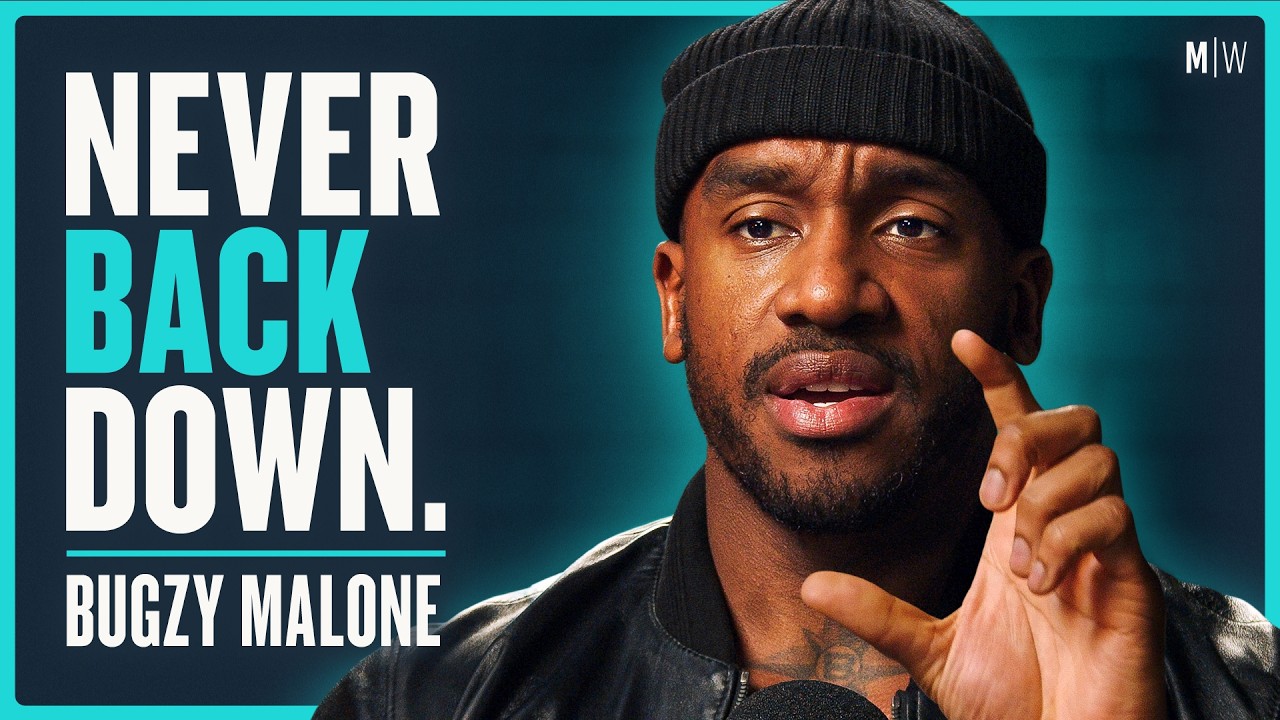
Bugzy Malone, a pioneering British rapper, reflects on the hidden costs of success, the difference between “making it” and “maintaining it,” and the internal journey required to sustain achievement without losing oneself, drawing on his path from childhood dysfunction and crime to artistic independence, acting, and a redefined sense of purpose.
The core tension: making it versus maintaining it
Success is advertised as an arrival point, but maintenance is the unspoken, ongoing demand that requires being the best version of yourself continuously, not just reaching a peak.
The advice marketplace overwhelmingly serves people still climbing (10,000:1 ratio), so cultural mythology focuses on ascent, not the discipline, solitude, and identity shifts required to hold altitude.
Falling after reaching the top carries a unique pain — public praise for traits like “never quitting” can become private constraints (e.g., staying in a toxic marriage 15 years because “I don’t quit”).
“What you are praised for in public you often pay for in private” — the skills that drive ascent can become liabilities if not consciously re-evaluated.
Transitioning from poverty/dysfunction to affluence/function requires parts of the old self to die; “death is always violent,” and the dust only settles after you’ve quote-unquote made it.
Childhood exposure to the “underbelly” and the education of the streets
Grew up in complex dysfunction: crime, murders, addiction, family fragmentation — a “wizarding world” (Harry Potter analogy) existing beneath normal society with its own rules, accessed not by choice but by osmosis.
Mother tried to shield him, leaving him underprepared when reality “turned up” (letters through the door moment).
Early job description model: the coolest, most respected figure was a well-paid criminal; met men who had killed and walked free, revealing a world outside “normal” parameters.
Felt like a misfit in both worlds: weekend exposure to violence vs. friends’ normal homes; mother’s friends questioning why he was there.
Reframe: “special people get challenged early” — adversity as a coach putting you in the ring with someone who can beat you, calibrated to build exactly the resilience needed for later purpose.
Boxing coach Brian Hughes saw potential he couldn’t see; belief is a journey you must walk alone — the uppercut that bit an opponent’s tongue in half proved the coach’s faith was warranted.
Self-reliance, vulnerability, and the tunnel of isolation
Disagrees with “find friends who believe in you more than you believe in yourself” — the real challenge is removing all crutches to achieve entire self-reliance; only then do you have something genuine to offer others.
Growing up close to the “dark side” exposes raw human nature: people hide savagery behind domestication; society prefers domesticated lies over honest danger.
Corporate deception feels “robotic, uncharismatic” compared to street honesty; compartmentalized integrity (nice at home, predatory at work) doesn’t sit well — hence independence.
“Ignore discreditation”: when you leave the underbelly for legitimacy, those who stayed try to discredit your story to protect their victim identity; same dynamic applies broadly — progress throws others’ stagnation into contrast.
Accountability is the antidote: ruthless honesty about your own effort vs. others’ results closes the gap and restores agency.
Rap as truth-telling inevitably illuminates others’ hidden stories; the best stories are true (Scorsese, Ritchie, Tarantino parallel).
Vulnerability as a fight, and the album as a honesty milestone
Vulnerability = a big guy with fists up; you must walk toward him, get closer, eventually fight — requires openness to embarrassment.
Album process: “if I can’t be more vulnerable, more honest, higher quality, I’m not doing it” — forced a stripping back to childhood roots.
Realization: “I’ve got everything I ever wanted and more” — contentment breaks the “lover of silver never content with silver” trap.
People who chase more after arrival are seeking validation; stripping that need reveals “who am I? What are my experiences of this planet?”
Learned: “I’m nobody special… not above people because my results came sooner” — work, consistency, standing up paid off, but ego was a temporary scaffold.
The tunnel analogy: solitude as the price of passage
Success = a tunnel between start and destination; halfway through, you’re ridiculed by those who didn’t enter, can’t see light behind or ahead, walking on bones of those who failed.
Isolation and solitude are the pivotal crucible: you lose the familiar world and people, face insecurities and fears head-on, and emerge un-pull-down-able.
“Your haters are holding their breath waiting for you to fail — make sure they suffocate” (Bedros Keuilian).
At the bottom, met the most honest people; in corporate rooms, “villains with slightly nicer suits” who’ve learned to hide.
Faith, law of attraction reframed, and pain as teacher
Law of attraction view evolved: as faith strengthens, sees himself as co-creator — you envision the life, then receive the challenges that forge the person who can attain and maintain it.
Solitude, hardship, stress build the strength to not just get the house but keep it (“light work”).
Dark forces / devil / karmic retribution: uses biblical framework loosely; respects religion’s multi-generational assignments (cathedrals built over 300 years) but focuses on lived physical reality.
Pain is the loudest and most impactful teacher — nervous system forces learning (get punched once, change how you address that guy next time).
Fear: sometimes wins (hid for 3 years after stabbing at 11, suicidal thoughts), but pivotal moment was facing the attacker in a fair fight and winning — “you can hide as long as you want, but at some point you’ve got to come out.”
Progress is irreversible; diversification into acting
Progress compounds underground like a seed — invisible nights of work are still progress.
“Make It, Maintain It Part One” drops tomorrow; barely promoted — already transcending the rapper identity.
Cast in The Gentleman Season 3 (Guy Ritchie) — only actor bridging film and series; sees Ritchie as a philosopher-director whose best work may be ahead.
Mastery arc: raw truth → experience + pressure → seduction by audience expectations → shed barnacles, keep root connection, emerge with refined craft.
Rap is a young man’s sport (come-up, transcendence of dysfunction); staying too long leads to dysfunction (money, cars, girls, beef) — British rap lacks documented “what next” phase.
Diversification = adult job description: acting, providing for family, taking transition seriously (unlike boxers/footballers who don’t and crash).
Motivation: toxic fuel vs. love as sustainable energy
Early fuel: chip on shoulder, proving people wrong, validation, money, freedom — potent but toxic long-term.
Manufactured enemies/rivalries to recreate that fuel (admits guilt; sees parallels in 50 Cent).
Street/boxing logic: scary opponent → extra runs, early nights, focus — but it’s a crutch, external reliance.
Winter arc / isolation season: learn to generate fuel internally from love — “why am I interested in my purpose? Because a 12-year-old me needed Muhammad Ali.”
Kid in darkness taking strength from what he does next = all the fuel needed; falling off lets that kid down.
Psychological immune system (CIRS/mold analogy): deep imprint of dysfunctional patterns triggers immediate withdrawal when re-encountered — not impulsivity, but cultivated discernment/responsibility.
Gossip test: gossiping teaches listeners you talk behind backs; seeks people with moral codes who don’t — accountability attracts accountability.
Building a kingdom: three layers of “fuck you” freedom
You money: don’t need a boss, price-blind.
You freedom: off-grid, self-sufficient, sovereign.
You family (most attainable): escape velocity from needing validation — partner and kids think you’re a superhero even if world burns.
All three needed: money buys freedom; functionality protects family from turning on you.
Surrounding yourself with people to avoid isolation = clinging for validation; more valuable to the group if you walk the isolation path and return stronger.
Man’s job = serve (protect, help, offer joy in usefulness) — sees this in Guy Ritchie (devoted husband/father, honest, human).
Simple guy behind the brand: humble beginnings (no carpet, floorboards), showoff phase humbled, now content.
The album, Van Gogh legacy, and letting go
“Make It, Maintain It Part One” = best work; disconnected from feedback/validation, layered musically, thrown out for future listeners.
Van Gogh hinge: paintings didn’t sell; sister-in-law Jo published letters revealing his philosophy — then work became priceless.
Eternity’s Gate scene: priest asks “You think God made you a painter to paint this?” Van Gogh: “Sometimes I feel God made me a painter for people not yet born.”
Artist’s job: do best work, accept it may go over heads now; influence compounds posthumously.
Part Two: will make it, throw it out, won’t promote as rapper — will be husband/father; acting either takes off or not; “let go and let God.”
Content with position; if smart, never work again; interested in enjoying life, building family, giving kids solid opportunities — that is maintenance.
What’s next
Album Make It, Maintain It Part One out Friday.
The Gentleman Season 3 filming — shaved head, gained 10kg, fully committed to acting craft.
Inspired by Jason Statham’s professionalism on set; wants that job description.
Continuing the internal journey: ruthless accountability, responsibility, service.