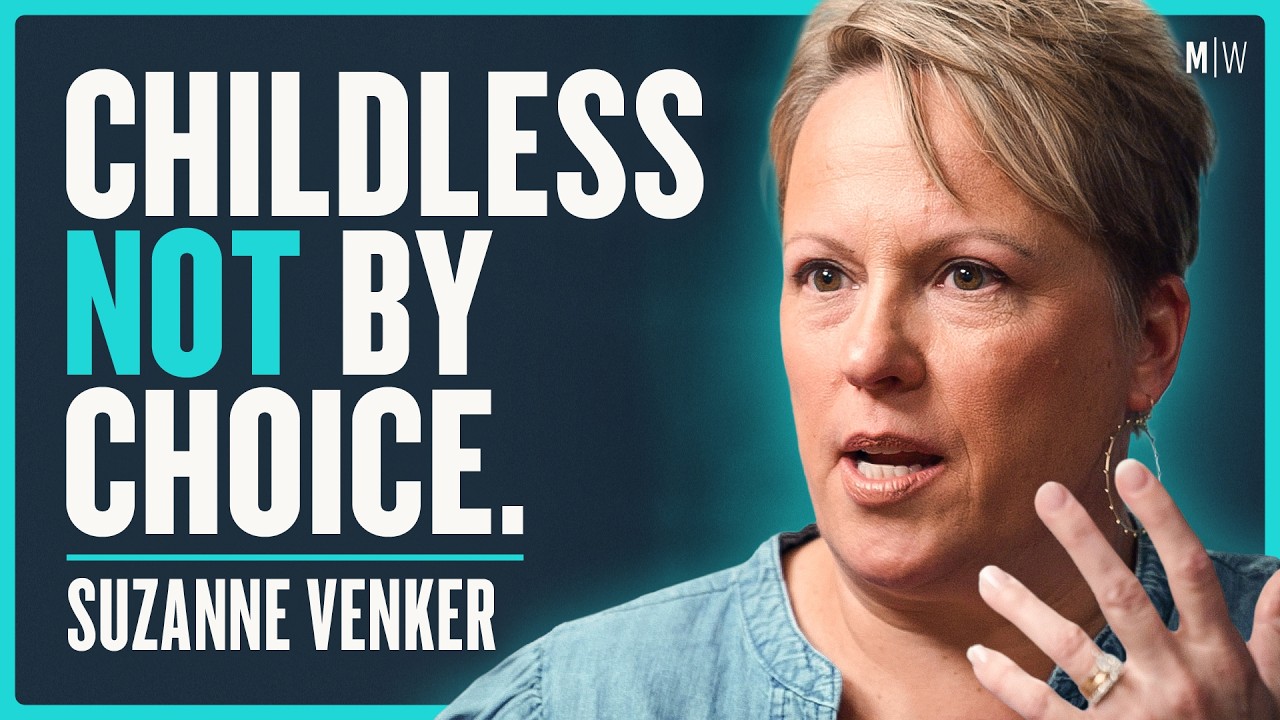
Suzanne Venker, a Gen X author and relationship coach, argues that an entire generation of women—primarily millennials and younger Gen X—have been set up for misery by decades of cultural messaging that told them career should be the center of their lives, that men and women are essentially the same, and that they could “have it all” without trade-offs. She wrote her latest book, How to Build a Better Life, as an apology to these women, who often don’t realize until around age 30—when their priorities shift toward marriage and motherhood—that the life they’ve constructed makes those goals extremely difficult to achieve.
How Women Were Misled
The dominant cultural message since second-wave feminism has been that women should prove themselves in the same way men do, treating career as the nucleus of life and fitting family in around it if desired.
This messaging came not from most women but from a small, vocal minority of feminists—many with dysfunctional family backgrounds—who extrapolated their personal pain into a political ideology that dismissed marriage and motherhood as oppressive.
Over decades, this became embedded in the cultural fabric to the point where it’s no longer questioned: a woman isn’t considered truly equal, empowered, or liberated unless she works for pay.
The result is that women are thoroughly prepared for the workplace but receive almost no guidance on how to build a life that includes marriage and children—and when their instincts shift around age 30, they feel stuck, confused, and betrayed.
Suzanne calls this the “bigotry of male expectations”: women are only valued insofar as they can contort themselves into traditionally male roles, while the work women have historically done—raising children, building a home—is implicitly treated as second-class.
The Three Decisions That Lock Women In
Professional: Women are encouraged to pursue any career regardless of whether it’s compatible with family life. Suzanne advises choosing a profession that offers flexibility—something that can be done part-time, from home, or paused and resumed—rather than one that demands 24/7 commitment. The goal is to build career around family, not the reverse.
Relational: Women are told they don’t need a man to provide for them, so many partner with men who haven’t found professional footing. Suzanne argues this is a trap: 71% of Americans believe men should be able to provide for their family, versus only 32% who believe the same of women—reflecting an instinctive understanding that mothers become vulnerable when they have children and need support. Marrying a man without financial stability locks women into being permanent breadwinners.
Financial: Massive student debt—encouraged by parents who said “it doesn’t matter what it costs”—makes it feel impossible to ever leave the workforce. Combined with inflated lifestyle expectations driven by social media, women feel they can’t afford to have children or stay home with them, even though the actual cost of raising a child in the early years is relatively modest.
The “Three-Hour Mom” Problem
Suzanne sharply criticizes the idea—exemplified by entrepreneur Emma Grede’s claim that three hours with her kids is enough—that full-time working mothers can adequately parent in leftover time.
She argues that full-time motherhood and full-time career work are two full-time jobs that inherently clash, like being a doctor and a lawyer simultaneously. When women try to do both, something gives—and it’s usually the children.
The “quality time” concept is bogus: children need enormous quantities of time, not just intense bursts. A child who gets only three hours of mom on a weekend may seem fine, but the attachment costs are invisible and show up years later when those children struggle to form healthy adult relationships.
The damage from absence is delayed and hidden, while the cost of leaving work is immediate and visible—so the trade-off is never honestly evaluated.
Breadwinning Mothers and Resentment
For most women, being the primary breadwinner while also being a mother becomes deeply taxing over time. Suzanne’s coaching experience shows that these women become resentful—not because they’re doing anything wrong, but because doing both simultaneously goes against their natural instincts.
When women tell men “I don’t need you to provide,” men instinctively step back. Men are wired to provide and protect as a core identity; removing that role has contributed to the crisis of men disengaging from work and family life.
The cultural paradox: society simultaneously demands that women be financially independent and that men be good providers, while also insisting that career is the most important thing a woman will ever do and lamenting the lack of maternity leave.
The Devaluation of Motherhood
Motherhood has been systematically devalued because it doesn’t generate economic return. In a materialistic, status-driven culture, anything without a paycheck attached is treated as unimportant.
Women who choose to stay home face social stigma: they’re seen as having “just” become mothers, as though it’s a lesser choice. A working mom at a playdate told a former colleague she wished she’d known her when she was still “doing something”—a comment that devastated her.
The women who are happy as wives and mothers are largely invisible in media because they’re quietly living their lives, not broadcasting them. The loudest voices represent a minority for whom family is not the focus, creating a distorted picture of what most women actually want.
80% of women who reach menopause without children did not intend to be childless—demonstrating how powerful the biological drive is, even when the cultural messaging suppresses it.
Marriage as the Most Important Decision
Suzanne argues that who you marry—and how that marriage fares—will affect your happiness and well-being more than any career choice, because you can change careers but you cannot easily change a spouse, especially when children are involved.
Yet almost no one tells young women this. Parents don’t pass it on, schools don’t teach it, and media doesn’t discuss it. The result is that women give less thought to choosing a life partner than to choosing a major.
She advocates “dating with purpose”: by the third date, women should be upfront about wanting marriage and children, asking about a man’s family background, his parents’ marriage, his professional trajectory, and his desire for kids. This isn’t a business meeting—it’s filtering for compatibility before attachment clouds judgment.
Cohabitation and the “Sliding” Problem
Suzanne opposes cohabitation before engagement, not for religious reasons but for practical ones: living together causes people to slide into marriage through inertia rather than making a deliberate decision.
The research supports this: divorce rates are 31.4% for couples who cohabited before marriage versus 25.9% for those who didn’t. Earlier studies found a 20–50% increase in divorce risk.
The “sliding versus deciding” framework explains why: people move in together for reasons that have nothing to do with wanting to marry. By the time engagement comes, they’re already functioning as a married couple, and the wedding becomes a formality rather than a genuine decision.
Suzanne advises couples to date from their own spaces, make the engagement decision with objectivity and distance, and only then move in together—treating the engagement period as the real trial of compatibility.
The Alpha Female Problem at Home
Suzanne wrote The Alpha Female’s Guide to Men and Marriage to address a pattern she knows personally: the skills that make women successful in the workplace—assertiveness, disagreeability, directness, competitiveness—are exactly the wrong skills for a happy marriage.
Disagreeability is positively correlated with professional earnings but negatively correlated with relationship satisfaction. A woman who thrives on debate and challenge at work will destroy intimacy at home if she brings that energy to her marriage.
Men don’t want a challenge in their relationship; they want peace, receptivity, and softness. When a woman thinks and behaves like a man at home, conflict is inevitable.
The solution isn’t to become weak or submissive but to develop a separate set of relational skills: softening delivery, choosing when to argue, and understanding that the marketplace and the home require fundamentally different approaches.
Daycare as a Last Resort
Suzanne views daycare—particularly institutional group care for infants and toddlers—as the bottom of the childcare hierarchy, to be used only when every other option is exhausted.
The original purpose of daycare (Head Start) was for genuinely needy families. Its normalization for all families regardless of financial need has created a system where parents drop off six-week-old babies for 10-hour days without understanding the developmental costs.
In daycare, babies cannot get the one-on-one attachment they need. Sleep schedules are disrupted, hunger isn’t immediately addressed, and caregivers constantly turn over just as a child begins to attach. The stress of the environment is enormous.
Babies who stop crying at daycare drop-off aren’t “fine”—they’ve given up. Quiet compliance in a child who once cried is a warning sign, not reassurance.
Alternatives, in order of preference: mom at home, dad at home, grandparent, nanny, neighborhood co-op with another mom (trading childcare one or two days a week). Suzanne believes that if institutional daycare didn’t exist, families would figure out better solutions—the system has made them dependent on the worst option.
The Attachment Paradox
Many young parents are deeply engaged in therapy and attachment literature, working hard to understand and heal their own insecure attachment patterns so they don’t pass them to their children.
Yet the life they’ve constructed—driven by career demands, debt, and social pressure—often requires exactly the kind of prolonged absence and institutional care that creates the insecure attachment they’re trying to avoid.
They’re working to earn money for therapy to fix patterns that their current lifestyle is actively recreating in their children. The irony is devastating and almost never discussed.
Suzanne’s answer: build the life differently from the start. If family is truly the priority, the decisions about career, debt, partner, and housing all change—and the attachment crisis never materializes.
What Suzanne Wishes Every Young Woman Knew
Nothing in life—no career achievement, no amount of money, no status—will compare to the meaning, satisfaction, and euphoria of having and raising children and building a family. But most women don’t believe this until they’ve already constructed a life that makes it nearly impossible.
The billboard message: you have choices, but only if you make decisions early with the long game in mind. If you set up your life with family at the center, you will always have options. If you set it up with career at the center, you may find at 32 that the life you want is the one you’ve made inaccessible.
Live your life, not theirs. Social media has made it catastrophically difficult to resist comparing yourself to curated images of other people’s lives. Happiness requires knowing what you actually value and building around that core—not around what the culture tells you should matter.