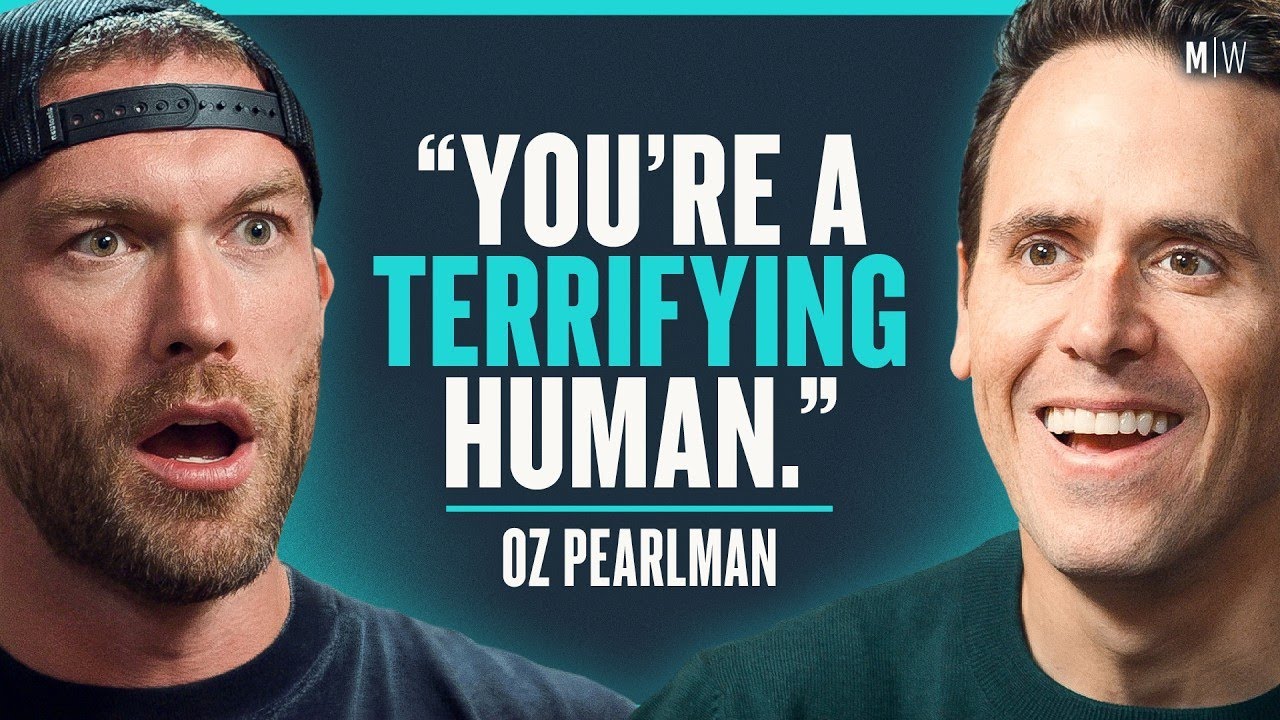
Oz Pearlman is a mentalist who builds his career on the illusion of mind reading. He cannot actually read minds, but he crafts experiences that feel impossible, using psychology, observation, and showmanship. Unlike magic tricks with gimmicks, his methods are “pure art”—learnable, repeatable, and rooted in science, not supernatural claims. The audience knows it’s not real, yet cannot explain how it works.
Core Principles of Mentalism
Building trust and rapport is foundational. The same skills that make a great salesperson, hypnotist, or con artist effective are essential for a mentalist. Without cooperation from the audience, the work fails entirely—it cannot be done against someone’s will.
Charisma and resilience matter enormously. Like stand-up comedy, mentalism takes years of painful iteration before mastery. Oz emphasizes that no one starts good; overnight success follows a decade of invisible work.
Storytelling transforms tricks into lasting memories. Oz realized early that audiences don’t remember the mechanics of a trick—they remember how it made them feel. By making the experience about the participant (e.g., revealing someone’s birth date through cards), the story becomes personal and retellable for years.
Silence is a powerful tool. Allowing reactions to breathe—letting wonder hang in the air—amplifies emotional impact. Oz compares it to not stepping on a joke in comedy or resting a steak to let the juices settle.
How He Reads People
Micro-expressions and body language are real but context-dependent. Oz uses a technique called “muscle reading”—observing subtle involuntary physical responses to detect choices (like which card someone picked). He demonstrates this live by correctly identifying a card, then a full poker hand, based solely on watching the guest’s reactions.
He creates the illusion of universal skill. By staging one impossible-feeling demonstration, audiences generalize his ability far beyond what he actually does. The “connector” the audience fills in—“If he can do that, he must be able to do everything”—is itself the trick.
Detecting deception relies on baseline deviations. Most people add unnecessary details when lying. Changes in speech cadence, response timing, and body language (compared to someone’s normal behavior) are more reliable indicators than any single “tell.” Oz believes AI will soon outperform polygraphs at this.
Memory and Connection Techniques
The “Listen, Repeat, Reply” method for remembering names:
Listen: Most people never actually hear the name in the first place because their brain is busy processing social cues.
Repeat: Immediately use the name twice (“Jared? Great to meet you, Jared”).
Reply: Hook the name with a visual—ask how to spell it, give a compliment, or connect it to someone else you know. This cements it in under 10 seconds.
Writing things down is a cheat code for memory. After events, Oz takes detailed notes on people he’s met—names, personal details, what he performed. Reviewing these notes before repeat encounters makes him seem supernaturally attentive.
Purpose drives retention. People struggle to remember what they read or learn because they have no reason to. Creating an output—a show, a newsletter, a conversation goal—gives the brain a reason to hold on to information.
Confidence, Rejection, and Self-Worth
Oz created a psychological “agent” to handle rejection. As a teenager performing magic in restaurants, he was devastated by tables that ignored or dismissed him. His solution: mentally split himself into two people. “Oz the magician” handles the rejection; “Oz Pearlman” doesn’t take it personally. This is like inserting plexiglass in a bowl of water—salt poured on one side doesn’t contaminate the other.
Vulnerability builds likability. Admitting nervousness or inexperience disarms people and makes you feel authentic. Oz argues that people have a near-supernatural ability to detect fakeness, and the best salespeople and performers are the same person on and off stage.
Preparation is non-negotiable. The “agent” model only works if you’ve done the homework. Confidence comes from earned competence, not delusion.
Handling Failure and Recovery
People remember the beginning and the end, not the middle. Oz designs his performances so that the final moment is the strongest. If something goes wrong earlier, a powerful ending overwrites the memory of the failure.
He never foreshadows his ending. Because the audience doesn’t know what the “success condition” is, a missed reveal is invisible to them. This gives him a permanent “get out of jail free” card.
The peak-end rule governs perception. The most emotionally intense moment and the final moment define how an entire experience is remembered. This applies to shows, conversations, and life events alike.
Cult Leaders, Manipulation, and Suggestibility
Charles Manson as a case study in manipulation. Manson was never part of MK Ultra, but his ability to make people suggestible—so much so that prisoners in his cell block experienced the physical effects of heroin without taking it—demonstrates that the CIA could have learned from cult leaders rather than the other way around.
Suggestibility is a feature, not a bug. Oz compares it to lucid dreaming—a “back door” in the human brain that wasn’t necessarily designed to be there but can be exploited through techniques like reality testing and hypnagogic self-suggestion.
Hypnotism works by connecting core memories to new associations. A single session can create a permanent aversion (e.g., linking cigarettes to the sensation of crushing cockroaches), but only if the subject wants to change. It cannot work against someone’s will.
Endurance, Suffering, and Mental Toughness
Ultra-running is Oz’s laboratory for mind control. He has run 153-mile races (the Spartathlon, from Athens to Sparta) and 100+ mile ultras. The physical suffering teaches him that the mind gives up long before the body fails.
A DNF (did not finish) changed his life. After quitting the Spartathlon due to vomiting and exhaustion—while watching slower, older runners finish—he realized his failure was entirely mental. The next year, with a completely different mindset, he finished.
“Fast forward your feelings” is his trick for procrastination. When dreading a task (rating it an 8/10 in anxiety), he sets an alarm for 24 hours later and forces himself to act immediately. The next day, the anxiety is always a 2/10. He’s tricking his own brain the way he tricks audiences.
The Paradox of Success and Happiness
Gratitude and high performance are often in tension. Being satisfied with where you are reduces the relentless drive to improve. Oz acknowledges this trade-off: his obsession with being the best ever means he can never fully enjoy his achievements.
Imposter syndrome never fully goes away. Even performing for millions, part of him is still the insecure teenager. But he uses it as fuel for iteration rather than paralysis.
Children give you a sense of mortality. Seeing your continuation in another person makes death real in a way nothing else does. Oz finds this liberating—in 500 years, no one will remember any of this, which makes current anxieties feel smaller.
What’s Next
White House Correspondents’ Dinner (April 2026): Oz is hosting, and President Trump will attend—the first time a sitting president has done so. Oz plans something unprecedented, banking on Trump’s inability to fake reactions. Even if the trick “fails,” Trump’s genuine response (anger, delight, confusion) becomes the content.
Netflix special (summer 2026): Filming in New York City, with more cameras pointed at the audience than at Oz—because the real show is watching people process the impossible.
Public tour launching May 2026: After a decade as a corporate act, Oz is doing more live public shows (Las Vegas, Atlantic City, and beyond).