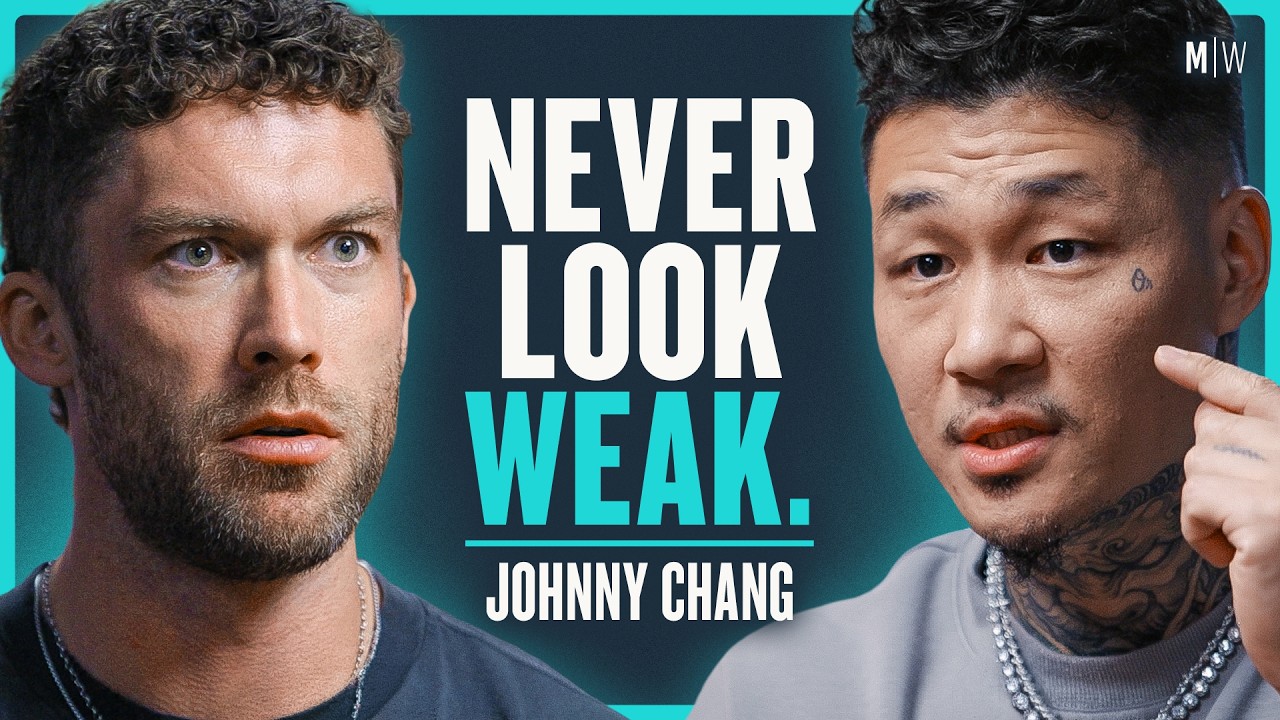
Johnny Chang grew up in San Gabriel Valley projects with an abusive alcoholic father who beat him, his mother, and his brother; after being jumped at age ten and then beaten by his father for “lying” about it, he internalized rage, turned to street fighting for survival, and was recruited into a gang at twelve, catching his first case (kidnapping and robbery) on a “mission” for an OG who had bought his loyalty with $100 and a sense of family.
Childhood Trauma and Entry into Gang Life
Immigrant parents landed in poverty; father, a chef, developed alcoholism and a victim mindset, breaking friendships and blaming everyone, which escalated into severe physical abuse of the whole family.
At ten, Johnny was jumped by four kids on a racial war basis (Asians vs. Mexicans); when he came home barefoot and bloody, his father accused him of lying and beat him, while his mother participated — the moment he realized he could trust neither parent.
He began staying out, fighting not for fun but to kill, carrying knives to school by twelve; gang members noticed the “trouble kid” and tested him (“banged on him”), then brought him to a shot-caller who treated him with gentle respect, gave him $100, and said, “When you’re with us, you’re family” — a coercive kindness that pulled him in.
His first mission was kidnapping and robbing a rival drug dealer; all six participants were caught and hit with RICO charges, sending twelve-year-old Johnny to the California Youth Authority (YA) despite it being his first offense.
Surviving California Youth Authority (YA)
YA was “the worst of the worst” — child serial killers, kids who killed parents — and he was placed there solely due to RICO guilt-by-association with older homies already indicted for murder.
First day: “lining up” fights — he fought six to eight kids (ages 12–16) in a “Ramla” (car) system where fighting one meant fighting all his friends; those who refused to fight were stolen from or raped.
Violence became a universal language: no talking, just beat people and earn praise; he fought 40+ people in four years and felt a twisted pride in “fitting in.”
Correctional officers ran “gladiator school,” pitting kids against each other and betting on fights; the environment bred a mindset where any perceived disrespect triggered immediate violence.
Adult Prison: Politics, Manipulation, and Hierarchy
At sixteen, a freeway shooting (gang war, Mexicans stacking signs) led to attempted murder charges, tried as an adult, ten-year sentence with 85% time in Level 4 maximum security.
Prison politics shattered his gang mentality: in California, race trumps gang — he had to back rival-gang members of his own race, and riots erupted over minor disrespect, making violence less frequent but more lethal.
Status hierarchy: General Population (GP) top for “solid” gang members; bottom for “jackets” (rape, molestation, snitching, dropouts) who get “rolled off the yard”; SNY/PC for those who can’t survive GP; “nons” (not on normal courtyard) for pedophiles kept separate.
Weakness = backing down from “raising your hand” (volunteering for stabbings), not programming (working out, running tiers, keeping word), or turning Christian (seen as unable to enact violence, therefore unreliable).
Manipulation is endemic: a respected inmate accused of stealing was challenged to burpees to spike his heart rate, then stabbed to bleed out faster — “friendly game” masking murder; this bred total distrust: “you cannot trust anybody.”
The Hardest Habits to Unlearn After Release
Criminal/manipulative mindset: constantly scanning angles, trading stamps, exploiting vulnerabilities — “an ecosystem” of hustle that ran automatically.
Anger that goes 0–100 over any perceived disrespect, then back to zero; rationalizing violence (“they deserved it”) and never being wrong — homies joked “bro is never wrong.”
Institutionalization: Pavlovian responses — asking a Walmart security guard to escort him to the bathroom (like COs did), not turning off lights at night (prison did it automatically), social anxiety in crowds (hyper-vigilance from yard survival).
Arrested development from 12 to 25 — the most formative years spent in cages.
Relapse, Emptiness, and Catalyst for Change
In prison, a Muslim mentor (Middle Eastern, respected, disciplined) converted him to Sunni Islam for 2–3 years; mentor taught Art of War, pushed fitness, but became defensive when Johnny questioned doctrine — betrayal echoing his father.
Mentor paroled, returned six months later — shattered Johnny’s hope: “if he can’t make it, I’m cooked” — he considered catching a strike to stay inside.
Paroled at 25, couldn’t get jobs (violent record), relapsed into gang life, made $40–50k/month, penthouse, women, drugs — but a “hole in the heart” persisted: rollercoaster highs/lows, nightly crying, near overdose.
Within two weeks: best friend died in his arms during a botched robbery (friend stepped right instead of left, took bullets meant for Johnny); childhood friend hanged himself in prison; a 15-year-old “carbon copy” of young Johnny died in a car-to-car shooting — death felt like “energy circling” him.
Encounter with Christianity and Reconciliation with Father
Mother’s car broke down near her church; Johnny drove her, smelled black bean noodles (father’s apology dish), stayed to eat with Pastor Kim (Korean, broken English, translator present).
Pastor redefined sin: not rule-breaking but identity — “you’re born Chinese; you didn’t choose it; eating more/less orange chicken doesn’t change it” — sin is being born into a nature that cannot produce perfection, creating emptiness.
Jesus as lifeguard: you’re drowning in depression/trauma; you can’t save yourself; the lifeguard (Jesus) pulls you out — first time anyone articulated his internal state and offered a way out not dependent on his performance.
Pastor challenged him to apologize to his father: “as right as you are, you’re miserable” — two countries at war, one concedes, peace flows, rebuild; Johnny called his father next day, met at a restaurant, said “I’m sorry” — father wept, apologized, admitted he felt he created Johnny’s path, first “I love you” ever spoken between them.
Learning Surrender vs. Passivity
Surrender ≠ passivity: “plan boldly, surrender daily” — Bible says count the cost before building; you work hard, but outcome is in God’s hands; glory goes to Him.
Distinguishing God’s voice from inner monologue: impulsivity vs. Scripture — “my thoughts are not your thoughts”; discernment comes from the Word (Hebrews 4:12); Holy Spirit leads back to Scripture, never contradicts it.
Christianity initially felt “weak” vs. gang/Islam “high testosterone” — but realized true strength is choosing dialogue over violence, vulnerability over bravado; “it takes a lot of strength to go the easy way and be violent… harder to hear them out.”
Forgiveness and Self-Forgiveness
Forgiveness is for you, not the offender — “taking off the shackles” so they no longer control your emotions.
Easier when thinking outside yourself: “how many times did I betray God?” — if God shows mercy to him, he can extend it to his father (who had his own trauma: killed a man at 19, alcoholic father).
Harder to forgive himself: conscious choice to do wrong despite knowing better — “the condemnation comes: you chose, you knew, you feel culpable.”
“Forgiveness is choosing to no longer suffer the things you cannot change… giving up on the hope of changing the past” — practical gateway: forgive yourself for not forgiving yourself yet.
Returning to Prison as Ministry
Pastor invited him to preach at his alma mater prison; panic attack driving there — “fraudulent” to tell homies “Jesus can help” after cracking off riots.
Pastor called: “when you did drugs/robbed, you never had doubts; now doing God’s work, you’re attacked — spiritual warfare (Romans 7); enemy threatened by what you’ll do.”
Second attempt: walked yard, homies shouted street name — “what’s up, bro? you made it out” — random inmates in class blown away by testimony; men confessed suicidal emptiness, asked “does God really work?”
Broke down in car after: “I found a purpose… God’s not going to not use it” — continued prison ministry, seeing Muslims, Buddhists, atheists changed by the message of emptiness and distrusting one’s own thoughts.
Current Work and Reflection
Runs Corahar Daily app (10 years of teachings, free), streams Q&A on Johnny Chang Live (TikTok, Instagram, YouTube).
12-year-old self would think he’s “famous… dope YouTube” but “lame” for Christianity — “not aggressive enough, not hard enough” — had to go through the chaos to value peace.
“No amount of socioeconomic or follow-account escape velocity can outstrip an unpeaceful life” — if you can’t lay your head down without worry, the price isn’t worth the return.
Mother’s faith was the avalanche’s start: schizophrenic by world’s standards, but spoke “world’s best husband/preacher” over broken reality with conviction and peace — father now sober, saved, cuddling Mom on the couch; brother saved; whole family transformed.