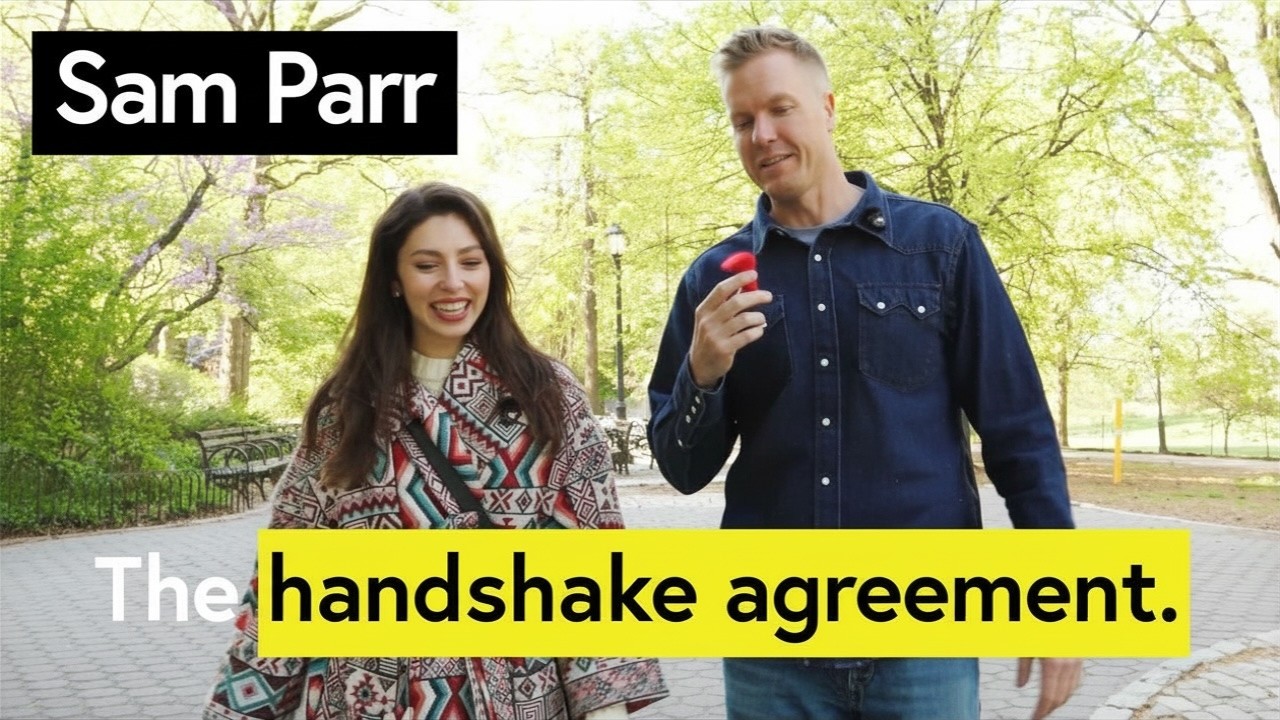
Sam Parr is a serial entrepreneur who built The Hustle newsletter to over 1.5 million subscribers and sold it to HubSpot for over $20 million, co-hosts the podcast My First Million, and now runs Hampton, a community for digital-first founders. This conversation covers how he thinks about money, marriage, luck, patience, and building a meaningful life.
When a $20 Million Wire Doesn’t Feel Real
Six months before the sale closed, Sam manually entered the expected payout into his finance app so he could look at the number every day, which helped him mentally adjust before the money actually arrived.
He received a large lump sum upfront, additional HubSpot stock, and some earnout payments over the following two years.
His wife worked at Airbnb and experienced its IPO around the same time, so both had life-changing liquidity events within months of each other.
Despite the windfall, Sam says it took about two years for the money to feel real, because he had previously been paying himself only around $2,000 a month and living extremely frugally in San Francisco (subletting rooms in a four-bedroom apartment, eating off the company credit card or leftovers from his wife’s employer cafeteria).
He distinguishes between gradual wealth (like his father-in-law’s moving company, which grew steadily over decades) and sudden lump-sum wealth, which can be psychologically disorienting.
Why His Wife Believed in Him Early
When they met, Sam was overweight, had a mohawk, wore camouflage pants, had little money, and had just started his company.
He believes people, especially women, are drawn to ambition, passion, and a clear sense of purpose, even if it’s not financial.
He told her he loved her within three weeks because he recognized she was physically beautiful, emotionally steady, and strong enough to balance his “up and down” personality.
Her parents are immigrants and entrepreneurs (mother built a successful pillow company, father a moving company), so she understood the startup journey and the arc from scrappy to successful.
Running a Marriage Like a Startup
Sam and his wife hold a monthly “4F meeting” covering Family, Fitness, Finance, and Fun.
The finance portion is less about budgeting and more about checking whether their spending aligns with what makes them happy, using the numbers as a conversation starter.
They review whether they stayed within a monthly budget, discuss whether they’re happy with where money went, and adjust if needed.
Each sets quarterly fitness goals and holds the other accountable.
Sam’s view on lasting relationships: early on, he and his wife had an explicit, almost contractual commitment to each other, discussing values, lifestyle, number of kids, and where they wanted to live at ages 30, 40, and 50.
He applied the same approach with his co-founder, treating the relationship like a founding partnership with clear alignment on goals and exit expectations.
He credits Napoleon Hill’s Think and Grow Rich with teaching him to write down specific goals and reverse-engineer them.
Luck Is Real and Underappreciated
Across hundreds of interviews with extremely successful people (including billionaires), Sam found that most acknowledge luck as a major factor, even if they also worked hard.
He distinguishes between macro luck (where and when you were born, your appearance, your parents) and situational luck (timing of events like COVID, which dramatically grew his business, or a HubSpot CEO’s accident that could have derailed his sale).
His advice for increasing the surface area of luck: produce a huge volume of output over a long period, because quantity leads to quality, and most people lack patience.
He pushes back on the idea that “today’s world is different,” arguing human nature has always been the same.
Commit Fully, Then Figure It Out
Sam’s decision-making style is to make commitments irreversible from the start, such as hiring people immediately when starting a company so he can’t easily bail.
He admits Hampton is very hard and there are moments he wonders if he should quit, but his Midwestern mindset is that once you commit, you stay committed.
At the same time, he believes overnight successes are real and that quitting something mathematically incapable of getting you where you want to go can be the smart move.
He has never asked himself whether he’s bored with Hampton, seeing company-building as a playground for creating interesting things, and notes he could always sell the company if he wanted an exit.
Negative Visualization and Emotional Management
Sam practices a stoic technique called negative visualization, imagining the worst possible outcomes (children dying, losing limbs, spouse dying) for several minutes, then opening his eyes to feel relief that none of it is real.
He references executive coach Joe Hudson’s technique of visualizing the worst outcome of an argument (like divorce), letting go of the fear, and then having a more productive conversation.
His general life attitude: “Life sucks, deal with it,” combined with finding joy in small things and not taking himself too seriously.
Environment and Aesthetics Matter
Sam has developed a strong preference for old, historical things and beautiful surroundings, which significantly improve his mood.
He lives on New York’s Upper West Side partly for the Gilded Age architecture and historical atmosphere.
He loves denim because it’s one of the few materials that gets better with age and develops patina; recommended brands include Momotaro and Iron Heart.
40 Hours a Week Can Make You Rich
Sam’s general rule: if you’re under 40 and not yet successful, working very long hours probably increases your odds.
Once a company reaches roughly $3–10 million in revenue and has a small executive team, he believes working 40 hours a week is sufficient to reach most goals.
He thinks intrinsic rewards (family, legacy, people around you loving you) matter more than external ones, but he still measures his own potential fulfillment partly through company size and net worth.
Finding Your Edge
Sam recommends the “ikigai” framework: the intersection of what the world wants, what you’re good at, what you love doing, and what the world will pay for.
He says finding that intersection can take 5–10 years and recommends Robert Greene’s Mastery.
He believes in reconnecting with what you loved doing as a child, noting that he still acts like one (skateboarding every weekend, playing on the floor with kids) and that this playfulness is part of his edge.
He has never cared much about what people think of him, which he says has always been the case and has helped him.
How He Interviews and Prepares
Sam prepares minimally: typically an hour before a podcast, he reads an automated Claude research summary on the guest, and only reads their book if he’s personally interested.
When conversations don’t flow, he uses playful provocations to break the ice, such as joking about a guest’s appearance or lowballing a known number to trigger an ego-driven correction.
He also opens up about his own vulnerabilities first to encourage guests to do the same.
His best episodes have often been with guests he initially didn’t want on the show, including an egg carton entrepreneur and his own mother-in-law.