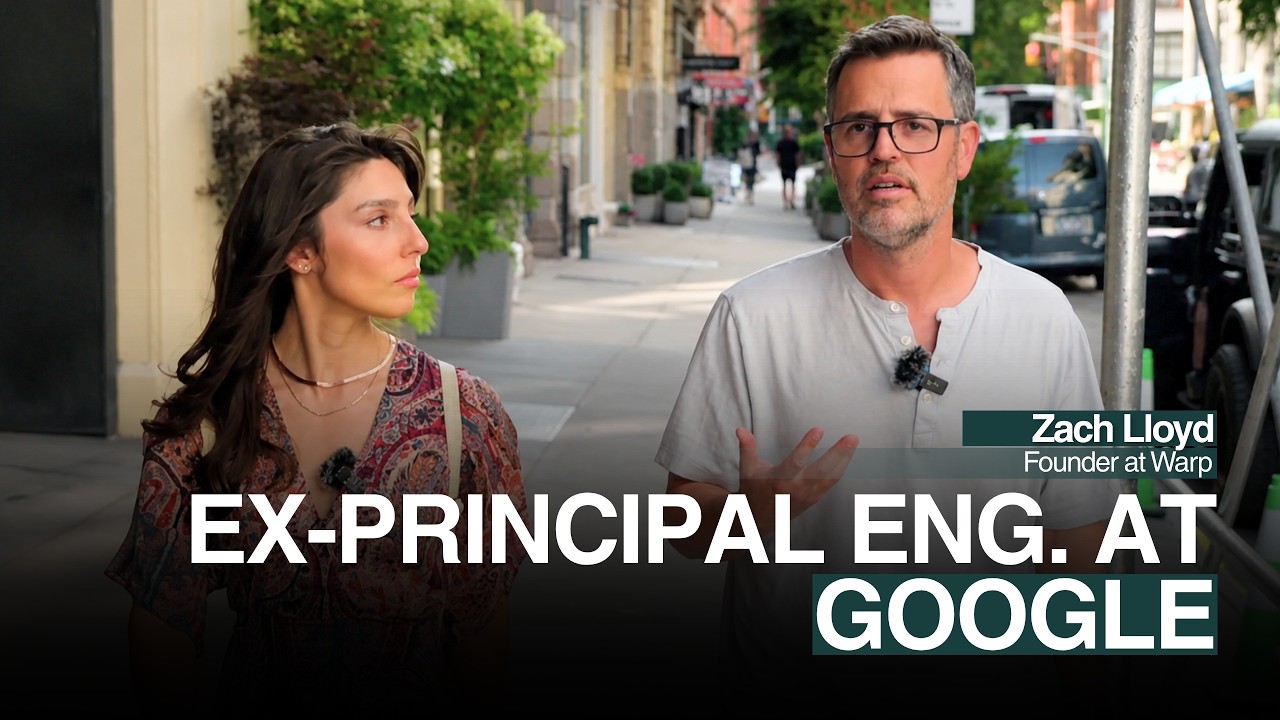
Zach Lloyd, founder and CEO of Warp (a modern terminal used by nearly a million developers daily), shares his winding path from philosophy major and NASA intern to Google Sheets engineering lead, a failed first startup (SelfMade), and building Warp into an AI-first developer platform now automating 30% of its own engineering work.
Family roots in entrepreneurship and sales
Grandfather Lloyd K. Lloyd ran a successful insurance business in San Francisco; remembered as a personable, relationship-driven salesman who was proud when young Zach won a magazine-drive sales contest.
Cousin Marc Benioff (Salesforce founder) was an early supporter and “cool cousin” who drove Zach around in a white BMW convertible; both grandfathers were entrepreneurs (the other had a textile business in LA).
Father started multiple businesses (video production, PR) but pushed Zach toward law school as a safer path; Zach dropped out after a year, glad he did.
Entrepreneurship “runs in the family” but wasn’t explicitly encouraged; Zach always wanted to start something but took years to commit.
Winding early career: NASA, philosophy, law school, Google
Studied an interdisciplinary mix of math, philosophy, and CS; worked at NASA Jet Propulsion Lab, lived abroad, worked in a recording studio — “hard to pick a lane.”
Advises others not to torture themselves over indecision: diverse experiences build general critical thinking, writing, and systems reasoning — skills that remain valuable as AI commoditizes narrow vocational skills like coding.
Joined Google Sheets at ~5 people (a Google Labs acquisition); manager Fuzzy Khosrowshahi (now Notion CTO) became a leadership model: empowered Zach early, made space for growth, bragged about deleting his own code, showed humility.
Rose to lead engineering for the full Google Docs suite over 7–8 years; learned to empower smart people rather than direct them.
SelfMade: 3 years, 150 employees, operational grind, founder breakup
Left Google to start a photo-sharing app (bad idea), then “co-founder dated” into SelfMade: photo-editing-as-a-service for social-media influencers, pre-AI.
Scaled to millions in revenue, Series A, 150 people (100 in Jakarta editing photos) — but Zach didn’t care about the mission, hated ops-heavy model, product never achieved true product-market fit (high churn, complaints).
Founder breakup was “very, very stressful”; wrote a 40-page private postmortem (never to be shared).
Key takeaways: must work on something you care about; avoid ops-heavy businesses; need genuine product love, not just revenue traction; hire talented generalists who want ownership.
Warp founding: idea maze with trusted investors, terminal as “spreadsheet for developers”
Worked with Greg (BoxGroup) and Eric (GV) — known from Google days — to explore ideas weekly; looked for widely used, painful tools where Zach had domain knowledge.
Terminal fit: every developer uses it daily, creates economic value, existing experience “sucks” (Zach’s view), hard technical moat, non-obvious so less early competition.
Investors pattern-matched to Figma/Airtable: hard tech, long build time, collaboration as hypothesized business model.
Chose solo founder route: didn’t want to repeat CTO-not-CEO dynamic; felt he had domain knowledge, hiring ability, and product vision for a dev tool.
Early Warp: near 1M users, collaboration didn’t monetize, AI features pre-ChatGPT
Warp is one of the world’s most popular terminals (~1M users; Cloud Code ~5M for comparison).
Collaboration features got user traction but weak pull to pay; business model unclear until AI.
Had natural-language-to-command AI feature before ChatGPT (late 2022); within a month of ChatGPT added a chat panel.
By end of 2023 fully oriented around AI; built a Codex/Claude-Code-like agent in Warp six months before those launched — but it only did terminal tasks, not code generation.
Regret: hedged on AI too long; now 100% committed to “cloud software factories”
Admits Warp went “50% gas” on AI fearing alienating anti-AI developers; should have gone all-in earlier.
Now fully pivoted: “cloud software factories” where agents live in the cloud, automate chunks of the SDLC (bug fixes, crash response, merges), humans guide/approve.
Warp internally automates ~30% of engineering work; engineers become “factory engineers” — product-minded systems thinkers who manage the automation pipeline, ensure quality, improve efficiency.
Cost of intelligence is high; goal is to make the factory more efficient over time.
Developer tools market: fragmented, opinionated, no enduring monopolies
Developers are fragmented, opinionated, love customization, try new tools constantly — no product dominates forever (GitHub closest but at risk).
Yet developers are the most influential buyers, driving Anthropic/OpenAI growth.
Productivity reports show 2–3x velocity increase (merged PRs) at Warp and customer teams, but not linear to business ROI: competitors have same tools, shipping more ≠ more revenue.
Measuring true business impact of developer productivity remains an unsolved hard problem.
Competitive positioning: “Switzerland” for inference, not competing with OpenAI/Anthropic
Initially saw foundation-model companies as competitors; realized they have insurmountable cost/scale advantages on tokens.
Pivoted to complementary: Warp provides agent infrastructure/interface; customers bring their own inference (OpenAI, Anthropic, open-weight models).
Position: invest in Warp’s platform, use whatever model/agent wins tomorrow.
Extreme vision: every app built just-in-time for a specific user need via agent (e.g., paste CSV → ask for analysis/graph/insights instead of opening Google Sheets).
Spreadsheets, basic SaaS CRUD interfaces will be “eaten” by general agent interfaces; databases and business logic (e.g., Salesforce data/workflows) remain valuable.
Founder reality: solo pressure, hiring/retention pain, self-management
Solo founder: no peer to share the daily mess; investors (Greg, Eric, Andrew Reed) give complementary outside perspectives (product, strategy, management) but don’t manage.
Market is ultimate accountability; must build a working business, not just “kind of working” (SelfMade trap).
Current pains: back pain (aging), team departures feel like failures, graph-watching anxiety, disconnecting to take long view.
Coping: exercise, time with kid (who doesn’t care about Warp), cooking + watching cooking competitions (Top Chef, Beat Bobby Flay).
Wife super supportive: moved for her ski-instructor work, handles more childcare, understands mission intensity.
Life philosophy: “Pick something useful, try your hardest, accept you can’t control the outcome.”
Quick personal details
Trait most grateful for: enjoys public speaking (energizing, not anxiety-inducing).
Would never do again: live on St. Mark’s Place in NYC (party street, tiny apartment, couldn’t sleep).
Name “Warp”: short, memorable, evokes speed/futurism; “Cursor” was a finalist.